
Why Am I Not Losing Weight on Keto? Tips to Overcome Common Mistakes
If you are not losing weight on keto, the problem is rarely effort and almost never “keto doesn’t work.”
Most early keto stalls happen because people confuse ketosis with fat loss, underestimate adaptation timelines, or unknowingly repeat execution errors that block progress even while carbs are low.

This page exists to diagnose that gap.
Not to motivate harder — but to identify what is actually interfering with results, how to tell which failure category you are in, and what structural corrections restore progress before keto gets blamed for problems it did not create.
Table of Contents
Why Am I Not Losing Weight on Keto?
If you are not losing weight on keto, it is usually because fat loss conditions are not fully met—even if you are in ketosis. This often comes from hidden intake issues, adaptation misinterpretation, or lifestyle interference rather than the diet itself failing.
Why You Can Be “In Keto” and Still Not Losing Weight

Being in ketosis does not guarantee that fat loss is happening.
Many people assume that once the body is producing ketones, weight loss should automatically follow. When that doesn’t happen, it creates confusion—especially when effort feels consistent and carbs are already low.
The issue is not whether ketosis is working.
It’s whether the conditions required for fat loss are actually being met.
Ketosis vs fat loss (why they are not the same)
Being in ketosis means the body is using fat and ketones for fuel.
It does not mean the body is reducing stored body fat.
Ketosis is a fuel state.
Fat loss is a tissue change.
They are related, but not interchangeable.
It is entirely possible to be producing ketones while maintaining the same amount of body fat. This happens when energy intake matches energy use, protein signaling is weak, or dietary fat is being burned instead of stored fat.
Early keto often creates the impression that ketosis equals progress because glycogen depletion releases water and the scale drops. When that phase ends, the scale may stabilize even though ketosis continues — and many people interpret that stability as failure.
In reality, ketosis creates the environment where fat loss can occur.
Execution determines whether it actually does.
This distinction is critical. Without it, people chase ketone levels instead of correcting the intake and recovery patterns that drive real body change.
Early water loss vs real fat loss
Most early keto weight change is not fat loss.
When carbohydrates are removed, the body empties stored glycogen. Glycogen is bound to water, so as it is depleted, several pounds of water leave with it. This is why the scale often drops quickly in the first days, then appears to “freeze.”
This phase creates a dangerous illusion: rapid early loss feels like progress, and when it slows, people assume something broke.
In reality, this is the moment when real fat loss is only beginning.
True fat loss depends on metabolic adaptation, hormonal signaling, and sustained execution. It does not occur at the same speed as water release. When the water drop ends, the scale often stabilizes temporarily even while the body is still changing internally.
Many people quit or overhaul their diet at exactly this point — not because keto stopped working, but because the body has shifted from fluid change to metabolic work.
Understanding this distinction prevents false failure signals and unnecessary execution errors.
The execution gap most beginners miss
Most people start keto by removing foods.
They rarely rebuild how their intake is structured.
This creates the central execution gap of early keto: carbs go down, but eating behavior does not change. Fats are added instead of substituted. Protein is guessed instead of designed. Portions drift upward while hunger temporarily disappears.
From the outside, it looks compliant. Internally, the metabolic signal is mixed.
Ketosis is achieved, but fat loss is not prioritized.
This gap is where most “keto isn’t working” stories begin. Not with cheating — but with invisible misalignment between intake, adaptation stage, and metabolic demand.
Early success on keto depends less on strictness and more on structural correction: how food is combined, how protein is positioned, how fats are used, and how recovery is supported.
Without this restructuring, people often remain “in keto” while unintentionally maintaining their current body composition.
If you’re not sure which of these failure patterns applies to you, this breakdown will help you understand why keto is not working for you—and what is actually causing the stall.
The 4 Failure Categories Behind Most Keto Stalls

When keto stops producing visible results, the cause is rarely random.
Most stalls follow predictable patterns that fall into a small number of failure categories. Identifying which category you are in is more important than trying to fix everything at once.
Without this classification, people tend to overcorrect—changing multiple variables at the same time and making it harder to identify what is actually blocking progress.
When keto weight loss stalls early, it almost always falls into one of four categories.
Not motivation.
Not genetics.
Not “keto doesn’t work.”
But identifiable execution failures.
First are intake failures — hidden carbohydrates, fat overconsumption, protein misalignment, and calorie drift that quietly remove the conditions required for fat loss.
Hidden carb sources are one of the most common reasons people unknowingly block ketosis depth and fat loss.
Second are adaptation failures — normal early-phase biological changes misread as problems, leading to unnecessary changes, inconsistent execution, or premature abandonment.
Third are electrolyte and fatigue interference failures — dehydration, mineral imbalance, and nervous-system stress that mask fat loss, disrupt appetite, and reduce visible progress.
Fourth are lifestyle interference failures — sleep debt, alcohol, chronic stress, and training mismatch that alter water balance, hormones, and energy regulation.
Every stall on this page fits inside one of these zones.
The rest of this guide exists to show how each one works — and how to tell which one you are actually dealing with.
Execution Failures That Quietly Block Progress
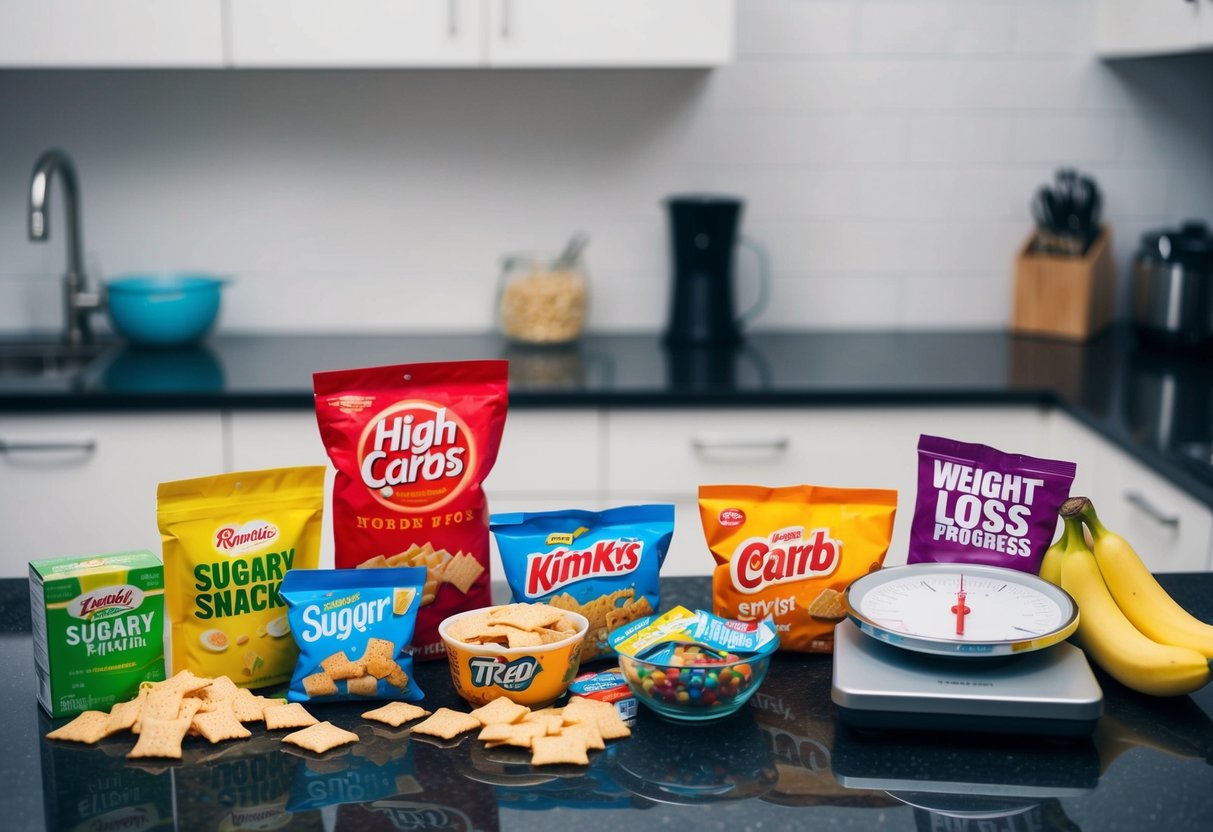
Achieving successful weight loss on a keto diet can be challenging when common execution mistakes go unnoticed. Hidden carbs, imbalanced macronutrients, and early adaptation symptoms often create the illusion that keto “isn’t working,” when in reality, the issue is usually how the diet is being applied rather than the diet itself.
Many people unknowingly repeat the same errors week after week, assuming the solution is more willpower or stricter rules, while the real blockers remain unaddressed.
Hidden carbs and label traps
Hidden carbohydrates are one of the most consistent execution failures in early keto stalls.
They rarely come from obvious foods. They come from sauces, condiments, “keto” snacks, flavored drinks, sweeteners, and restaurant meals where starches and sugars are invisible.
Even small amounts consumed repeatedly can disrupt ketosis depth, stimulate insulin, and increase appetite without the person ever feeling like they “broke” the diet.
This creates a pattern where effort feels high, compliance feels real, but metabolic signaling remains mixed.
The problem is not awareness.
It is exposure frequency.
When hidden carbs appear across multiple meals per day, they prevent the metabolic stability required for fat loss to become visible. The body remains in a constant partial-switch state instead of a consistent fat-use state.
Until this layer is controlled, no other correction produces reliable results.
Macro imbalance and “fat-loading” mistakes
One of the most common reasons people stop losing weight on keto is not carbs — it is how fats and protein are being used.
Keto removes carbohydrates, but it does not remove energy balance. Many stalls happen when high-fat foods are added on top of normal intake instead of replacing it. Oils, cheese, nuts, and “keto snacks” are extremely calorie-dense and easy to overconsume, quietly eliminating the calorie deficit required for fat loss.
At the same time, many beginners under-eat protein out of fear that it will “kick them out of ketosis.” This often leads to poor satiety, muscle loss, lower metabolic drive, and stronger cravings — all of which make fat loss harder, not easier.
Protein is not the enemy of ketosis. Chronically low protein intake weakens hunger control and reduces the body’s incentive to preserve lean tissue, which can slow visible progress even when carbs are low.
Many stalls trace back to dirty keto vs lazy keto execution patterns that look compliant but undermine results.
The result is a common execution pattern: very high fat, insufficient protein, and invisible calorie drift. On the scale, this looks like “keto stopped working.” In reality, fat loss has been replaced by fat maintenance.
This failure category is not solved by stricter rules. It is solved by correcting how fats and protein are structured so ketosis supports fat loss instead of blocking it.
Social eating, alcohol, and weekend reversals
Social eating failures are rarely about single meals.
They are about metabolic interruption patterns.
Alcohol suppresses fat oxidation, alters insulin response, increases appetite, and promotes water retention. Even small amounts can stall visible progress for several days, making it appear as if keto has stopped working.
Social settings also weaken portion awareness and increase ultra-dense food intake, which quietly removes the calorie conditions required for fat loss while still appearing “low carb.”
When this happens once per week, the body spends more time recovering than progressing.
The scale shows inconsistency. Energy fluctuates. Hunger becomes unpredictable.
This is not lack of discipline.
It is repeated disruption of metabolic continuity.
Fat loss on keto depends heavily on consistency.
Weekend reversals often erase weekday alignment.
Adaptation Is Not Failure (But Most People Treat It Like One)

One of the most common reasons people think keto is not working is because they misread the early adaptation phase.
During this period, the body is still transitioning into efficient fat use, and results rarely appear stable or predictable. Weight, energy, and hunger can all fluctuate in ways that feel like failure—but are often part of the process.
The problem is not the fluctuation itself.
It is how those fluctuations are interpreted.
What the first 2–4 weeks actually look like
The first few weeks of keto are not a fat-loss phase.
They are a metabolic transition phase.
Understanding when keto typically starts working helps distinguish early adaptation from real execution failure.
During this period, the body is reducing reliance on glucose, increasing fat-oxidation capacity, altering enzyme production, and adjusting electrolyte handling. These internal shifts happen before consistent fat loss becomes visible on the scale.
As a result, progress rarely looks linear.
Some days weight drops rapidly due to fluid shifts. Other days nothing changes. Energy may dip before it stabilizes. Hunger may disappear temporarily and then return as signaling recalibrates.
This pattern is normal.
The problem begins when these expected fluctuations are interpreted as proof that keto is failing. People respond by cutting calories aggressively, removing more foods, or changing strategies every few days — often disrupting the very adaptation they are waiting for.
In most cases, early “stalling” is not resistance.
It is incomplete adaptation.
Understanding this timeline prevents unnecessary overcorrection and keeps execution stable long enough for fat loss to actually emerge.
Why energy, scale, and hunger fluctuate early
Early keto is not a stable metabolic state.
The body is shifting fuel systems, enzyme production is changing, electrolyte handling is adjusting, and appetite signaling is being recalibrated.
During this phase, it is normal to see:
• sudden water shifts on the scale
• drops or spikes in energy
• suppressed hunger followed by rebound appetite
• days where nothing seems to move
These are not failures. They are adaptation signals.
The problem begins when these signals are interpreted as proof that keto is ineffective, leading to random dietary changes, inconsistent intake, or overcorrection.
Fat loss does not present as a smooth downward line in early keto. It presents as a noisy phase where internal regulation changes before external metrics stabilize.
Understanding this prevents people from disrupting a process that is still assembling.
When stalling is normal vs when it signals execution error
Not all stalls mean the same thing.
Most early stalls fall inside normal keto adaptation timelines rather than true metabolic resistance.
A normal early stall usually appears after initial water loss. Weight stabilizes, hunger may shift, energy fluctuates, but execution has been consistent and recent changes have been minimal.
This type of stall often resolves as adaptation deepens.
An execution stall feels different.
It repeats week after week. Hunger increases. Food decisions become reactive. Energy remains low. Measurements do not change. And small adjustments produce no response.
This pattern usually indicates one of the four failure categories is active — intake, adaptation mismanagement, electrolyte interference, or lifestyle disruption.
The key distinction is not time.
It is pattern consistency.
Normal stalls are transitional.
Execution stalls are structural.
Knowing the difference prevents unnecessary restriction, constant plan changes, and premature abandonment of a diet that was never actually corrected.
When Keto Problems Are Not Food Problems

Success on a keto diet is influenced by various lifestyle factors, beyond just food choices. Exercise habits, sleep quality, and stress management are crucial components. Each plays a significant role in determining how effectively one can lose weight on keto.
Electrolytes, hydration, and fatigue loops
Many early keto stalls are not fat stalls.
They are fluid and nervous-system stalls.
When carbohydrates are reduced, the kidneys excrete more sodium and water. This shifts electrolyte balance, often leading to fatigue, headaches, weakness, dizziness, poor workouts, and disrupted sleep.
Fat loss can still be occurring — but fatigue increases stress hormones, which promote water retention and appetite dysregulation. The scale does not move. Energy drops. Cravings rise.
People respond by eating reactively, supplementing randomly, or changing their plan.
The real issue was not food.
It was electrolyte instability masking progress.
Fatigue-driven stalls often come from keto flu and electrolyte disruption rather than fat-loss resistance.
Until hydration and mineral balance are corrected, the body cannot reliably display fat loss even if it is occurring internally.
Sleep debt, cortisol, and water retention
Sleep and stress failures often look like fat-loss resistance.
They are usually fluid-regulation and appetite-control failures.
Sleep restriction alters leptin and ghrelin, increasing hunger while reducing satiety. It also elevates cortisol, which promotes water retention and disrupts glucose regulation.
Chronic psychological stress produces a similar effect.
The body enters a conservation pattern.
Fat loss slows. Scale weight fluctuates. Abdominal water retention increases. Energy becomes inconsistent. Food choices become reactive.
None of this means keto stopped working.
It means the hormonal environment required to display fat loss has been compromised.
Until sleep and stress load are addressed, intake corrections often produce weaker-than-expected results.
Medical and hormonal flags (screening logic, not diagnosis)
Some stalls are not purely execution failures.
They are interference patterns.
Conditions such as insulin resistance, thyroid dysfunction, certain medications, and chronic inflammatory states can alter how the body mobilizes fat and regulates water.
When execution is consistent, intake is aligned, hydration is supported, and lifestyle interference is minimized — yet no measurable response occurs over extended periods — it becomes appropriate to screen for these factors.
This is not about self-diagnosis.
It is about recognizing when repeated non-response signals something beyond dietary structure.
In those cases, keto may still be useful — but it must be positioned inside a broader metabolic strategy rather than treated as a standalone fix.
How to Rebuild Your Keto Execution Structure
Early keto stalls are rarely fixed by adding more rules.
They are fixed by rebuilding execution structure.
This means correcting the hierarchy of what actually drives fat loss on keto instead of reacting to symptoms.
Long-term progress usually requires you to personalize your keto approach instead of repeating universal rules.
The first layer is intake alignment.
Hidden carbohydrates must be eliminated. Fat intake must support, not replace, fat loss. Protein must be sufficient to preserve lean tissue, regulate appetite, and maintain metabolic drive. Without this base, ketosis becomes a fuel state without a fat-loss outcome.
The second layer is adaptation support.
Early keto requires time, metabolic stability, and consistency. Constant changes, unnecessary restriction, or chasing short-term scale movement often interfere with the body’s ability to fully transition into efficient fat use.
The third layer is electrolyte and recovery stabilization.
Hydration, sodium, potassium, and sleep quality directly affect energy, stress hormones, and water balance. Until these are supported, progress is often masked even when internal changes are occurring.
The fourth layer is lifestyle interference control.
Alcohol frequency, chronic stress, and training mismatch can quietly override dietary alignment. Keto does not operate in isolation. It responds to the entire physiological environment.
When these layers are addressed in the correct order, fat loss becomes more predictable.
When they are addressed randomly, people often stay “on keto” while remaining stuck.
At that point, the goal is no longer to try harder — it is to remove guesswork.
Diagnostic Summary — Why Keto “Stops” for Most People
When keto feels like it has stopped working, it is almost never because fat loss suddenly became impossible.
It is because the signal has become unclear.
Early water loss ends.
Adaptation creates fluctuation.
Execution errors accumulate quietly.
Fatigue and stress mask progress.
And without a diagnostic framework, all of that gets interpreted as failure.
This page exists to correct that misinterpretation.
Keto stalls usually belong to one of four zones:
intake misalignment, adaptation mismanagement, electrolyte and fatigue interference, or lifestyle disruption.
Each zone has a different solution.
None are solved by motivation alone.
When those zones are identified and corrected, fat loss rarely needs to be forced. It resumes as a natural response to a stable metabolic environment.
The difference between people who quit keto and people who eventually succeed is not willpower.
It is whether they stop reacting — and start structuring.
When troubleshooting stops producing clarity, the issue is no longer effort—it is structure.