
Why the Scale Isn’t Moving on Keto: Real Reasons & Solutions
When the scale refuses to move on keto, frustration builds quickly—especially if you believe you’re following the diet correctly. Carbs are restricted, meals look keto-friendly, and yet the number on the scale stays exactly the same.
But when the scale is not moving on keto, it does not automatically mean fat loss has stopped or that the diet is failing. The scale measures several variables at once—water balance, digestive content, glycogen shifts, and body composition—not just body fat.
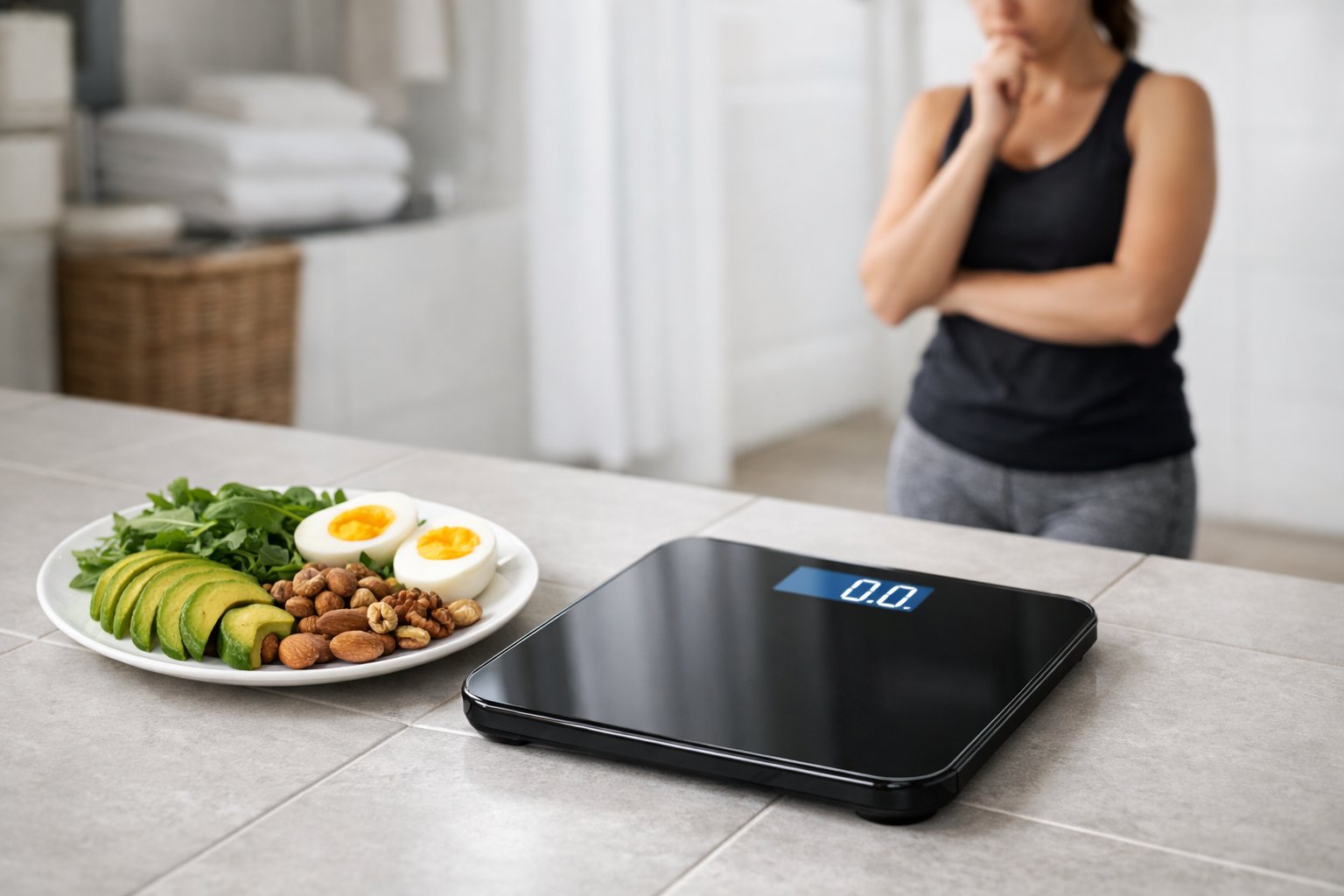
The real challenge is distinguishing between a misleading signal and a genuine stall. In some cases the body is still adapting to carbohydrate restriction, while in others subtle execution mistakes quietly offset progress.
This article explains why the scale can remain unchanged on keto, how to interpret those signals correctly, and when a stall actually indicates something that needs adjustment.
The Scale Is Not Moving on Keto — Does That Mean It’s Not Working?

When the scale stops moving, most people think keto isn’t working for them. But honestly, the scale only tells a tiny part of the story.
Weight loss almost never follows a straight line, even if you’re losing fat.
Why the Scale Becomes the Primary Metric
The scale is easy. It gives you a number, right now.
Most folks step on expecting to see progress, and when they don’t, it feels like failure.
This focus on the scale creates a narrow view of success. You might be shrinking your waist, feeling more energetic, or getting better blood sugar numbers—but if the scale doesn’t move, it’s easy to ignore all that.
The scale measures total body weight, not just fat. It includes water, muscle, bone, food in your system, and waste.
You could lose two pounds of fat, hold onto three pounds of water, and see the scale go up by a pound. It’s not always a fair judge.
The Assumption That Weight Loss Must Be Linear
Lots of people expect the number to drop every week—one or two pounds, like clockwork.
But weight loss just doesn’t work that way. Even if you’re strict, it comes in waves.
You might lose weight for a few weeks, then hit a plateau for a month, then start losing again. It’s frustrating, but it’s normal.
Plateaus that last up to three months aren’t rare. The body adjusts to burning fat at its own pace.
Hormones, water balance, and metabolism all play a role. Sometimes, the scale is reacting to those things, not actual fat loss.
The Real Question: No Fat Loss or Misleading Signal?
The real question is—has fat loss actually stopped, or is the scale just messing with you?
True fat loss can happen even if the number isn’t moving.
If you start exercising on keto, you might build muscle while losing fat. Muscle is denser than fat, so you could get leaner without seeing much change on the scale.
Water retention is huge, too. Hormones, stress, sodium, inflammation—they all make you hold water.
Women often gain a few pounds of water during parts of their cycle. And starting a new workout can cause your body to hang onto water as your muscles repair.
If your clothes are looser, your energy is up, or your health markers are better—even if the scale says otherwise—you’re probably still making progress.
What the Scale Actually Measures (And What It Doesn’t)
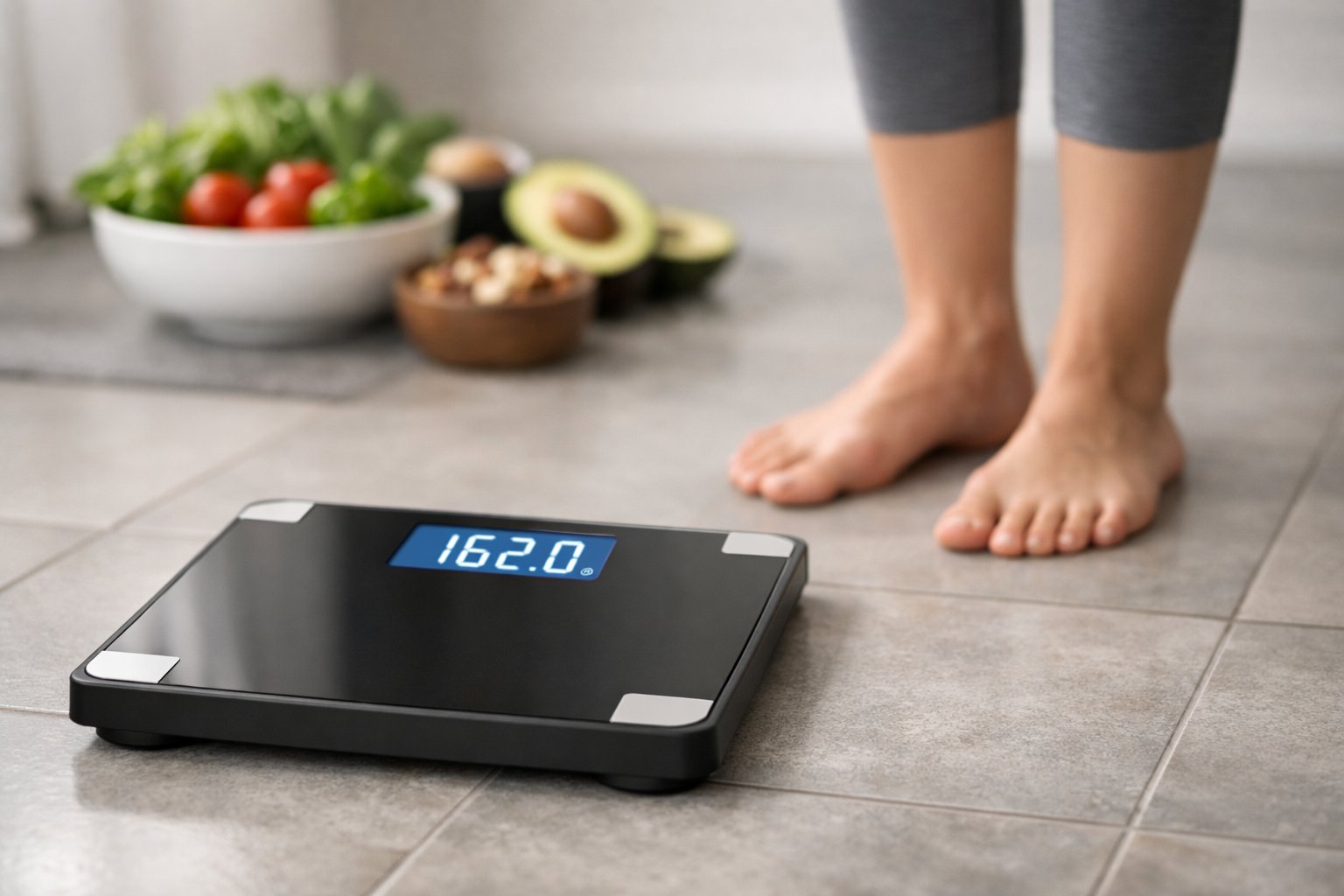
Your scale shows your total body weight at that moment. It doesn’t know the difference between fat, muscle, water, or what you just ate.
Water, Glycogen, and Digestive Content
Water weight is a big reason for daily ups and downs. Every gram of glycogen in your body holds about three grams of water.
When you start keto, you burn through those glycogen stores, and all that water gets flushed out.
The average person stores about 100 grams of glycogen in the liver and 350 to 700 grams in muscles. Losing those stores can mean dropping 4 to 8 pounds of water in the first week.
Food in your digestive system also adds weight. It can take a few days for food to fully pass through, so if you haven’t had a bowel movement, you might weigh more that day.
Keto often makes you pee more at first, too. That means more water loss, and it’s totally normal for the scale to swing 5 or 6 pounds in a single day.
Fat Mass vs Lean Mass Changes
The scale doesn’t care if you gain muscle or lose fat—it just adds it all up. A pound is a pound, but muscle takes up way less space than fat.
If you’re eating enough protein and working out, you could be building muscle while burning fat. The scale might stay flat or even go up, but your body is changing.
Key differences between muscle and fat:
- Muscle is denser than fat
- You can lose fat and gain muscle at the same time
- The scale might not move, but your body changes
You could lose two pounds of fat and gain two pounds of muscle in a week. Your clothes fit better, you look leaner, but the scale says nothing’s changed.
Why Body Composition Can Shift Without Scale Change
Fat loss and scale weight aren’t the same thing. You can get leaner even if the number doesn’t go down.
Exercise can cause temporary weight gain from muscle inflammation and extra glycogen in the muscles. Your body also holds more water to repair muscle after strength training.
Women can see 3 to 6 pound swings during their cycle thanks to hormones and water retention. A salty or carb-heavy meal can make you hold water for days, too.
That’s why the scale might not budge, even if you’re losing fat. Measurements, photos, and how your clothes fit tell a better story.
Understanding the science of ketosis explains why being in ketosis does not guarantee immediate scale movement.
Early Keto Adaptation and Temporary Weight Stalls
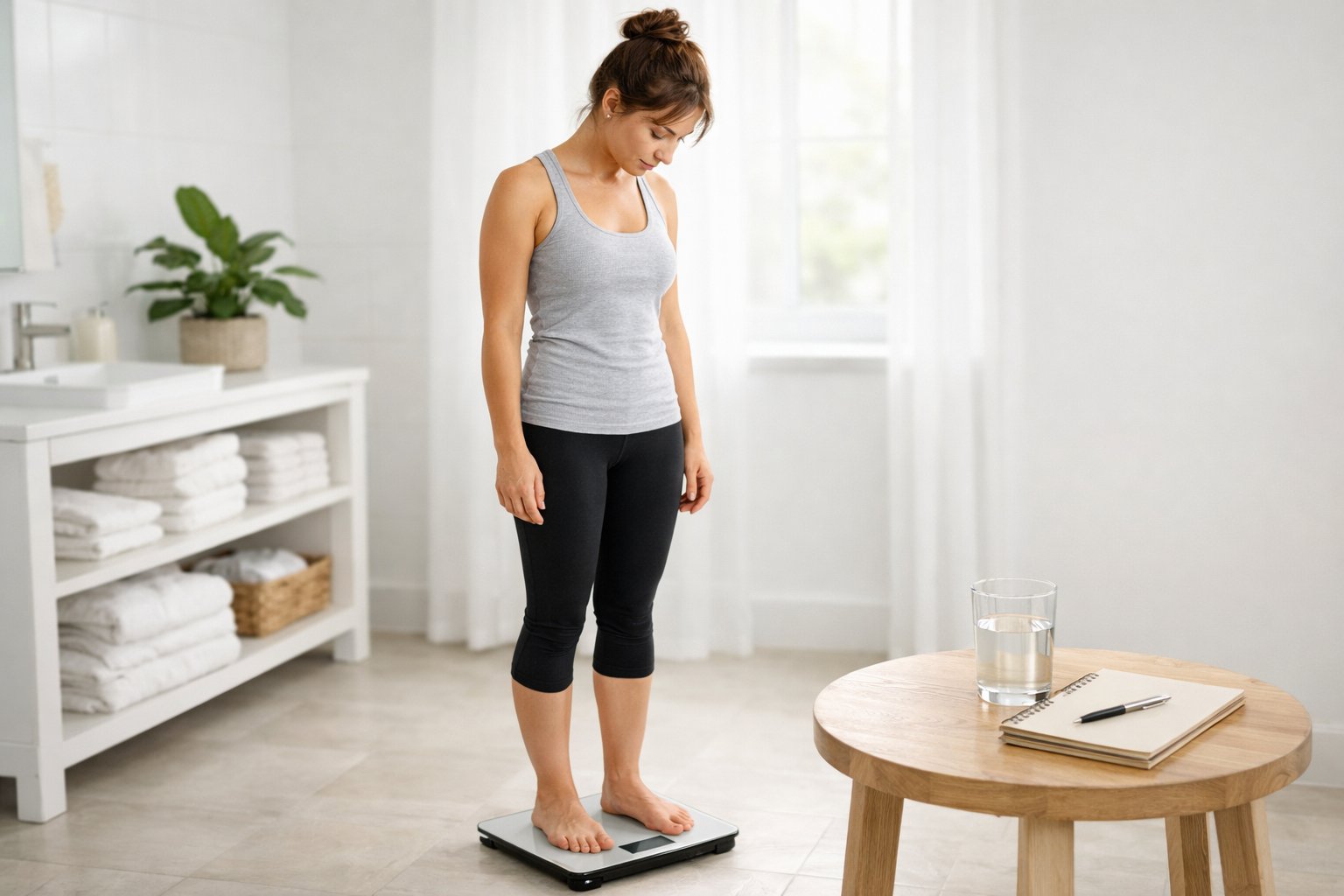
When you start keto, your body goes through some wild changes. The scale might stall or even go up for a week or two, but it’s usually just water, sodium, and shifting energy stores—not fat.
Glycogen Depletion and Replenishment Cycles
Glycogen is stored carbs in your muscles and liver, and it holds a lot of water.
During your first days on keto, you burn through these stores, which dumps a bunch of water and makes the scale drop fast. But after a week or two, things shift.
Your body starts adapting to burning fat. Glycogen and water levels settle into a new balance. Sometimes your body even refills a bit of glycogen, which brings water back.
This can add 2-5 pounds back to the scale, usually between week two and four. It’s temporary and doesn’t mean you’re not losing fat.
Sodium Shifts and Fluid Retention
Cutting carbs changes how your kidneys handle sodium. With less insulin, your body dumps more sodium and water at first.
After that initial flush, your body starts holding onto sodium again. Some people see mild fluid retention while things balance out.
Common sodium-related changes early on:
- Lots of urination in the first few days
- Sodium rebalancing in weeks two and three
- Temporary water retention (1-3 pounds)
- Things usually stabilize by week four
Getting enough salt (3,000-5,000 mg per day) helps keep things on track.
When the Body Stabilizes Before Releasing Weight
The early keto stall usually lasts a week or three. Your metabolism is shifting from burning sugar to burning fat, and it just takes time.
Fat loss keeps going, even if the scale is stubborn. You might notice more energy or looser clothes, even if the number doesn’t move.
After this phase, most people see the scale start to drop again. The timeline is different for everyone, but usually, weight loss picks up after week four. Hang in there—your body is doing a lot behind the scenes.
Many early stalls become easier to interpret once you understand normal keto adaptation timelines and how the body adjusts during the first weeks.
Hidden Execution Errors That Mimic “Doing Everything Right”
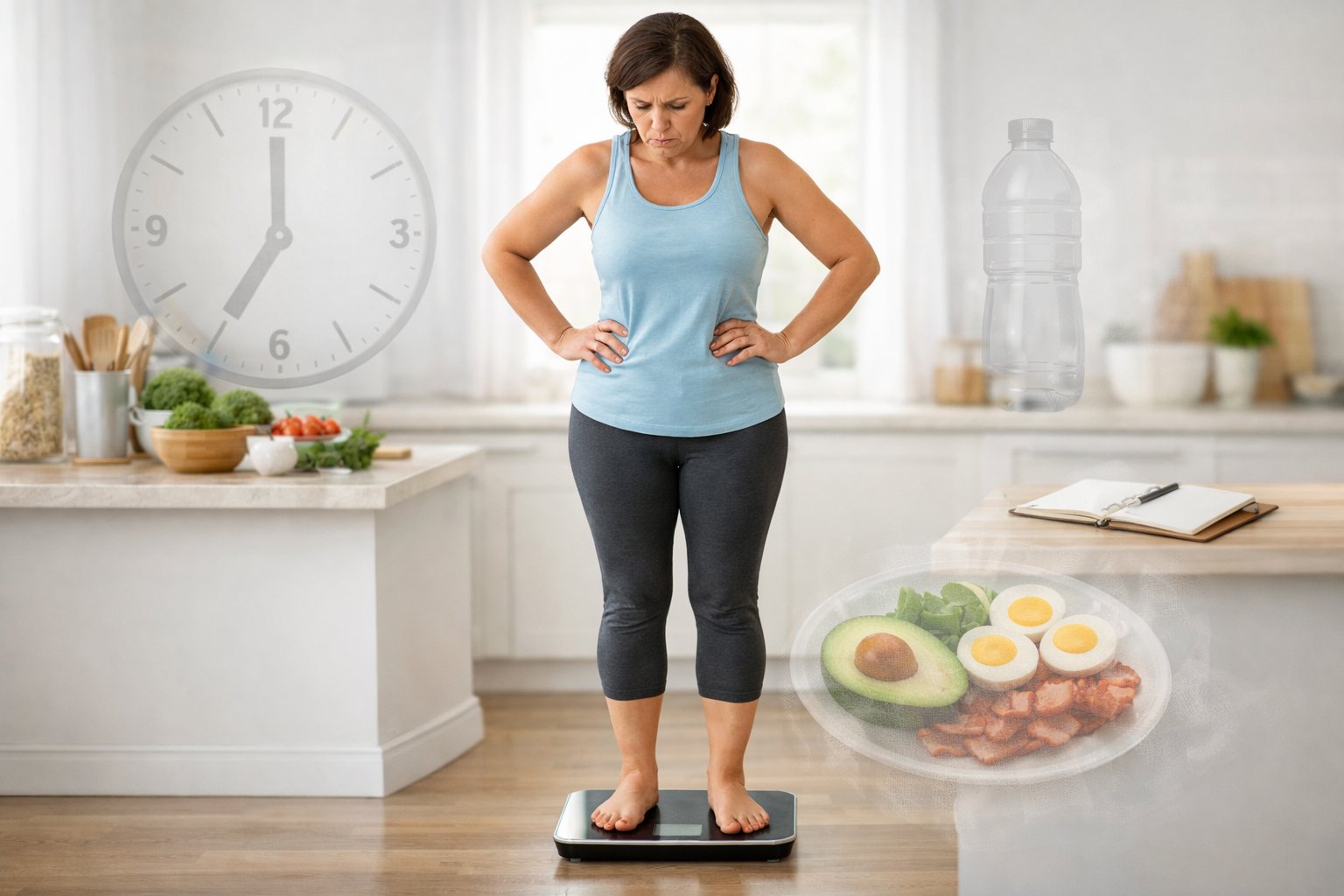
Sometimes, weight stalls aren’t because keto doesn’t work—it’s just sneaky tracking errors piling up. These mistakes hide in plain sight, so it feels like you’re doing everything right even if your carbs or calories are higher than you think.
Underestimating Carb Intake
Hidden carbs are a huge keto trap. Packaged foods marked “keto-friendly” can have more carbs than you’d guess.
Sauces and condiments often sneak in several grams per serving. Ketchup has 4-5 grams per tablespoon, and BBQ sauce can have 12-15 grams in just two tablespoons. Even “sugar-free” stuff can use sweeteners that still affect blood sugar.
Veggies add up, too. A cup of cherry tomatoes is 6 grams, a bell pepper is 4-6 grams, and even onions or garlic can tack on a gram or two per clove or tablespoon.
Common sources of hidden carbs:
- Salad dressings and marinades
- Processed meats with fillers
- Medications and supplements
- Pre-shredded cheese with anti-caking agents
Before assuming a true stall, it is important to rule out hidden carb sources that may quietly disrupt progress.
Portion Drift and Calorie Creep
Keto “calorie creep” is real—portion sizes just seem to grow over time. Eyeballing a tablespoon of olive oil? It’s probably two, and that’s an extra 120 calories.
Nuts are a classic problem. An ounce of almonds is about 23 nuts and 164 calories, but most people eat two or three times that straight from the bag.
Cheese portions double or triple before you know it. What starts as one ounce can turn into three, adding over 200 calories. Fats like butter, mayo, and oils are sneaky, too—just a tablespoon is 100-120 calories.
Try using a food scale for a couple of weeks. Most people find they’re underestimating by 20-30% when they eyeball portions. It’s eye-opening, honestly.
Keto Snacks and Liquid Calories
So many keto snacks made for convenience can trigger weight stalls. These products often sneak in artificial sweeteners, extra calories, or inflammatory stuff that gets in the way of fat loss.
Keto bars and cookies? They usually run 200-400 calories each. If you eat a couple a day, that’s 400-1200 calories that don’t really feel like “real food” to your brain.
Fat bombs taste great, but just one bite can be 100-200 calories. Easy to lose track.
Liquid calories are even sneakier. Heavy cream in coffee adds about 50 calories per tablespoon, and let’s be honest, most people use more than one.
Bulletproof coffee can hit 300-500 calories in a cup. MCT oil, protein shakes, and flavored electrolyte drinks all add up, too, but don’t really fill you up.
Diet sodas and artificially sweetened drinks might be calorie-free, but they can still trigger cravings or even insulin responses for some folks. Swapping them out for water, black coffee, or plain tea can sometimes break through those keto snack stalls.
Learning how to calculate macros accurately often reveals hidden calorie drift even when carb intake remains low.
Protein and Fat Imbalance
Messing up the protein-to-fat ratio is a macro mistake that slips under the radar. Eating too much fat just means your body burns what you eat, not what’s stored.
Some people add fat to everything, hoping for faster results. But honestly, fat should satisfy hunger—not be forced in. If you’re piling on butter, cheese, and cream with fatty meats, you might hit 150-200 grams of fat daily, when 70-100 grams would do.
Too little protein is a problem, too. It leads to muscle loss and slows down your metabolism. Women generally need 80-120 grams a day, depending on body size and activity. Men usually need 120-180 grams.
Prioritizing protein at every meal and letting fat adjust for hunger works better than just chasing more fat.
People who feel the scale is frozen often discover the deeper explanation in why they are not losing weight on keto despite following the rules.
When the Scale Stall Is a Tracking Illusion
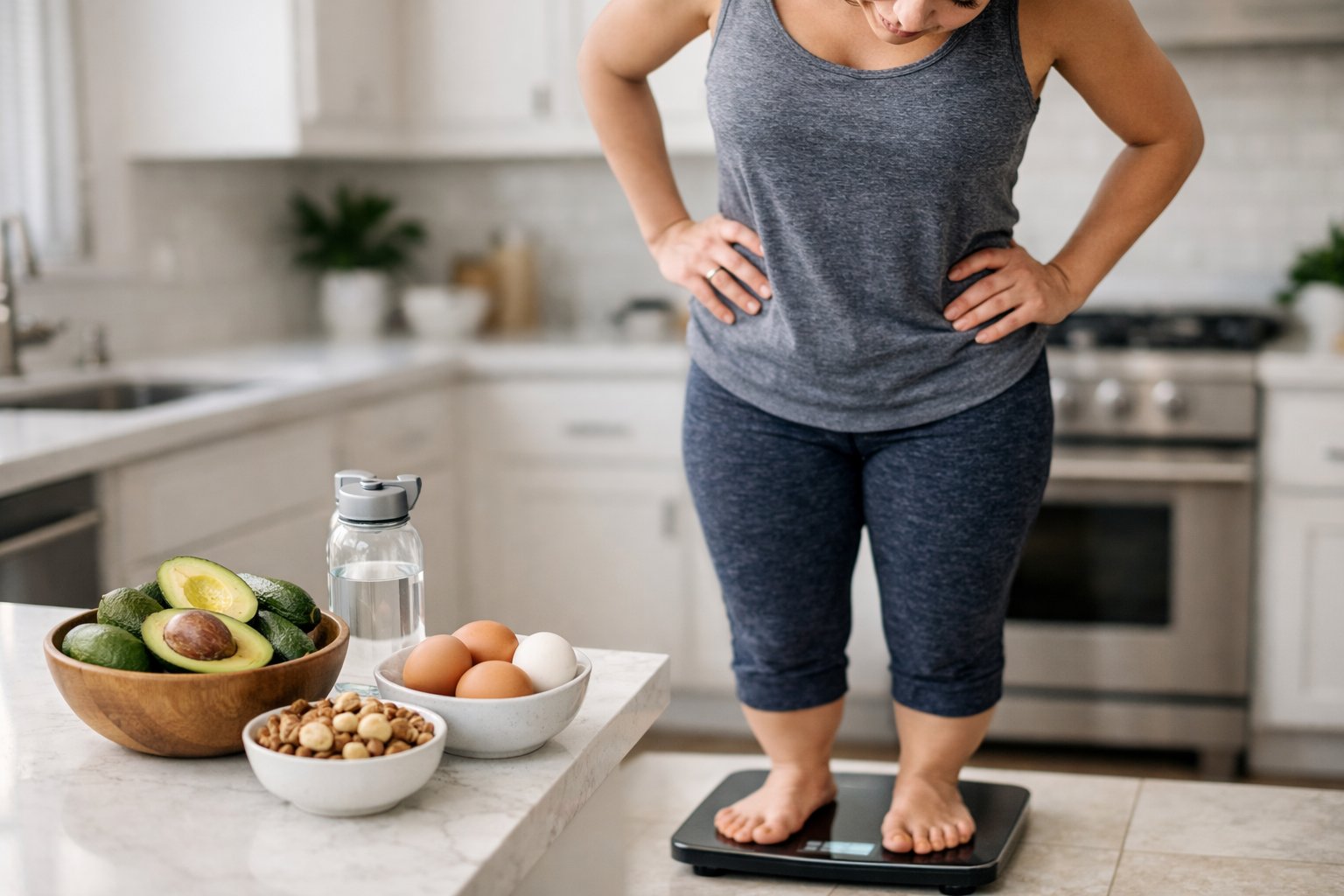
The scale might not be stuck at all. On keto, daily weight swings can hide actual fat loss, making it look like nothing’s happening when your body is changing.
Inconsistent Weighing Conditions
The time of day you weigh yourself matters more than most realize. If you weigh in the morning one day and at night the next, you might see a 3-5 pound difference that’s got nothing to do with fat.
Body weight shifts all day based on what you eat, bathroom trips, and how much water you’ve had. Drink a liter of water and you might be two pounds heavier on the scale.
Factors that affect weigh-in consistency:
- Time of day (morning vs. evening)
- Clothing weight
- Food still digesting from previous meals
- Bladder and bowel fullness
- Scale placement on different surfaces
Weighing at the same time each day, preferably first thing in the morning after using the bathroom and before eating, is the best bet. That strips away most of the random noise.
Hormonal Water Retention Fluctuations
Women deal with hormonal water retention that can hide fat loss for weeks. Estrogen and progesterone shift during the cycle, so the body can hold onto 2-7 pounds of water without warning.
This water weight usually peaks right before a period starts. You might lose fat consistently but see the scale stay put or even climb the week before your period.
Men aren’t totally off the hook, either. Stress hormones like cortisol cause water retention for everyone. Bad sleep or high stress can tack on 2-4 pounds overnight.
After hormones settle, the scale sometimes drops fast. You might see no change for two weeks, then suddenly lose 3-4 pounds in a couple days as the water flushes out.
Digestive Slowdown and Fiber Changes
Keto changes how digestion works. Most people eat less fiber when they cut carbs, and that slows things down in the bathroom.
Slower transit time can mean carrying around an extra 1-3 pounds of digestive weight. It feels like a stall, but it’s not fat gain—just, well, slower plumbing.
Common digestive factors affecting scale weight:
- Reduced bowel movement frequency
- Lower food volume passing through intestines
- Changes in gut bacteria
- Less water pulled into the colon
If you switch from lots of veggies to mostly meat and cheese, you’ll naturally have less bulk in your system. That alone can make the scale look stuck even while fat is dropping.
Metabolic Adaptation vs Early Misinterpretation
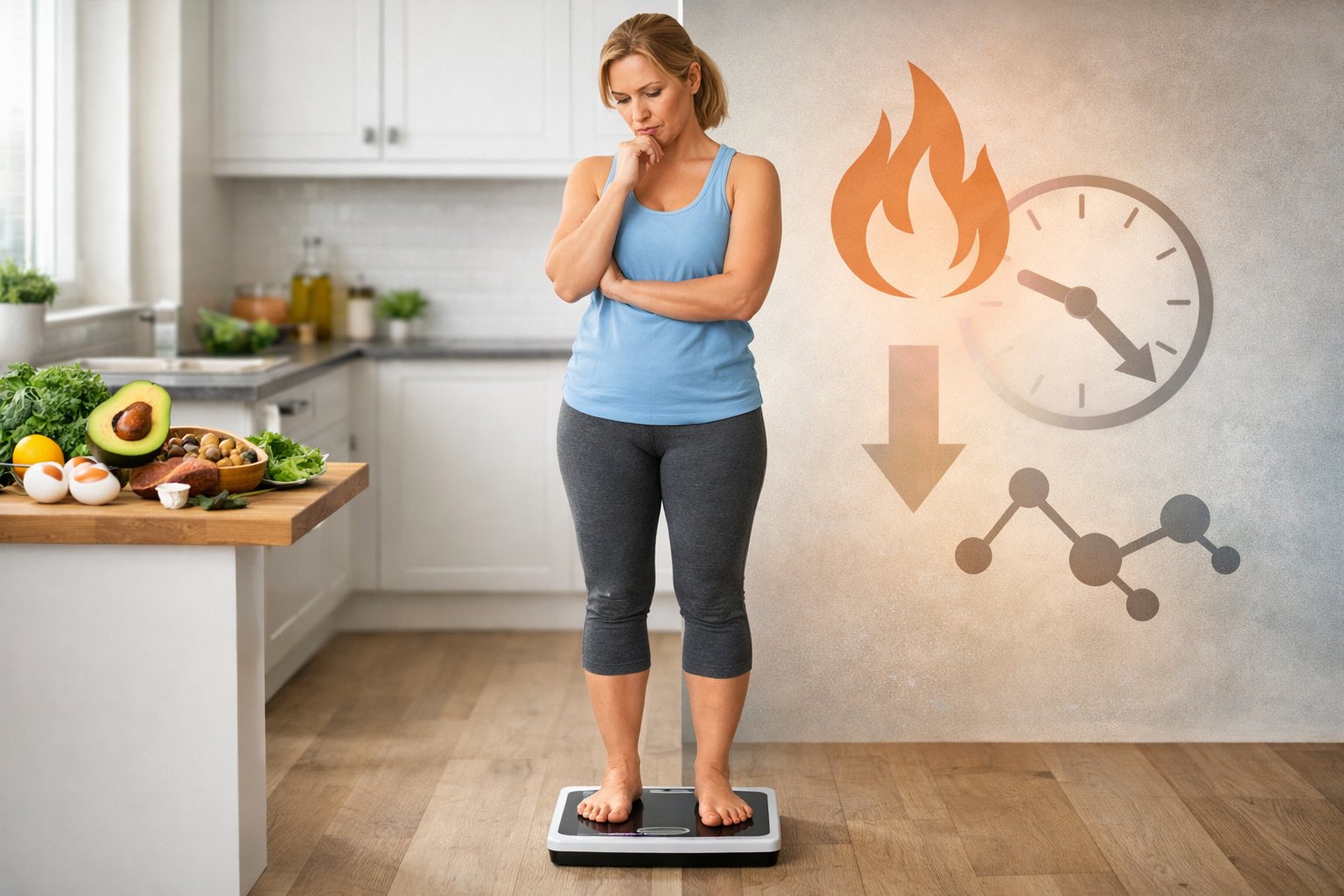
People often worry their metabolism has crashed after just a few days of no movement on the scale. But real metabolic adaptation takes time—weeks, not days. Early weight swings are usually just normal body stuff, not a broken metabolism.
The Myth of Immediate Metabolic Slowdown
Metabolic adaptation doesn’t kick in during the first couple weeks of keto. The body needs time to adjust how it burns energy after calorie restriction and weight loss.
When you start keto, most of the early weight loss is just water and glycogen dropping off. Once that phase ends—usually around week two—the scale naturally slows down. That’s not adaptation, just a shift from water loss to actual fat loss.
Research shows metabolic adaptation means your body burns fewer calories than expected for your new weight, but this happens slowly, over weeks or months. A three-day stall in week one is just noise, not a crisis.
The body lowers metabolic rate as a survival mechanism with long-term calorie restriction. This takes time—it’s not instant.
Why Week-to-Week Data Matters More Than Daily Fluctuations
Daily weigh-ins mostly show normal ups and downs, not real progress. Your weight can bounce 2-5 pounds in a day from water, food, or hormones.
Weekly or bi-weekly trends tell the real story. You might be 180 on Monday, 182 on Wednesday, 179 on Friday—still losing fat the whole time.
Women get even more fluctuations from their cycle. Water retention can hide fat loss for up to two weeks at certain times. The scale might not budge, even if keto is dialed in.
Tracking measurements along with weight gives a better picture. Sometimes the scale stalls while your waist shrinks. Relying just on the number can be frustrating and misleading.
Differentiating True Stall From Normal Variability
A real plateau means no change in weight or measurements for 3-4 weeks, even with a calorie deficit. Less than three weeks? That’s just normal fluctuation.
Signs of normal variability:
- Weight bounces up and down during the week
- Measurements keep changing, even if weight doesn’t
- Energy levels are steady
- Clothes start fitting differently
Signs of true metabolic adaptation:
- No change in scale or measurements for over 4 weeks
- Noticeably lower energy
- Body temperature feels cooler
- Worse sleep quality
Most people see normal ups and downs, not true stalls, in their first month of keto. Fat gets released from cells before it’s eliminated, so you might lose fat while the body holds onto water temporarily.
Expecting weight loss to be perfectly steady just sets you up for disappointment. Fat loss usually comes in steps—nothing for a while, then a sudden drop.
Research shows that metabolic responses to carbohydrate restriction vary widely between individuals.
Lifestyle Factors That Quietly Affect the Scale
Even with perfect keto macros, daily habits like sleep, stress, and movement can shift water weight and mask fat loss for days or even weeks.
Stress, Cortisol, and Water Retention
Chronic stress bumps up cortisol, a hormone that tells your body to hold onto water and sodium. When cortisol stays high, tissues keep more fluid to handle the stress.
Work deadlines, lousy sleep, hard workouts, or life stuff all push cortisol up. The scale reads higher, but it’s not fat.
High cortisol can also slow digestion and make you crave salty or sweet foods. That just adds more water weight from sodium and glycogen storage.
Signs stress is affecting the scale:
- Weight stays flat even with consistent keto meals
- Waist measurement drops a bit or stays the same
- Clothes feel tighter around the middle
- Energy is low, even with enough food
Managing stress doesn’t have to be dramatic. Short daily walks, getting seven to nine hours of sleep, and cutting caffeine after noon can drop cortisol and help your body shed water in just a few days.
Sleep Quality and Recovery
Poor sleep messes with hunger hormones and keeps cortisol up. Less than seven hours a night, and your body hangs onto water and slows fat loss.
Short sleep boosts ghrelin (makes you hungry) and drops leptin (signals fullness). That combo makes it harder to stick to your plan.
Sleep also affects digestion. Eating late at night means more food in your gut, which shows up as extra weight in the morning.
Sleep habits that support scale movement:
- Aim for 7-9 hours in bed each night
- Keep your bedroom cool and dark
- Skip screens and caffeine three hours before bed
- Eat your last meal two to three hours before sleep
Better sleep often triggers a quick drop in water weight—sometimes in just a couple days—as cortisol drops and digestion evens out.
Low energy and stalled weight loss sometimes resemble common keto fatigue patterns rather than a metabolic slowdown.
Activity Levels and Non-Exercise Movement
Daily steps and light movement matter more than most people think. Non-exercise activity thermogenesis (NEAT) covers walking, standing, fidgeting, and chores—basically, calories burned outside the gym.
When NEAT drops, fat loss can stall—even if your workouts are solid. Working from home, cold weather, or a packed schedule can quietly cut your daily movement by thousands of steps.
NEAT usually accounts for 15-30% of total daily energy burn. Dropping from 10,000 steps to 5,000 means burning 200-300 fewer calories a day, without changing your diet or gym time.
Tracking steps can reveal why the scale’s not moving. Adding a 10-15 minute walk after meals or parking farther away brings movement back up—no extra gym time needed.
Strength training can cause temporary water retention as muscles repair. It’s normal and actually helps with long-term fat loss, but it can hide progress for a day or two after tough workouts.
Long-term progress often requires learning how to personalize your keto diet instead of relying on fixed macro templates.
When a Non-Moving Scale Is Actually Progress
The scale staying flat doesn’t always mean nothing’s happening. Some of the best changes happen in body composition and measurements, not just total weight.
Recomposition: Losing Fat While Gaining Lean Tissue
Body recomposition on keto is all about burning fat while building or at least keeping muscle. The scale might not budge, since muscle weighs more per unit of volume than fat.
You could lose two pounds of fat and gain two pounds of lean muscle, so the number on the scale doesn’t move at all. That can be a little frustrating, but it’s surprisingly common, especially in the first few months of keto—more so if you’re lifting weights or doing resistance training.
Even if your weight stays the same, your body composition can shift a lot. Suddenly, your clothes fit differently, especially around the waist and hips, yet the scale refuses to cooperate.
Signs you’re actively recomposing:
- Getting stronger in the gym
- Muscle definition is more obvious
- Clothes feel looser even though weight is stable
- Body shape looks different
Reduced Inflammation and Fluid Shifts
Keto tends to lower inflammation, which changes how your body holds onto water. As inflammation drops, you lose some of that extra water that was hanging out in swollen tissues.
But here’s the kicker: sometimes, as fat gets broken down, fat cells fill up with water for a while instead. It’s like your body is playing tricks, holding onto water just as you’re burning fat.
This can keep the scale stuck, even if you’re actually losing fat. Eventually, that water leaves—sometimes all at once—so you might see a sudden drop after weeks of nothing.
Lower inflammation can mean less joint pain, clearer thinking, and better energy. Those are wins, even if the scale isn’t telling the full story.
Waist Measurements vs Scale Weight
Honestly, measuring your waist is usually more telling than obsessing over the scale. You could drop two or three inches from your waist while your weight barely changes.
This happens because you’re losing visceral fat around your organs, while muscle mass is going up somewhere else. The scale just can’t keep up with those details.
Measuring your waist once a week—at the narrowest point, just above the belly button—shows what’s really happening. Try to do it at the same time each day, ideally in the morning before breakfast.
If your waist is shrinking but your weight isn’t, you’re still making progress. This is especially true if you’re working out or following keto pretty closely.
If the scale stall leaves you questioning whether keto is working at all, the full diagnostic guide in Why Keto Is Not Working for Me can help identify whether the issue is adaptation, execution drift, or a deeper structural mismatch.
What To Adjust If the Scale Hasn’t Moved

If your weekly averages and waist size don’t budge for two to four weeks, it’s time to tweak something. No need to guess wildly—just figure out whether carbs, fat, or protein need adjusting, without going overboard.
Revalidating Net Carbs and Macro Accuracy
“Carb creep” is a sneaky reason keto stalls after a good start. Little bits of nuts, “keto” snacks, or low-carb tortillas add up faster than you’d think.
For example, a tablespoon of almond butter has 3-4 grams of net carbs. Three servings a day? Suddenly, you’re over your limit and didn’t even realize it.
If the scale’s stuck, try tracking everything for a week—use a food scale for oils, cheese, nuts, and protein. Write down every bite, even the tastes while cooking or the splash of cream in your coffee.
People often underestimate fat by 200-400 calories a day just by eyeballing. Compare net carbs to total carbs. Some veggies—onions, peppers, tomatoes—pack more carbs than you’d expect.
A medium tomato is 4-5 grams of net carbs. Two cups of cooked broccoli? Six more grams. If you’re aiming for under 20-30 grams of net carbs, precision matters.
If you eat a lot of packaged foods, read the labels. “Net carbs” on products can be misleading, especially when they subtract questionable fibers or sugar alcohols. When in doubt, just count total carbs instead.
Reducing Added Fats if Calories Drifted Up
Fat makes keto satisfying, but it’s easy to overdo. One tablespoon of olive oil or butter is 120 calories. Add an extra tablespoon per meal and you’ve got 360 extra calories a day—enough to erase any deficit.
Some folks add fat just to hit macro percentages, forgetting about total calories. But keto doesn’t require eating fat past the point of fullness. The body will happily burn stored fat if you’re in a deficit.
Places where fat sneaks in:
- Cooking oils and butter (try using a spray or just less overall)
- Coffee add-ins like heavy cream, MCT oil, butter (maybe pick just one or measure more carefully)
- Cheese (actually weigh it—an ounce is smaller than you think)
- Nuts and seeds (portion these out ahead of time; eating from the bag is dangerous)
- Fatty meats (swap ribeye for sirloin, or chicken thighs for breast here and there)
Cutting 200-300 calories from fat each day is usually enough to get things moving again, and you likely won’t feel hungrier. Keep protein and veggies high so you don’t lose muscle or feel deprived.
Increasing Protein to Support Lean Mass
Protein is your friend for muscle and keeping hunger at bay. Some keto plans keep protein low out of fear it’ll “kick you out of ketosis,” but that’s not really an issue for most people.
Getting enough protein protects muscle and helps you feel full, making it easier to stay in a deficit. Aim for 0.7-1.0 grams of protein per pound of your goal weight. So, if your goal is 150 pounds, shoot for 105-150 grams a day.
Spread it out—30-50 grams per meal is a good target. That helps with muscle building and keeps cravings away later on.
Some high-protein, low-fat keto foods:
- Chicken breast, turkey breast, lean pork loin
- White fish (cod, tilapia, halibut)
- Shrimp, scallops, crab
- Egg whites (add a couple whole eggs for taste)
- Greek yogurt (plain, full-fat, but don’t go overboard)
- Protein powder (whey or casein, unsweetened)
If you’ve been eating lots of fat and just enough protein, try shifting 100-200 calories from fat to protein. It keeps your total calories about the same, but you’ll likely notice better body composition and less hunger. And if you’re lifting weights, that’s even better.
Avoiding Overcorrection Through Extreme Restriction
Slashing calories too hard is just asking for trouble. Big deficits crank up hunger, zap your energy, mess with sleep, and slow your metabolism.
It’s tempting to cut 500-800 calories overnight when you’re frustrated, but that usually backfires. Instead, make one small change—trim 100-200 calories from fat, walk an extra 1,000-2,000 steps a day, or swap 20 grams of fat for 20 grams of protein.
Wait a couple weeks, check your averages and waist size, and only tweak again if needed. If you’re always tired or hungry, maybe take a short break at maintenance calories for a week or two. Your hormones and sleep will thank you, even if your weight creeps up a bit from water or glycogen. Fat loss picks up again once you’re back on track.
Going too low on calories also risks losing muscle, which slows your metabolism. Keep protein up, make only moderate cuts, and be patient. Losing half a percent to one percent of your body weight per week is more sustainable than crash diets, and you’ll keep more muscle.
If the scale stall reflects deeper macro imbalance or metabolic mismatch, a structured plan built around your metabolic profile can resolve the issue more effectively than repeated trial-and-error adjustments.
When a Persistent Scale Stall Signals a Deeper Issue
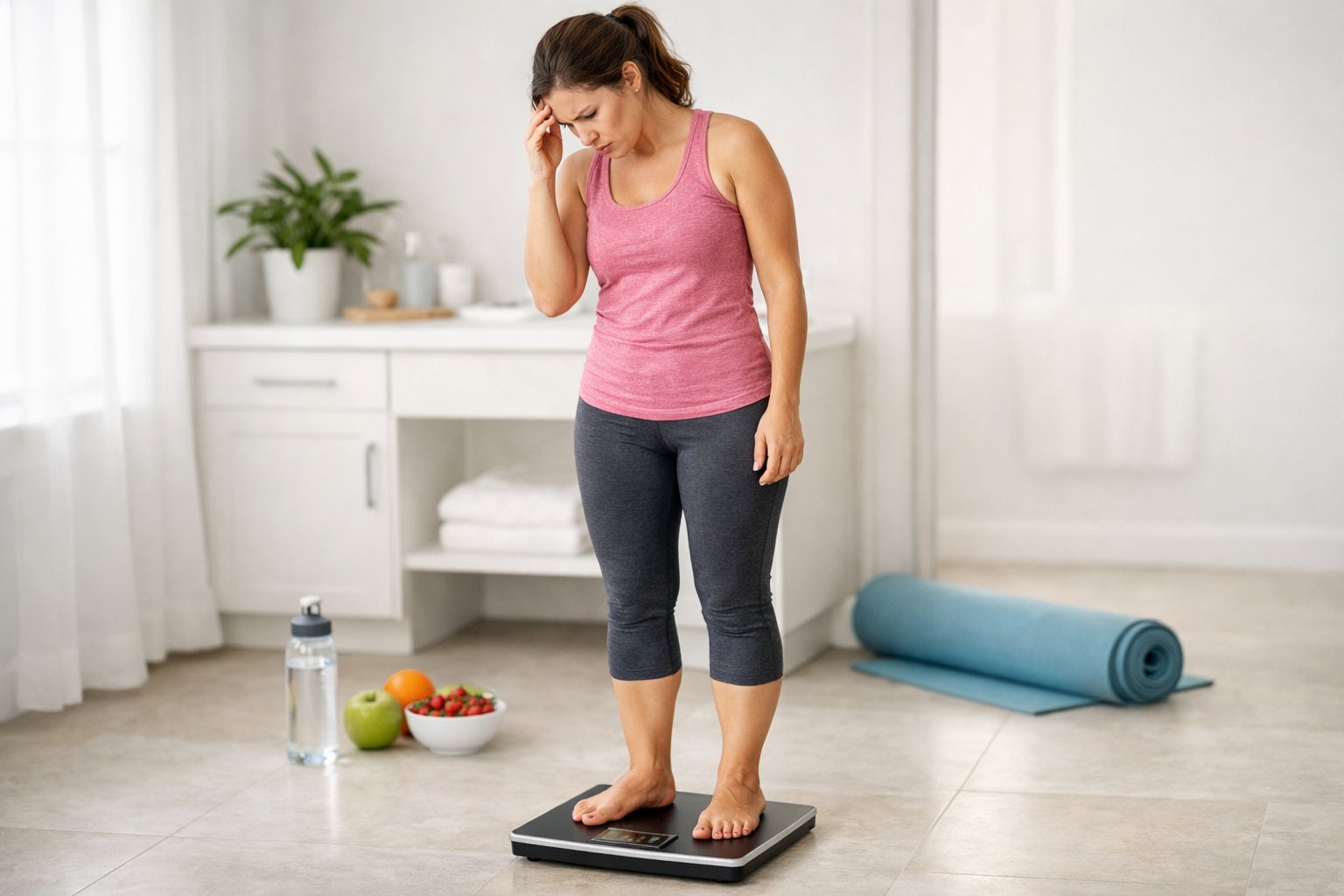
If a stall lasts over a month or you see troubling changes in metabolic markers, there might be something else going on. High blood glucose or signs of hormone imbalance could mean your body’s fighting you every step of the way.
More Than 3–4 Weeks Without Downward Trend
If you’ve seen no weight loss for three or four weeks straight, despite sticking to keto, that’s worth paying attention to. A real plateau isn’t just a week or two of bouncing around—it’s a longer stretch where even your body measurements don’t change.
Weight can swing by a few pounds from water, digestion, or hormones. But if both the scale and your waist are stuck for weeks, it might be a metabolic or hormonal issue.
Some health conditions make fat loss way harder. Thyroid issues slow your metabolism, so even with calorie cuts, weight loss stalls out. PCOS can mess with insulin and fat storage, too.
If this sounds like you, track more than just weight—waist size, how your clothes fit, and your energy are all good clues. If nothing’s changing after four weeks, it could be time to check in with your doctor.
Consistently Elevated Blood Glucose
On keto, fasting blood glucose should usually fall between 70-90 mg/dL. If you’re seeing numbers above 100 mg/dL regularly, your body might not be responding to keto the way it should.
Sometimes the liver produces extra glucose through gluconeogenesis, especially if stress hormones are high or you’re insulin resistant. Even with low carbs, the body can keep releasing glucose.
Some folks test their blood sugar and see it stay high, even after weeks of solid keto. This is common if you already have insulin resistance or metabolic syndrome—the cells just aren’t listening to insulin like they should.
Certain meds, like steroids or beta-blockers, can also push blood sugar up. If you’re on those, you’ll want to talk with your doctor about it.
Signs of Insulin Resistance or Hormonal Interference
Insulin resistance means your cells ignore insulin, so your pancreas pumps out more to get the job done. Higher insulin levels make it tough to burn fat—your body just wants to store it instead.
Look for signs like dark patches on your neck or armpits, crashing after meals, or sugar cravings that won’t quit even when you’re eating enough fat and protein. If your waist is over 35 inches (women) or 40 inches (men), that’s a red flag for visceral fat and insulin resistance.
Other hormones can slow weight loss, too. Chronic stress raises cortisol, which tends to pile fat around your middle. Low thyroid function drags down your metabolic rate—sometimes by a lot—making a calorie deficit nearly impossible.
Women with PCOS often hit weight loss walls due to high androgens and insulin issues. Men with low testosterone have a similar struggle, since that hormone helps keep muscle and burn fat.
Blood tests can spot these problems—fasting insulin, A1C, thyroid panel, and sex hormones are all helpful. If your fasting insulin is above 5 μIU/mL or A1C is over 5.7%, it’s worth a deeper look with your healthcare provider.
Diagnostic Summary: Why the Scale Is Not Moving on Keto
The scale can stall for a few reasons: normal metabolic adaptation (which is nothing to panic about), small mistakes that add up over time, or lifestyle stuff like water retention. Figuring out which one fits makes all the difference in what you do next.
If Your Stall Is Likely Normal Adaptation
If you’ve been doing everything right and the stall is under three months, it’s probably not a true plateau. Body weight bounces around daily from water, salt, or just how much food’s in your gut.
Studies on diabetes programs show most keto folks lose steadily for nine months, then hit a plateau for three months. That’s just how it goes—the body finds a new normal and settles in for a bit.
Weight loss is rarely a straight line. It comes in bursts: two pounds down, one up, two weeks flat, then three pounds gone overnight. It’s maddening, but totally normal.
Signs you’re just adapting:
- Your health markers are still getting better
- Clothes fit better even if the scale is stubborn
- You feel good and hunger is under control
- The stall hasn’t lasted more than 12 weeks
- Your body shape is changing—more muscle, less fat
If Execution Drift Is the Hidden Cause
Small changes in food choices often slip in without us noticing. Over time, these little shifts can add up—what researchers sometimes call “carb creep” or sneaky calorie excess that quietly stalls weight loss.
Hidden carbs lurk in all sorts of places: processed meats, sauces, and those packaged “keto” snacks you might grab in a pinch. Maybe it’s a tablespoon of dressing here, an extra ounce of cheese there, or just a few more nuts than planned. Funny how fast it adds up.
Dairy and nuts are classic culprits. They’re technically keto-friendly, but it’s easy to overdo it and slow your progress.
Protein is another thing to keep an eye on. Not getting enough can leave you hungry or risk muscle loss. On the flip side, too much just means more calories your body doesn’t need, which can get in the way of fat burning.
Common execution drift issues:
- Snacking between meals just because, not out of real hunger
- Portion sizes slowly creeping up over time
- Bringing back higher-carb veggies like carrots or squash
- Using more cream, cheese, or butter than you realize
- Forgetting to track food after some early weight loss wins
If Lifestyle Factors Are Driving Water Retention
Water weight is tricky—it can completely mask fat loss for weeks. Hormones, stress, how hard you exercise, and even how much sodium you eat all mess with how much water your body hangs onto.
Women especially notice cyclical water retention with their menstrual cycle. The scale might jump up five pounds, then drop back down just as fast. Intense resistance training? That’ll make your muscles hold onto water for repair, at least for a bit. And a salty meal? Expect to feel puffier for a day or two.
Cortisol from stress or lousy sleep can also make you retain water. Alcohol, flying across time zones, or just eating late at night—these all play a part in water balance too.
Fat burning doesn’t actually stop during these times. It’s just hidden for a while on the scale. Honestly, body measurements and how your clothes fit are a better gauge when this happens.
What This Means for Your Next Step
The response depends on the diagnosis:
If normal adaptation applies, just keep going with what you’re doing. Maybe shift your focus to non-scale victories for a while.
Try tracking things like measurements, energy, or health markers instead of obsessing over the scale every day.
If execution drift is the culprit, it’s probably time to tighten things up for a week. Cut out nuts and dairy for now.
Stop snacking, stick to actual meals, and measure your portions—eyeballing it rarely works as well as we hope.
If water retention is hiding your progress, ignore the daily ups and downs. Look at weekly or monthly patterns instead.
Weigh yourself at the same time and under the same conditions each time. Measuring your body every couple of weeks can also give you a clearer picture.
A real keto weight stall that calls for major changes usually doesn’t happen until you’ve seen absolutely zero progress for three months straight—while following the diet correctly, of course.
Until then, it’s usually about figuring out which of these three issues is throwing you off.