
How to Measure Keto Progress: Key Metrics Beyond the Scale
Many people judge the success of a keto diet by one number: the reading on the bathroom scale. When that number fails to change as quickly as expected, it’s easy to assume keto is not working.
The problem is that body weight reflects only one aspect of progress. During the early stages of keto, changes in water balance, glycogen stores, appetite, energy, and body composition can all occur before meaningful fat loss appears on the scale.
Focusing only on weight often causes people to overlook important improvements that indicate their body is adapting successfully. This can lead to unnecessary frustration and cause them to abandon a plan that is actually moving in the right direction.
This guide explains how to measure keto progress beyond the scale, which indicators deserve the most attention, and when slower progress may require a closer look.
How to Measure Keto Progress Beyond the Scale

The scale just spits out a number. It doesn’t care if you’re losing fat or gaining muscle. Water weight, muscle gain, and fat loss can all mess with what you see on the scale, so it’s not the best way to judge keto progress.
Why Many Beginners Judge Progress Too Early
Most folks on keto see a quick drop in weight the first week or two. It feels awesome, but it’s mostly water weight, not fat.
Your body stores carbs as glycogen, and each gram of glycogen holds onto water—like 3-4 grams of it. Cut the carbs and that water gets flushed out, so you can drop 5-10 pounds in a matter of days.
It’s easy to think that rapid loss will keep happening, but after the first couple weeks, things slow down. Sometimes the scale just stops.
That’s when people get discouraged, but honestly, this is the point where real fat burning starts. Your body needs a few weeks—maybe three or four—to really switch over to burning fat for fuel.
During this adaptation time, the scale might not move at all, but your body composition could be shifting anyway.
Weight Loss vs Overall Keto Progress
Weight loss is just one piece of the puzzle. The scale can’t tell you if you’re losing fat, water, or even muscle.
You might lose two pounds of fat and gain a pound of muscle, and the scale only shows a one-pound change. Not exactly the whole story.
Body composition matters more than the number. You could lose inches from your waist, fit into smaller clothes, and look way leaner—without the scale budging.
Fat takes up more space than muscle, so losing fat and gaining muscle actually makes you look slimmer, even if the number stays put.
Key differences between scale weight and real progress:
- Scale weight includes water, muscle, fat, bone, and organs
- Body fat percentage shows actual fat loss
- Measurements reveal where fat is coming off
- Energy levels indicate metabolic health
- Blood markers demonstrate internal improvements
Plenty of people see better blood sugar, sleep, less inflammation, and clearer thinking on keto. None of that shows up on your bathroom scale.
What This Article Will Help You Measure Instead
To really track keto progress, you need more than a scale. Grab a tape measure and check your waist, hips, chest, arms, and thighs every couple of weeks—that’s where you’ll see the real changes.
Progress photos are super helpful, too. Snap pictures from the front, side, and back, always in the same lighting and clothes, every month. You’ll spot changes you’d never notice day to day.
How your clothes fit is huge. If your jeans are getting looser or shirts fit better, you’re losing fat—even if the scale won’t admit it. Some people drop a size or two with barely any scale movement.
Then there’s energy, mental clarity, and physical performance. If you’re feeling better, working out stronger, or staying focused longer, those are signs your metabolism is shifting. Sometimes these improvements show up before the weight loss does.
Triage — Are You Actually Making Progress?
Figuring out where you stand on keto means looking at specific markers—not just guessing. Some changes mean you’re adapting, others mean you’re stuck or need to tweak your approach.
Signs You’re Making Good Progress
Steady energy all day, no big crashes, and not needing to snack constantly? That’s a big win. It means you’re burning fat for fuel, not just sugar.
Mental clarity gets better, too. You might notice you can focus longer at work or when you’re studying.
Hunger gets less intense and easier to handle. It’s not unusual to go 4-6 hours between meals without feeling desperate. Sugar cravings might even vanish.
Physical signs:
- Clothes fitting looser around the waist and hips
- Measurements dropping, even if your weight isn’t
- Sleeping better, waking up less at night
- Less inflammation in joints or elsewhere
- More morning energy, even without coffee
Blood ketone levels between 0.5-3.0 mmol/L? That’s nutritional ketosis. The scale might stall, but losing inches means you’re burning fat.
Signs You’re Still in the Adaptation Phase
It usually takes 2-4 weeks for your body to swap from burning sugar to fat, and honestly, it can feel weird at first.
Fatigue, headaches, and brain fog are common in week one as your glycogen runs out. You might also feel thirstier and run to the bathroom more, since your body’s dumping water.
Sometimes, you get muscle cramps because of shifting electrolytes—think sodium, potassium, magnesium. It’s annoying, but usually temporary.
Common adaptation symptoms:
- Tiredness during workouts or just daily stuff
- Dizziness if you stand up too fast
- Irritable or mood swings
- Some nausea or digestive changes
- That classic “keto breath” (acetone)
Most of these go away in 10-14 days as your body gets better at using ketones. Weight can bounce around by 3-5 pounds here—don’t panic, it’s just water shifting.
Signs Your Current Approach Needs Adjustment
If your weight and measurements haven’t changed at all for 4-6 weeks and your energy’s still low, you might be eating hidden carbs or just too many calories.
Check your food logs for sneaky ingredients—maltodextrin, dextrose, even some veggies can add up. If you’re always hungry or craving sugar, maybe you’re not eating enough protein, or carbs are still pushing up your insulin.
| Problem | Likely Cause | Solution |
|---|---|---|
| No energy, no results | Hidden carbs or not enough fat | Double-check everything you eat |
| Hunger after meals | Low protein | Bump protein to 0.8-1g per pound |
| Weight gain with bloating | Too many calories or food sensitivities | Cut portion sizes, try ditching dairy |
If your blood ketones stay below 0.5 mmol/L or glucose is always over 100 mg/dL, it’s time to tweak your diet. Watch your serving sizes—small mistakes add up.
Diagnostic Summary — Which Progress Pattern Fits You?
Most people on keto fall into one of four patterns. Figuring out which one you’re in can help you decide if you should stick with your plan or switch things up.
You’re Improving More Than the Scale Suggests
If your clothes fit better but the scale hasn’t budged, you’re not alone. Maybe you’ve lost a couple of inches from your waist but weigh the same as last month.
This is metabolic recomposition—fat loss with muscle staying put (or maybe a bit of water hanging around). Your body sometimes holds onto water as it restocks muscle glycogen after the initial keto drop.
Look for:
- Looser pants or shirts
- Getting stronger in the gym
- More energy, less need to snack
- Hunger isn’t running your life
Blood ketones between 0.5-3.0 mmol/L are typical here. Body measurements will tell you more than the scale ever could.
You’re Still Adapting Normally
This is the first 3-8 weeks, where your body’s figuring things out. You might see a quick drop on the scale, then nothing for a couple weeks.
The first big loss (5-10 pounds) is water from glycogen. The plateau comes as your body sorts out electrolytes and hormones.
All normal:
- Energy goes up and down for a few weeks
- Cravings pop up but get weaker
- Mental clarity slowly improves
- Positive ketone readings (blood or breath)
During this time, the scale might not move, but your metabolism is changing. No need to panic or overhaul your plan just yet.
You’re Measuring the Wrong Indicators
If you’re only watching your weight or using unreliable tests, it’s easy to get discouraged. Urine ketone strips, for example, stop being accurate after a few weeks because your body actually uses ketones instead of dumping them.
Weighing yourself multiple times a day? Don’t. Fluctuations of a few pounds are just water and sodium, not fat loss or gain.
Try measuring your waist weekly, or use blood ketone tests if you want more accuracy. Progress photos every couple weeks can show changes you’d otherwise miss.
Your Current Strategy May Need Adjustment
If nothing’s changing—measurements, energy, how your clothes fit—for four weeks straight, something’s off. Maybe you’re always hungry or your workouts feel harder.
Common culprits:
- Hidden carbs in sauces or packaged foods
- Too much protein (which can turn into glucose)
- Eating so much fat your body doesn’t need to burn its own
- Not enough calorie deficit, even if you’re in ketosis
It’s time to audit your food log for hidden carbs and recalculate your macros. If you’re eating 75% fat, try cutting back a bit so your body taps into stored fat.
If your blood glucose is still over 100 mg/dL, you might need to drop carbs even further. A Glucose-Ketone Index above 9 means you’re not quite metabolically flexible yet.
Don’t just wait it out. Adjust your macros, eat less often, or work on sleep and stress. Usually, the stall breaks within a couple of weeks once you tweak things.
If you’re still unsure whether your current progress is normal, our guide to the signs keto is working explains the physical and behavioral changes that often appear before significant weight loss.
The Most Reliable Signs Keto Is Working

Your body sends out some pretty clear signals when it starts burning fat for fuel instead of carbs. These changes usually show up in the first few weeks, and honestly, they’re a better sign of progress than just watching the scale.
More Stable Energy
One of the first things you might notice is your energy levels becoming way more even. Eating carbs tends to spike your blood sugar, then crash it, leaving you tired a few hours after meals.
Ketones, on the other hand, offer a steadier energy source. The body makes them from fat, and they keep you going without those afternoon slumps or sudden snack cravings.
Most folks see this shift within two to four weeks. Suddenly, you can work longer without that drained feeling, and mornings might even feel easier—sometimes before your alarm goes off.
Better Appetite Control
Hunger just doesn’t hit the same way once you’re in ketosis. Ketones and steady blood sugar help dial down those hunger signals, and the hormone ghrelin (which makes you feel hungry) drops to more manageable levels.
Lots of people find themselves eating less without much effort. Maybe you skip breakfast or realize you forgot about lunch—not because you’re depriving yourself, but because you’re just not as hungry.
Lower insulin levels play a big role here. When insulin is high, your body clings to fat and keeps you hungry. Once it drops, you can tap into stored fat between meals, and hunger becomes way less urgent.
Reduced Sugar Cravings
Those relentless sugar cravings? They usually fade within the first week or two. Your brain stops begging for quick carbs because ketones meet its energy needs better than sugar ever did.
When you can walk past cookies or candy without a second thought, that’s a real sign your body has adapted. Some people even notice that sweet things taste way stronger, and foods that seemed bland before start to have more flavor. It’s like your taste buds get a reset.
Improved Mental Clarity
That “mental fog” so many people complain about? It tends to lift once your brain starts running on ketones. Suddenly, you can focus longer and think more clearly, without your mind drifting off.
Ketones are just a more efficient brain fuel than glucose. They create less oxidative stress and keep brain cells humming along. Some people notice this mental clarity all at once, while for others, it sneaks up gradually.
Honestly, this mental boost sometimes ends up mattering more than the number on the scale. Being able to think faster and work better can change your whole day.
Why Body Weight Can Be Misleading
The scale? It’s not telling you the full story, especially on keto. Water weight shifts, daily ups and downs, and changes in body composition can all hide real fat loss.
Water Retention and Glycogen Changes
When you start keto, your body burns through its glycogen stores in your muscles and liver. Each gram of glycogen holds onto 3-4 grams of water, so the first few pounds you lose are mostly water, not fat.
The body can stash away 400-600 grams of glycogen when you’re eating carbs, which is about 3-5 pounds of water weight. Eat more carbs, even for a day, and that water weight can come right back.
Keto water retention doesn’t work the way most expect. Sodium intake has a big impact on water balance, and if you don’t get enough sodium, your body may hang onto water. Hormonal changes, especially for women, can add another 2-5 pounds of water weight at certain times of the month.
Normal Daily Weight Fluctuations
Your weight can swing by 2-5 pounds in a single day. Food in your system, bathroom habits, and how hydrated you are all play a part. Weigh yourself in the morning before breakfast, and you’ll see a different number than you will after dinner.
Keto weight fluctuations happen for all sorts of reasons besides fat loss. A salty meal can make you hold onto water for a day or two. Exercise causes muscle inflammation, which also holds water. Even stress can boost cortisol and cause water retention.
The scale just measures everything—water, food, muscle, fat, and waste. Not just fat.
Why Fat Loss Doesn’t Always Appear on the Scale
Fat loss vs weight loss isn’t the same thing. You can lose fat and gain muscle, and your weight might not budge at all. Muscle is denser than fat, so your body can shrink even if the scale stays put.
The scale won’t show if you lose 2 pounds of fat but gain 1 pound of muscle. Your clothes might fit better, your measurements go down, and you see more muscle definition—even if the number doesn’t change.
It’s pretty normal to hit plateaus where fat loss keeps happening but your weight stalls for a couple of weeks. Sometimes, it’s just your body rebalancing water or building lean tissue while burning fat.
Understanding why the scale isn’t moving on keto can help you interpret slow weight changes without assuming your efforts are failing.
Better Ways to Measure Keto Progress
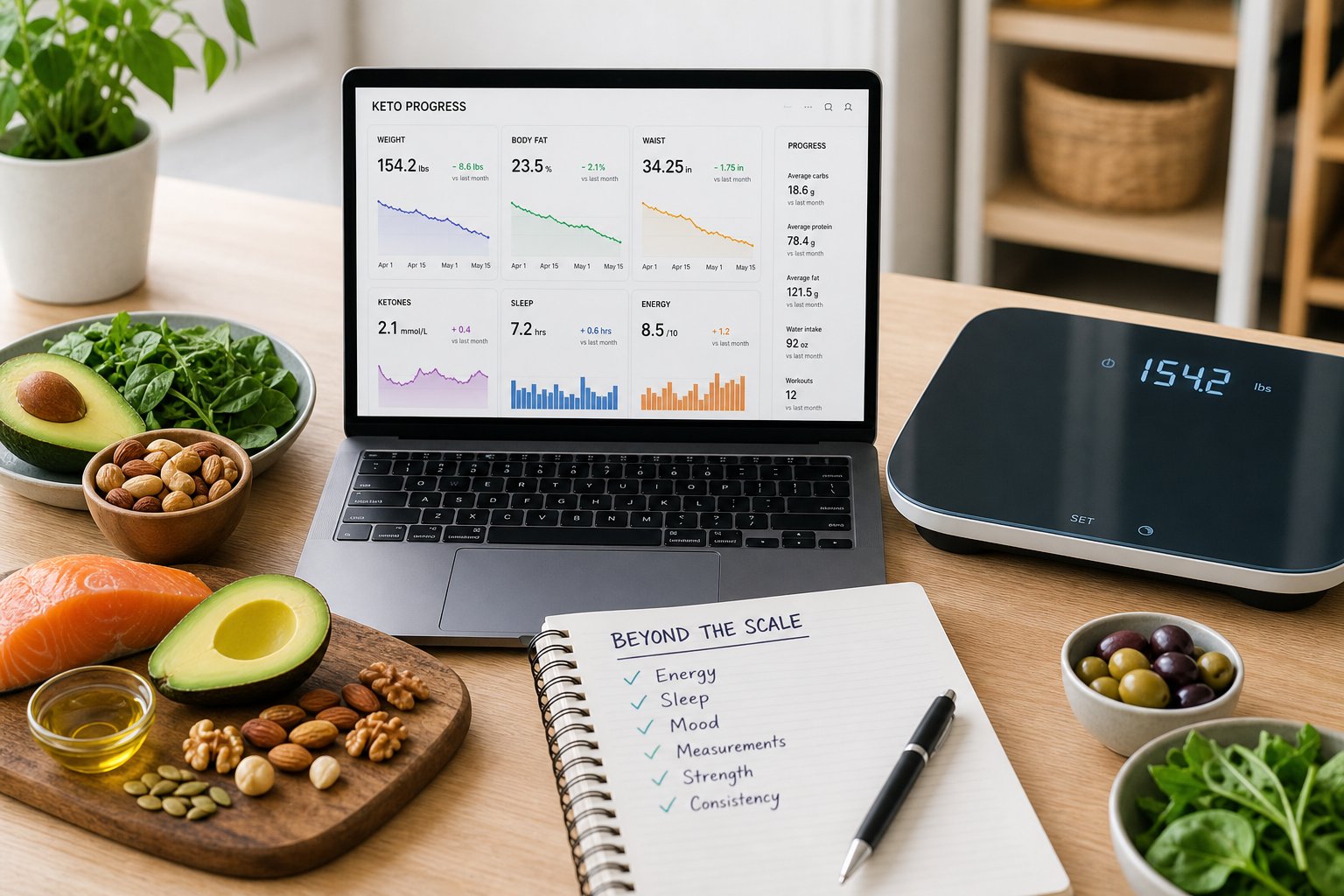
Tracking changes with measurements, progress photos, how your clothes fit, or body composition testing gives you real proof of fat loss. These methods catch the changes the scale misses.
The National Institute of Diabetes and Digestive and Kidney Diseases notes that body weight is only one measure of progress and recommends using additional indicators, such as waist size, to better assess changes in body composition and overall health.
Body Measurements
Grab a tape measure and track your waist, hips, chest, thighs, arms, and neck. These spots tend to show fat loss even when the scale is stubborn.
Do it at the same time each week, ideally in the morning before breakfast. Stand relaxed, keep the tape snug but not tight, and jot down the numbers somewhere you can find them later.
Plenty of people lose inches while the scale doesn’t move, especially if they’re building muscle. A shrinking waistline is a solid sign of visceral fat loss, which is a bigger deal for your health than just dropping pounds. Checking every couple of weeks is enough—no need to obsess daily.
Progress Photos
Photos might feel awkward at first, but they’re honestly one of the best ways to see change. Take front, side, and back shots every two to four weeks, in the same spot and lighting, wearing similar clothes.
Fitted workout clothes or underwear work best—baggy clothes just hide your shape. Try to stand the same way each time, arms relaxed at your sides.
Looking back at old photos can be a huge motivator, especially during plateaus. Sometimes, you won’t notice changes in the mirror, but the camera doesn’t lie. Progress photos often show big differences even when you feel stuck.
Clothing Fit
How your clothes fit is one of the most satisfying ways to track progress. Pants getting loose, shirts buttoning easier, or needing a new notch on your belt—these are all wins.
Keep a pair of “goal jeans” or another snug item to try on every few weeks. It’s a practical, low-stress way to see results, especially if tracking numbers isn’t your thing.
Even rings, watch bands, or shoes can fit differently as you lose fat. These little victories are proof your body is changing, even if the scale is stubborn.
Body Composition (When Appropriate)
Body composition testing tells you how much of your weight is fat versus lean mass. DEXA scans, bioelectrical impedance scales, and bod pod tests all work, though some are more accurate (and pricey) than others.
DEXA scans give the most detailed info but cost more and usually require an appointment. Home bioelectrical impedance scales are convenient but less precise. They’re better for spotting trends than for exact numbers.
You don’t need to do these tests often. Every 8-12 weeks is plenty for most people. Athletes or folks with specific goals might want to check more regularly. These tests help you see if weight changes are coming from fat, muscle, or just water shifts.
Lifestyle Improvements That Signal Keto Is Working
Keto can change your daily routines before the scale even budges. People often notice more energy, steadier workouts, better eating habits, and that sticking with keto just gets easier once their body adapts to burning fat.
Improved Daily Energy
Energy usually evens out within a few weeks of starting keto. Most people report fewer afternoon crashes and less need for caffeine just to make it through the day.
Better energy keto perks include:
- Steady mental clarity all day
- No more post-lunch crashes
- Less brain fog
- Fewer snack attacks just to keep going
Fat just gives a more reliable fuel source than carbs. Blood sugar doesn’t spike and crash after meals, so you get that all-day energy without the rollercoaster.
Better Exercise Performance
Once you’re fat-adapted—usually after a month or so—workouts start to feel easier. Endurance athletes especially notice they can go longer without needing to refuel.
Runners, cyclists, and swimmers often see the biggest boost, since their bodies can tap into fat stores more efficiently. Fat packs more energy per gram than carbs, which helps during long sessions.
Strength training can feel tougher at first, but it usually evens out. Many notice faster recovery and less soreness, once their body adjusts. Give yourself time—it’s worth it.
More Consistent Eating Habits
Keto consistency gets easier as your hunger hormones settle down. Ghrelin drops, leptin works better, and you just don’t feel like eating as often.
Most end up eating two meals a day without even trying, and cravings for sugar or processed foods fade away. Planning meals gets simpler, too. People usually settle into a rotation of favorite dishes, which makes shopping and cooking less of a chore.
Easier Long-Term Adherence
Long term keto habits stick once keto feels like a lifestyle, not just a diet. You know it’s working when keto-friendly choices become automatic, not a struggle.
Keto adherence goes up when:
- Ordering at restaurants is no big deal
- Social events don’t throw you off
- Travel doesn’t wreck your eating plan
- Special occasions aren’t stressful
Keto is often easier to stick with than calorie-cutting diets because fat and protein actually fill you up. Once your body adapts, it doesn’t feel like a battle of willpower. Honestly, a lot of people just prefer how they feel eating this way compared to how they felt on more carbs.
A consistent keto morning routine often makes it easier to maintain the daily habits that support long-term progress.
Should You Measure Ketones?

Testing ketones gives you data on whether your body’s making ketones, but it doesn’t measure fat loss, metabolic health, or overall progress. Some folks like testing; others skip it or even find it stressful.
What Ketone Testing Can Tell You
Ketone testing confirms if you’ve hit ketosis. Blood ketone meters check beta-hydroxybutyrate (BHB) in your blood, giving you a number in mmol/L.
This number shows how much of the main ketone fuel is floating around right then. Readings between 0.5 and 3.0 mmol/L usually mean you’re in nutritional ketosis.
Higher numbers aren’t always better. You could be at 0.8 mmol/L and losing fat, while someone at 2.5 mmol/L isn’t.
Testing also lets you see how certain foods affect your ketones. If your ketones tank after a meal, maybe that food had more carbs than you thought, or it spiked your insulin.
This info can help you tweak your food choices. For anyone managing diabetes or certain health conditions, ketone testing can be a safety net.
People with diabetes need to watch ketones to avoid diabetic ketoacidosis (DKA), which is dangerous if ketones and blood sugar both get high.
Understanding the science of ketosis helps explain what ketone readings can—and cannot—tell you about fat loss.
What Ketone Testing Cannot Tell You
High ketones don’t always equal fat loss. You could have great ketone readings but not lose weight if you’re still eating too many calories.
The scale, measurements, and body composition give you a clearer picture of fat loss than ketone numbers. Testing won’t show you if your metabolic health is improving, either.
Things like better energy, less hunger, sharper thinking, and steady blood sugar can happen whether your ketones are 0.8 or 2.5 mmol/L. Plenty of people see those benefits without ever testing.
Ketone levels bounce around all day—exercise, stress, sleep, and when you eat all play a role. One reading doesn’t tell the whole story.
If your ketones are low in the afternoon but higher in the morning, it doesn’t mean you fell out of ketosis. Fat adaptation takes weeks, not days.
Once you’re adapted, your body actually gets better at using ketones, which can lower your readings. So, lower numbers after a while might mean you’re more efficient, not less.
When Measuring Ketones Is Actually Useful
Testing makes sense in the first two to four weeks of keto. It helps confirm you’re on track and can be motivating.
After you know you’re in ketosis, most people don’t need to keep testing all the time. Some folks need to keep specific ketone ranges for medical reasons—like epilepsy, cancer support, or certain neurological issues.
Doctors often recommend regular testing in those cases. Here are times when testing can be useful:
- Troubleshooting a weight loss stall to check if carbs are sneaking in
- Trying new foods to see how they affect you
- Managing diabetes and watching for DKA
- Following a therapeutic plan with target ketone ranges
If you feel good, see progress, and know how your body reacts to foods, testing gets less important. Signs like less hunger, steady energy, and body changes say more than ketone numbers ever could.
If you’re producing ketones but not seeing the results you expected, our guide on being in ketosis but not losing weight explains why those two outcomes are not always connected.
Common Mistakes When Tracking Keto Progress
Lots of people trip themselves up on keto by focusing on the wrong things or checking too often. These mistakes add stress and sometimes make people quit before they see real change.
Weighing Yourself Too Often
Weighing in daily is misleading—your weight can swing 3-5 pounds just from water. Stepping on the scale every morning just shows normal ups and downs, not true fat change.
Your body holds about 3-4 grams of water for every gram of glycogen. Eating a few more carbs or extra salt can bump up water weight, totally unrelated to fat loss.
Hormones play a role, too—especially for women. You might be losing fat but see the scale go up during certain weeks.
Weekly weigh-ins are more reliable. Take measurements on the same day, same time, same conditions. Some folks even do every two weeks at first, since water shifts can be wild early on.
Comparing Yourself With Other People
Everyone drops weight at their own pace. Age, gender, starting weight, health, and diet history all play a part.
Someone losing 10 pounds in a week might just be losing water. Men often lose faster than women, thanks to more muscle and testosterone.
If you’ve done a lot of yo-yo dieting, your metabolism might be slower. Two people on the same plan can get totally different results.
Social media usually highlights the biggest success stories, not the steady, slower ones. Comparing yourself to these outliers just sets you up for disappointment.
Ignoring Non-Scale Improvements
It’s easy to miss the good stuff if you only look at the scale. More energy, clearer thinking, less hunger, better sleep, looser clothes—these all mean your body’s changing.
Sometimes your body works on healing inside before you see changes outside. Maybe you don’t need snacks anymore or don’t crash in the afternoon, even if the scale’s stuck.
Measurements often matter more than weight. You could stay at the same weight but lose inches as muscle builds and fat drops. How your clothes fit is real-world proof.
Other wins: clearer skin, less inflammation, better digestion, and improved blood sugar. These show keto’s working, even if the scale isn’t moving.
Chasing Higher Ketone Numbers
Bigger ketone numbers don’t mean faster fat loss. Once you’re at 0.5-3.0 mmol/L, pushing for higher doesn’t help weight loss.
Some folks eat loads of fat just to boost ketones, but that just burns the fat you’re eating—not what’s stored. The goal is to burn body fat, not just crank out ketones from food.
Ketone levels change all day—activity, stress, sleep, and meal timing all matter. You could see 0.8 in the morning and 2.5 in the evening, and that’s normal.
Consistency is what counts. A steady 1.0 mmol/L is a good sign of adaptation. Chasing high ketones by eating too much fat, cutting protein too much, or taking supplements rarely changes your body composition.
Some tracking habits can hide meaningful progress, while others contribute to common keto problems that make troubleshooting more difficult.
A Simple Weekly Keto Progress Checklist

A weekly keto progress checklist makes it easier to spot patterns you’d miss with daily weigh-ins. By tracking weight trends, measurements, energy, and how well you stuck to your routine, you get a fuller picture of your progress.
Weight Trends
Track your weight a few times a week, not just once. Your weight can swing 2-5 pounds day to day from water, salt, or hormones.
Weighing three times a week lets you average it out. That average is way more useful than any single number. Keeping a keto journal helps you see if you’re trending in the right direction.
Tips for weekly weight tracking:
- Weigh at the same time, ideally in the morning
- Use the same scale, in the same spot
- Write down every measurement, even if it’s not what you want
- Average your weights each week to smooth out the noise
Sometimes, weight holds steady for weeks while fat’s still coming off. Water retention or muscle gain can hide your progress on the scale.
Waist and Body Measurements
Weekly measurements prove fat loss when the scale isn’t moving. Waist size (at the narrowest point) is the most telling for keto.
You might lose 1-2 inches from your waist with no change in weight. That’s a win—fat’s dropping, muscle’s sticking around. Hip, thigh, and arm measurements add more detail.
| Body Area | How to Measure | Why It Matters |
|---|---|---|
| Waist | Narrowest point above belly button | Primary indicator of visceral fat loss |
| Hips | Widest part of buttocks | Tracks lower body changes |
| Thighs | Mid-point of upper leg | Shows leg composition shifts |
| Arms | Midpoint between shoulder and elbow | Indicates upper body changes |
These measurements show body changes you won’t see on the scale. Taking photos from different angles on measurement day gives you a visual record—super motivating down the road.
Energy, Hunger, and Cravings
How you feel day to day says a lot about fat adaptation. If you’ve got steady energy and don’t crash mid-afternoon, you’re probably burning fat well.
Each week, rate your energy from 1-10. Track hunger too—are you going longer between meals? Less hunger usually means your hormones are balancing out.
Cravings for sugar and carbs tend to fade after a couple weeks. If you can go hours without thinking about food, your body’s likely switched to fat for fuel. That’s worth noting in your progress journal.
Questions to check your progress:
- Can I focus for 3+ hours without feeling foggy?
- Am I really hungry, or just bored?
- Are sugar cravings down from last week?
- Can I skip breakfast without getting shaky?
Sleep matters, too. Better sleep often shows up in the first month of steady keto.
Consistency With Your Routine
Sticking to your routine is just as important as the results. Each week, look back: how many days did you stay under your carb limit? Did you meal prep?
Write down slip-ups—no judgment. Maybe you notice a pattern, like always going off-plan on Saturday or after a rough workday. Knowing this helps you plan better next week.
A simple yes/no checklist works for keeping track:
- Stayed under 25g net carbs daily
- Hit protein goals most days
- Drank enough water
- Prepped meals ahead of time
- Tested ketones at least once
- Got at least 7 hours of sleep most nights
Consistency beats perfection every time. If you stick to your plan 85% of the time, you’ll see way more progress than someone who’s all-or-nothing. The weekly review keeps you honest without stressing about little slip-ups.
Want an easier way to stay consistent? Our free 7-Day Keto Meal Plan helps you build daily habits that support steady progress without relying on the scale alone.
When Progress Really Has Stalled
Even when you’re tracking the right indicators, there may come a point when progress genuinely slows or stops. The key is knowing the difference between a normal pause in adaptation and signs that your current approach needs closer attention.
Recognizing when to troubleshoot helps you make informed adjustments instead of changing your plan too early.
Normal Slow Progress vs Genuine Lack of Progress
Energy improvements usually kick in during the first week or so after starting keto. Some folks feel a bit wiped out at first, but that tends to pass.
If things are on track, energy feels steady throughout the day. Those annoying mid-afternoon crashes from high-carb eating? They start to fade away.
Hunger drops off as your body learns to run on fat. Suddenly, going four or five hours between meals just isn’t a big deal anymore.
Slow results don’t always spell trouble. For some, it takes three or even four weeks before the energy really picks up, especially as their cells get the hang of using ketones.
During that stretch, you might notice clothes fitting differently or your mind feeling a bit sharper—even if the scale seems stubborn.
But a genuine lack of progress? That feels different. If you’re still hungry every couple of hours after a month, or you can’t shake the fatigue, or those sugar cravings are relentless, something’s up.
Persistent hunger, fatigue, or cravings after several weeks may indicate that your current approach needs a closer review rather than simply more time.
Signs It’s Time to Troubleshoot
Persistent symptoms after one month indicate keto troubleshooting is needed.
If you’re still dealing with hunger that interrupts your day, low energy, or cravings that just won’t quit, it’s time to take a closer look at your approach.
Some warning signs pop up more than others:
- Feeling shaky or weak between meals after three weeks
- Needing snacks every two to three hours
- Experiencing intense sugar or carb cravings daily
- Having less energy than before starting the diet
- Feeling mentally foggy rather than clear
These symptoms can be associated with several issues, including hidden carbohydrates, inadequate electrolyte intake, inconsistent adherence, or a dietary approach that may need adjustment.
The Next Step if Results Stop Improving
If your progress has slowed despite several weeks of consistent effort, avoid making multiple changes at once. Drastic adjustments often make it harder to identify what is actually affecting your results. Instead, take a step back and review the fundamentals before assuming keto is no longer working.
Start by looking at your overall consistency. Review your carbohydrate intake, portion sizes, meal patterns, and any recent changes to your routine.
Hidden carbohydrates, unplanned snacks, inconsistent weekends, or gradually increasing portion sizes can all contribute to slower progress without being immediately obvious.
Next, consider factors beyond food. Poor sleep, ongoing stress, limited physical activity, and inadequate electrolyte intake can all influence how you feel and how consistently you follow your plan.
Looking at these areas alongside your weight, body measurements, energy, hunger, and cravings provides a much more complete picture of your progress.
If multiple progress indicators have remained unchanged for several weeks despite consistent adherence, it may be time to investigate your approach more systematically.
Rather than focusing on a single number on the scale, use the information you’ve collected to identify the most likely bottleneck and make one adjustment at a time.
If you’ve tracked your progress consistently and still aren’t seeing meaningful improvement, a personalized keto plan can help identify the specific factors that may be limiting your results.
Conclusion: Measure the Progress That Actually Matters
The scale? It just shows a number. It doesn’t care if that number comes from water, fat, or muscle.
Real progress on keto shows up in so many ways. Tracking body measurements, noticing energy shifts, or just feeling how jeans fit—these tell a bigger story than the scale ever could.
Sometimes the weight stays put, but the waistline shrinks and muscle builds up. That’s progress, even if the number doesn’t budge.
Key metrics to track regularly:
- Ketone levels (blood or breath testing)
- Body measurements with a tape measure
- Energy patterns throughout the day
- Hunger and craving levels
- How clothing fits
- Progress photos every 2-4 weeks
- Physical performance and strength
Health changes matter too, not just how you look. Better sleep, steadier blood sugar, less inflammation, and clearer thinking? Those are all huge wins.
Honestly, these benefits often show up before the scale moves much. It’s worth paying attention to them.
Testing needs some consistency. Weekly check-ins beat daily ones—who needs the stress of normal ups and downs?
Bodies can swing a few pounds in water weight overnight, and that doesn’t mean anything about fat loss.
When you track more than just weight, you start to see real patterns. You figure out what actually works for you, and you can tweak things with confidence.
Progress isn’t always fast. Sometimes the best changes sneak up slowly, week by week, and that’s okay.