
Why Keto Success Depends More on Consistency Than Perfection: Sustainable Results Through Real-World Habits
Many people begin keto believing they have to follow the diet perfectly to see results. One unplanned meal, a social event, or a mistake at dinner can feel like complete failure, leading unnecessary guilt and making it harder to stay motivated.
In reality, long-term keto success rarely comes from perfection. It comes from making good decisions consistently, recovering quickly from occasional setbacks, and building habits that fit everyday life. The people who achieve lasting results are often those who focus on progress instead of flawless execution.
This difference is important because chasing perfection often creates stress, decision fatigue, and burnout. By contrast, a consistent approach makes keto easier to maintain, even when life becomes busy or unpredictable.
This guide explains why keto consistency matters more than perfection, how perfectionism can quietly undermine your progress, and practical ways to build habits that support long-term success.
Keto Consistency: Why It Matters More Than Perfection
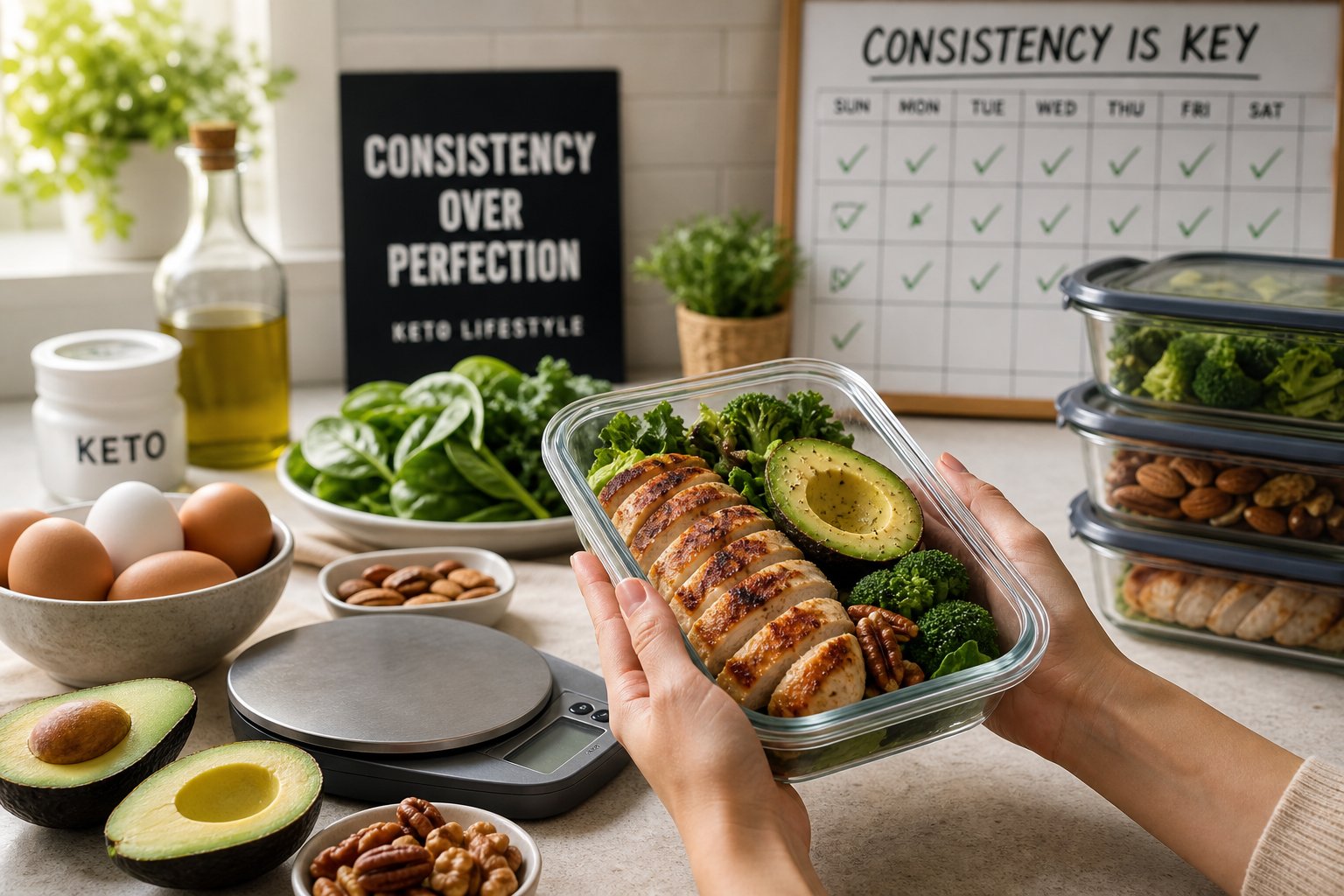
Most people don’t fail at keto because they ate the wrong foods. They quit because, after a small mistake, they abandon the diet completely.
The difference between those who succeed and those who quit? It’s how they handle imperfect days.
The Mistake Many Beginners Make
New keto folks often come in with an all-or-nothing attitude. They think every meal has to be tracked, every carb counted exactly, and any slip-up means total failure.
So, someone has a piece of fruit or finds out there were hidden carbs in a sauce. Instead of just moving on, they decide the day is shot, eat pizza for dinner, pastries for dessert, and plan to “restart” Monday.
This cycle? It repeats. Each restart feels a little harder than the last.
The person never stays in ketosis long enough to get fat-adapted or see the real benefits that make keto sustainable.
The damage from one higher-carb meal is honestly pretty minor. The real problem is the week of giving up that follows.
Why Perfect Keto Is an Unrealistic Goal
No one hits perfect macros every single day for months or years. Life happens—restaurants, family gatherings, days when tracking is just too much.
Aiming for perfect keto causes a few major headaches:
- Stress from worrying about every bite
- Social isolation—skipping events because you’re afraid of the food
- Quitting more often because perfection is impossible
- Metabolic confusion from bouncing between strict keto and totally giving up
Someone who’s mostly keto six days a week for a year gets way better results than someone who’s perfect for three weeks and then stops. That’s just math—300 days in ketosis versus 21.
Honestly, flexible keto that allows for occasional higher-carb days is usually easier to stick with than rigid rules.
What Actually Determines Long-Term Success
Keto works when you rack up total days in ketosis over months and years—not when you hit perfect macros for a week or two. Research on diet adherence backs this up: sticking with a plan matters more than the details.
Three things predict long-term keto success better than perfect tracking:
- Getting back to keto at the next meal after a slip-up
- Building habits that don’t need endless willpower
- Allowing for flexibility instead of strict deprivation
Someone who eats 20-30g net carbs most days, sometimes goes up to 50g, and just keeps going will do better than someone who’s perfect for a month and then quits. The consistent person gets fat-adapted, appetite drops, and habits start to feel automatic.
It’s not about keto perfection. Small mistakes aren’t what stop fat loss. Giving up is.
Triage — Are You Struggling With Consistency or Chasing Perfection?
Most people struggling with keto are either having trouble sticking with the basics, or they’re burning out from chasing perfection. Figuring out which one you are helps you fix the right thing.
Signs You’re Building Consistent Keto Habits
If you’re building sustainable keto habits, you probably:
- Eat low-carb most days without obsessively tracking
- Get back on track after a slip-up, no drama
- Keep easy keto foods on hand
- Don’t “restart” after a small mistake
- Focus on protein and keeping carbs low, not exact numbers
- Make keto fit your life—work, family, whatever
That’s what real adherence looks like. Not perfect, just regular low-carb choices. That’s where progress comes from.
Signs You’re Chasing Perfection
Keto perfectionism looks like this:
- Every meal is tracked, weighed, or photographed
- One high-carb food means the whole day is blown
- Restarting keto multiple times a month
- Skipping social events because the food won’t be “perfect”
- Spending hours researching the “best” way to keto
- Feeling guilty for anything off-plan
This approach leads to burnout fast. You might see quick results, but it doesn’t last. The stress just builds up and eventually outweighs the benefits.
Signs Perfectionism Is Slowing Your Progress
If perfectionism is taking over, you might notice:
- Frequent restarts: Always starting over after weekends
- All-or-nothing thinking: Either 100% on or totally off
- Decision fatigue: Spending more time planning than eating
- Avoiding real life: Skipping meals or events because you can’t control everything
- Obsessive measuring: Checking ketones daily and stressing over tiny changes
These patterns just make keto harder. If you’re stuck here, it’s probably time to simplify your approach—don’t double down on perfection.
Diagnostic Summary — Which Pattern Describes You?
Most people struggling with keto fall into one of four patterns. Knowing which one you’re in helps you see what needs to change.
You’re Building Sustainable Habits
If this is you, you’re making progress without overthinking every detail. Maybe you eat extra carbs one day or skip meal prep, but you get back to your routine without guilt.
Your focus is on long-term patterns, not daily perfection. Keto is a lifestyle, not a temporary diet.
Some signs:
- Weight loss or health markers improve slowly over time
- You bounce back after unplanned meals or missed workouts
- Keto feels doable most days, not like constant work
- You’ve tweaked the plan to fit your life
This is the pattern that leads to real, lasting results. Consistency wins—perfection is overrated.
Perfectionism Is Creating Unnecessary Pressure
This group does keto perfectly for a while, then ditches it after one mistake. They track every macro and stress about hidden carbs.
A birthday cake at work or a restaurant meal without perfect macros triggers guilt and all-or-nothing thinking.
Common behaviors:
- Restarting every Monday after a weekend “fail”
- Dodging social stuff because of food anxiety
- Spending hours recalculating macros
- Feeling like a failure for eating 25g of carbs instead of 20
The fix is to loosen up a bit while keeping the basics. 80% compliance beats going from 100% to zero over and over again.
Inconsistency Is Preventing Long-Term Results
This looks like lots of stops and starts. Maybe you do keto for two weeks, eat normally for a month, then try again.
The body never adapts, so you don’t get the benefits. Weight jumps around, energy is unpredictable, and frustration grows.
It often looks like:
- Starting keto several times a year but never sticking with it
- Never getting the steady energy or mental clarity others talk about
- Dealing with keto flu over and over
- Not sure if keto even works because you’re never consistent
Consistency starts with manageable changes. Try one keto meal per day or focus on a week at a time to build momentum.
Your Routine Needs to Be Simpler
Sometimes people make keto way too complicated. Elaborate meals, specialty ingredients, tracking a dozen things, or eating windows that don’t fit your life—it’s just too much.
When your routine eats up too much time or headspace, it’s not going to last. Life gets busy, motivation fades, and the whole thing falls apart.
Signs it’s too complex:
- Meal prep takes forever—like, more than two hours a week
- You need apps or spreadsheets to keep track
- Recipes call for weird ingredients you can’t find at the regular store
- The plan only works when everything in life is going smoothly
Keto habits should feel almost automatic after a few weeks. If it still feels like work every day after a month, it’s time to simplify. Stick to a few easy meals, basic tracking, and routines that work even on your worst days.
If inconsistent habits or overly strict expectations are preventing progress, our complete troubleshooting guide can help you identify the execution mistakes that matter most.
→ Why Keto Is Not Working for Me
Why Perfect Keto Is Usually the Wrong Goal

Chasing perfect keto usually creates more headaches than it solves. Most people quit because they set impossible standards and feel like failures when they can’t meet them every single day.
The All-or-Nothing Trap
The all-or-nothing mindset with keto can trap people in a frustrating cycle. If someone eats 30 grams of carbs instead of 20, they might feel like the whole day’s ruined.
That thinking often leads folks to ditch their plan entirely, instead of just moving on and making a better choice at the next meal.
This mindset doesn’t really match how the body works. Ketosis isn’t a light switch—one off meal doesn’t mean you’re suddenly out for good.
The body adapts and adjusts over time. It’s not as fragile as the rules make it sound.
People stuck in this trap often find themselves restarting the diet over and over. Each time, it just feels a little tougher.
Eventually, they start doubting whether they can stick with anything at all.
Why Small Mistakes Rarely Cause Failure
Minor keto mistakes aren’t nearly as catastrophic as most people fear. Going 10 grams over your carb limit one day won’t erase weeks of effort.
Your body doesn’t hit a big red reset button after a single slip. Metabolic adaptation takes time to build and doesn’t just vanish overnight.
If you’ve been in ketosis for weeks, you’ve built up some metabolic flexibility. Small variations aren’t going to wreck that.
The real problem isn’t the mistake—it’s how people react to it. Seeing a small error as total failure often leads to giving up completely.
How Unrealistic Standards Create Burnout
Keto burnout usually hits when folks try to follow super strict rules they can’t keep up with. Some cut out entire food groups, avoid restaurants, or track every macro down to the last gram.
That kind of restriction might work for a few weeks, maybe even a couple months. But eventually, it just gets exhausting.
The constant mental effort drains willpower. People start resenting the diet instead of seeing it as something helpful.
Honestly, the only way to make keto last is to find the least restrictive version that still works. Maybe that’s a slightly higher carb limit on days you’re more active.
Or maybe it’s not tracking on weekends, but still making generally keto-friendly choices. Consistency over months and years beats perfection for a few weeks, every time.
Many setbacks blamed on willpower are actually common keto problems that become easier to solve with a more sustainable approach.
Why Consistency Produces Better Results
Small, regular actions on keto make a bigger difference than short bursts of perfection. When habits become automatic, you don’t have to rely on willpower all the time.
That makes sticking with keto feel less like a chore and more like just…life.
According to Harvard Health, the foundation of a healthy lifestyle is built on lasting habits, and even small daily actions can have a significant impact over time. This is why consistent keto habits are more effective than trying to follow the diet perfectly for short periods.
Small Daily Habits Compound Over Time
Little keto habits stack up over time. Tracking carbs every morning helps you get a sense of what you’re eating.
Repeating that simple step daily leads to better choices without much effort. The progress comes from accumulation, not intensity.
Making keto meals three times a week for months beats prepping perfectly for two weeks and then quitting. Each small action makes the next one easier.
Key compounding habits include:
- Tracking net carbs daily
- Prepping one keto meal ahead of time
- Drinking water with each meal
- Checking ketone levels once a week
These steps might seem tiny on their own. But after three months, they’re the foundation for long-term success—weight loss, better energy, and improved metabolic health.
Repetition Builds Automatic Behavior
Doing something over and over makes it automatic. Research says it takes about 66 days of repetition for a habit to really stick.
Once you’ve made eggs and avocado every morning for a while, you don’t have to think about it. You stop overanalyzing what fits your macros.
That repetition smooths out the friction that causes people to bail on their diet. The more automatic your keto habits, the less you get worn out by decision fatigue.
With so many choices in a day, having a few meals or routines on autopilot saves your willpower for unexpected stuff—like parties or eating out.
Sustainable Routines Beat Short-Term Intensity
Moderate keto routines kept up for months always win out over extreme restriction followed by burnout. Someone who allows 25-30 grams of net carbs can stick with it way longer than someone who tries to live on 15 grams with no wiggle room.
Pushing for perfection often leads right back to that all-or-nothing thinking. One day a person eats 40 grams of carbs and, next thing you know, they’re tossing the whole plan.
It just works better to treat occasional variations as normal, not failures. Flexibility inside consistent boundaries is what actually changes things.
Having backup meals, knowing which restaurants have good options, and planning for special occasions without guilt—those are the little tweaks that turn a diet into a lifestyle.
If staying on keto feels like a constant struggle, understanding why keto is hard to stick to can help identify the barriers affecting your routine.
Common Situations Where Perfection Gets in the Way

Perfectionism hits hardest when life gets messy. That’s when the gap between a perfect keto plan and real life shows up most.
Social Events
Social gatherings can make it tough to stick to perfect keto standards, especially with limited choices. Some people even skip events or get stressed over every bite.
But, honestly, most social events won’t have perfect keto food. There might be bread, pasta, or desserts everywhere you look.
The protein might be breaded or covered in a sweet glaze. So what can you do?
Try focusing on damage control instead of perfection:
- Pick protein-based options if you can
- Skip the obvious carbs
- Eat before you go if you’re not sure about the food
- Bring a keto-friendly dish to share
One meal at a party isn’t going to undo weeks of effort. The real issue comes when that meal turns into an excuse to give up. Getting back to your routine the next day matters way more.
Holidays and Travel
Keto on the road is a challenge—airport food, hotel breakfasts, family gatherings, you name it. Perfect meal plans rarely survive travel days.
Holidays add emotional pressure too. Family members might push their favorite dishes or get offended if you say no.
Some practical travel strategies:
- Pack jerky or nuts
- Book rooms with a fridge if you can
- Look up restaurants ahead of time
- Stick to protein and veggies at buffets
Travel days probably won’t be perfect keto days, and that’s fine. The goal is to make reasonable choices most of the time, not to nail it 100% in impossible situations.
Busy Workdays
Crazy workdays can wreck even the best meal prep plans. Meetings run late, lunch breaks disappear, and it’s easy to grab something you regret.
Perfectionism says if you can’t have a home-cooked meal and perfect macros, the day’s lost. But that’s just not true.
Rotisserie chicken works. So does a bunless burger, or even a quick omelet.
Some low-effort workday options:
- Deli meat and cheese rolls
- Pre-cooked eggs
- Canned fish with mayo
- Bagged salad with protein
Keto meals don’t need to be fancy to get the job done.
Family Meals
Making separate meals for yourself and your family? That’s a fast track to burnout. Parents especially give up on keto because cooking two dinners every night just isn’t doable.
Kids complain about missing pasta, partners don’t want to change their habits, and suddenly perfect keto feels impossible.
Instead, try flexible meal building:
- Cook a protein everyone likes
- Offer regular and low-carb sides
- Let others add their own carbs
- Keep meals simple—grilled chicken, veggies, butter
Everyone can eat grilled chicken. Some add potatoes, others add extra veggies and butter. No need for separate meals, and keto stays realistic.
What Highly Consistent Keto Success Actually Looks Like
Sticking to keto long-term doesn’t mean never eating a carb or tracking every single macro. It’s about building habits that make keto a mostly consistent pattern, and bouncing back quickly when things go sideways.
Planning Without Obsessing
People who keep keto going for years usually plan meals a few days ahead, but don’t make it a big production. They keep basics like eggs, ground beef, greens, olive oil, cheese, and nuts on hand for easy meals.
Maybe they spend 15-20 minutes on Sunday jotting down main proteins and veggies for the week. It’s not a huge meal prep session—just a rough plan to cut down on guesswork.
After the first few weeks, most stop weighing every gram. They learn what 20-30 grams of carbs looks like and just eyeball it. A palm-sized piece of protein, a thumb of fat, and veggies filling the rest—good enough.
Planning becomes routine, not a source of stress. It’s a quick weekly check-in, not a daily obsession.
Recovering Quickly From Slip-Ups
People with strong keto habits treat a high-carb meal as just that—a single meal, not a disaster. Pizza at a family gathering? Back to normal breakfast the next morning, no guilt, no punishment.
No need to “restart keto” every Monday. One meal with 100 grams of carbs might pause ketosis for a day or two, but it doesn’t erase all your progress.
The real shift is mental. Instead of “I blew it,” it’s “that was one meal out of 21 this week.” They look at their week as a whole, not just one slip. How fast you recover matters more than how perfect you are.
Making Better Decisions Most of the Time
Keto consistency means making good choices maybe 80-90% of the time, not 100%. Maybe you stick to your plan all week, then have a higher-carb meal on Saturday and still keep moving forward.
At a restaurant, you swap fries for veggies, skip the bun, and don’t sweat a little sugar in the sauce. At home, you use real butter and olive oil, but don’t panic if the seasoning blend had a pinch of cornstarch.
Some “better decision” patterns:
- Picking a chicken salad over a sandwich most times
- Drinking water or unsweetened tea instead of soda
- Keeping nuts or cheese in the car for emergencies
- Saying yes to birthday cake once in a while, not every week
Doing the right thing most of the time gets results. Chasing perfection just leads to burnout.
Focusing on Weekly Progress Instead of Daily Perfection
People who stick with keto for the long haul tend to look at their progress week by week, not day by day. They might check their ketones or weight just once a week, always on the same day.
This helps cut out the noise from daily water changes, hormones, or a random carb slip. It’s a lot less stressful than micromanaging every single morning.
Most folks count their keto success by how many days they hit their target each week. If they stay under their carb goal six days out of seven, that’s about 85%—which honestly is more than good enough to keep seeing results.
They don’t freak out over one off day. That’s just life.
Weekly check-ins help spot real patterns. If someone notices they’re solid Monday through Thursday but always get thrown off on weekends, that’s useful info. They can plan better or even allow a higher-carb meal on purpose, no guilt attached.
This makes keto feel more flexible and personal, not some rigid, stressful thing you’re doomed to mess up.
Practical Ways to Improve Keto Consistency

Building consistent keto habits is really about finding systems that fit into your actual life. It’s less about chasing a flawless plan and more about making things as simple as possible.
Simplify Your Meals
People who last on keto usually eat the same handful of meals over and over. It might sound boring, but it saves a ton of mental energy and makes shopping a breeze.
For most, a rotation of five to seven meals does the trick. Maybe it’s eggs with avocado one day, a protein smoothie the next. Lunch could be a salad with grilled chicken or just leftovers from last night’s dinner.
Simple meal building blocks include:
- A protein source (chicken, beef, fish, eggs)
- A fat source (olive oil, butter, cheese, avocado)
- Low-carb vegetables (spinach, broccoli, cauliflower)
- Simple seasonings (salt, pepper, garlic)
Batch cooking helps a lot. Grill a bunch of chicken on Sunday and use it all week. Hard-boiled eggs keep for days. Pre-washed salad greens are a lifesaver when things get hectic.
Honestly, the goal isn’t to have endless variety—it’s to make sticking with keto as easy as possible.
Create Repeatable Routines
Keto meal planning works best when there’s some sort of pattern. Eating at set times helps your body adjust and makes it less tempting to snack on random non-keto stuff.
Some people do well with an eating window, like noon to 8 PM every day. After a while, it just becomes second nature.
Weekly routines that support keto consistency:
- Shop for groceries on the same day each week
- Prep veggies every Sunday
- Make breakfast at the same time
- Pack lunch the night before
- Keep emergency keto snacks in the car
Food prep works better when it’s scheduled. Maybe set aside an hour on Sundays to wash veggies, cook proteins, and portion out snacks for the week. That way you’re not scrambling every day, wondering what to eat.
It’s about making keto habits automatic—something you do without thinking about it all the time.
Building a consistent keto morning routine is one practical way to reduce daily decision-making and strengthen long-term habits.
Prepare for Difficult Situations
Restaurants, travel, and social stuff can throw you off, even if you’ve been doing keto for ages. Planning ahead makes these moments way less stressful.
At restaurants, you can almost always get meat and veggies. Order a burger minus the bun, steak with extra veggies instead of fries, or a salad with grilled protein and oil-based dressing. Checking menus online before you go helps a lot too.
Travel is easier if you pack snacks. Toss in things like:
- Cheese sticks
- Almond butter packets
- Beef jerky or meat sticks
- Macadamia nuts or pecans
- Protein powder for quick shakes
Social gatherings are a little different. Eating a small keto meal before you head out can help. Bringing a keto-friendly dish to share means there’s at least one thing you can eat—and most hosts appreciate the gesture.
Keto gets a lot more doable when you’ve got a plan for tricky moments instead of just hoping your willpower holds up.
Track Habits Instead of Chasing Perfection
It’s more important to track what you do each day than to obsess over every macro. Someone who eats keto most days will get better results than someone who aims for perfect and gives up after a single mistake.
A simple checklist could look like this:
- Ate mostly whole foods
- Avoided bread, pasta, and sugar
- Had protein and fat at each meal
- Drank enough water
- Prepped food at home
Weekly habit scorecard:
| Habit | Mon | Tue | Wed | Thu | Fri | Sat | Sun |
|---|---|---|---|---|---|---|---|
| No sugar/grains | ✓ | ✓ | ✓ | ✓ | X | ✓ | ✓ |
| Protein at each meal | ✓ | ✓ | ✓ | X | ✓ | ✓ | ✓ |
| Meal prep done | ✓ | – | – | – | – | – | ✓ |
Over time, you can see your progress. If you hit your habits five out of seven days, that’s solid. Missing one day doesn’t wipe out all the others.
Some people just jot down what they ate and how they felt, instead of counting every carb. It’s less pressure, and you still get awareness.
Whatever method you pick, make sure it’s simple enough to stick with. Overcomplicated systems usually don’t last long.
Building lasting habits starts with a simple routine. Our free 7-Day Keto Meal Plan helps you remove unnecessary complexity and stay consistent from day one.
Why Consistency Makes Keto Easier to Maintain
When you follow the same keto patterns most days, it gets easier. You stop overthinking, and it just becomes part of your routine.
Less Decision Fatigue
At first, every food choice feels like a big deal. You’re checking carbs, reading labels, and second-guessing yourself.
But once you settle into a groove—same breakfast, a few go-to dinners—you don’t have to think so much. The routine just runs in the background.
Common consistent patterns that work:
- Repeating the same protein sources every week
- Sticking to a couple breakfast options
- Keeping keto snacks handy
- Having a usual order at restaurants
Fewer choices means more mental energy for other stuff. Meal planning doesn’t have to take over your life.
More Confidence
Doubt is the enemy of keto motivation. If you’re always wondering if you’re doing it right, it’s easy to get discouraged.
Consistency builds confidence. After a couple weeks of eating the same meals, you know what works for your body. You learn which foods keep you full, what triggers cravings, and what portions feel right.
That kind of self-knowledge makes a huge difference. You stop second-guessing and start trusting your process.
Every successful day is proof that the plan works for you.
Better Long-Term Adherence
Keto works long-term if it’s sustainable—not if you’re trying to be perfect all the time. People who burn out are usually the ones pushing too hard from the start.
Simple routines last because they fit real life. Meal prep on Sundays, protein at every meal, and keeping carbs in a reasonable range—these are the things that hold up when life gets busy.
When you find a routine that works, you stop chasing new plans. Consistency is what makes keto stick.
Eventually, it’s just part of your normal life—not some temporary experiment.
Reduced Mental Stress
Trying to be perfect on keto is exhausting. Every meal feels like a test, and one slip-up seems like the end of the world.
Consistency takes away that pressure. You just focus on repeating what works. If you stick to your usual foods and patterns, you’re doing fine—even if it’s not flawless.
The mental shift looks like this:
| Perfection Focus | Consistency Focus |
|---|---|
| “I ate 25g carbs instead of 20g – I failed” | “I stayed close to my usual range” |
| “I need to track every macro perfectly” | “I ate my regular portions” |
| “One slip ruins everything” | “Tomorrow I continue my routine” |
This mindset makes food choices less stressful. Mistakes are just small bumps, not disasters. Focusing on progress instead of perfection makes keto way more manageable for the long haul.
When Your Keto Plan Is Too Difficult to Follow

If your keto plan feels like a full-time job, it’s probably not going to last. The answer isn’t to try harder—it’s to figure out what’s not working and make it easier.
Recognizing an Overly Complicated Routine
It’s too much if you’re spending hours tracking every macro, prepping different meals all the time, or stressing out about every social event. That’s a recipe for burnout.
Common signs of an overcomplicated plan:
- Tracking takes more than 10 minutes a day
- Meal prep eats up hours every week
- You avoid restaurants or parties altogether
- Every food choice feels like research
- Shopping means hitting up multiple specialty stores
If you’re always feeling behind or overwhelmed, maybe the plan is the problem—not you. Sometimes the “restrictive” feeling comes from self-imposed rules, not keto itself. Banning all convenience foods or setting super strict carb limits can make things way harder than they need to be.
Sometimes the issue isn’t keto itself but making the diet more restrictive than necessary.
Simplifying Instead of Quitting
You don’t have to quit keto if it feels too complicated. Most routines can be pared down to the basics and still work.
Figure out what’s causing the most stress. If tracking every bite is driving you nuts, try eating the same meals and just tracking once. If cooking fancy recipes is overwhelming, stick to five simple meals you can make on autopilot.
Simple swaps that reduce effort:
| Instead of this | Do this |
|---|---|
| Tracking every macro daily | Eat identical meals and track weekly |
| Making complex recipes | Use basic proteins, vegetables, and fats |
| Weighing every ingredient | Use visual portion guides |
| Shopping at multiple stores | Buy basics from one regular store |
Lots of people quit keto because they think it’s impossible to stick with. Usually, it’s just that the routine was too advanced for where they were starting.
Adjusting Your Plan to Fit Your Lifestyle
A sustainable keto plan should bend around your habits, not demand a total life makeover. If you’re always traveling for work, you’ll have different needs than someone who cooks at home most nights.
Check your weekly schedule and spot the natural anchors. If mornings are hectic, breakfast should take less than five minutes—or maybe you just skip it.
Lunch at work? It should need zero heating or assembly. If evenings are slower, that’s your window for prepping proteins and veggies.
Social patterns matter too. If you eat out a lot, it’s worth having a shortlist of go-to restaurant orders.
Cooking for family? You’ll want kid-friendly options that don’t mean making separate meals for everyone.
Sometimes, adjustments mean fewer food choices, maybe paying a bit more for convenience, or allowing a slightly higher carb limit for sanity’s sake. These little trade-offs can be the difference between a keto routine that actually sticks and one that fizzles out fast.
Try removing one complicating factor at a time. See if you still get results. Most folks realize they can cut the effort in half and still keep moving forward.
Learning how to personalize your keto diet can help you create a routine that feels realistic enough to follow consistently.
A Personalized Approach Makes Consistency Easier
When you shape keto to fit your life—not the other way around—you’re a lot more likely to keep at it. It’s about matching the plan to your schedule, food likes, and even your metabolism, which honestly, varies more than most people think.
Everyone Builds Habits Differently
Some people love strict meal plans and tracking macros to the gram. Others need room to eat more intuitively, as long as it sticks to keto basics.
If you’re always on the road, you’ll need a different routine than someone who eats at home most days.
Testing blood ketone levels can help figure out your sweet spot for carbs. Some people stay in ketosis at 40 grams of net carbs, while others have to keep it under 20. Bodies really do their own thing here.
Food preferences aren’t just a detail—they’re the backbone of sticking with keto. If you hate cooking complicated meals, you won’t last long on a plan that expects you to whip up fancy recipes every night.
If you’re designing your own approach, include foods you actually look forward to eating. Otherwise, what’s the point?
Matching Keto to Your Daily Routine
A truly sustainable keto plan fits into your real schedule. If you work out early, maybe you eat breakfast. If not, maybe you skip it and that just works for you.
Your job matters, too. Shift workers have different needs than folks with a regular lunch hour. Parents cooking for a family? You want simple meals that don’t require you to play short-order cook.
Social events and weekends can throw things off, so some people stick to strict keto all week, while others bend the rules for special occasions. The trick is finding what lets you stay mostly on track without feeling boxed in.
Sustainable Plans Create Better Results
If a plan feels too strict, it’s easy to go from all-in to all-out. Personalizing your keto diet based on your own ketone responses helps you find what actually works for you—not just what someone else says should work.
It’s not just about the scale, either. Tracking energy, sleep, focus, or even how your clothes fit can keep you motivated when the numbers stall.
Building flexibility into your plan from day one keeps you out of the “all or nothing” trap. Missing ketosis for a day isn’t the end of the world, and it sure doesn’t mean you have to start over. Honestly, that mindset helps people get back to their routine faster, minus the guilt trips.
If your current keto routine feels difficult to maintain, a personalized plan can help you build habits that fit your lifestyle and support long-term consistency.
Conclusion: Long-Term Keto Success Comes From Consistency, Not Perfection
People who stick with keto for the long haul have something in common. They don’t nail the diet perfectly every single day—honestly, who does?
Most days, they eat keto. If life throws them off, they don’t spiral or get stuck in guilt. Maybe there’s an extra-carb meal, but it’s not the end of the world. They just pick up where they left off at the next meal.
What consistency looks like in practice:
- Sticking to keto 80-90% of the time, not shooting for 100%
- Getting back to routine after social stuff, without making a big deal about it
- Paying attention to big-picture patterns, not obsessing over daily numbers
- Creating habits that actually fit into real life
Trying to be perfect with keto? That’s a lot of pressure. It usually leads to frustration or just giving up. When someone tries to cut every carb and log every macro, it gets exhausting fast.
Consistency is a lot kinder. You can go to family dinners, travel for work, or have a slice of cake at a birthday. Those moments don’t erase your progress if most of your choices still line up with your goals.
The mindset shift that matters: Progress is about what you do most days, not about being flawless on your best or worst day.
People who make keto stick treat it like a normal way to eat, not a rigid rulebook. They choose what works for them most of the time. No dramatic restarts—just moving forward.