
Doing Keto but Not Losing Weight: Why Results Stall Despite Effort
Many people start keto with discipline, consistency, and confidence—yet see little to no fat loss after the initial phase. When effort is high but results stall, frustration usually follows, and the assumption becomes that keto “doesn’t work” for them.
In reality, most keto failures are not caused by lack of willpower or bad intentions. They are caused by execution gaps, biological differences, and hidden variables that generic keto advice rarely addresses.
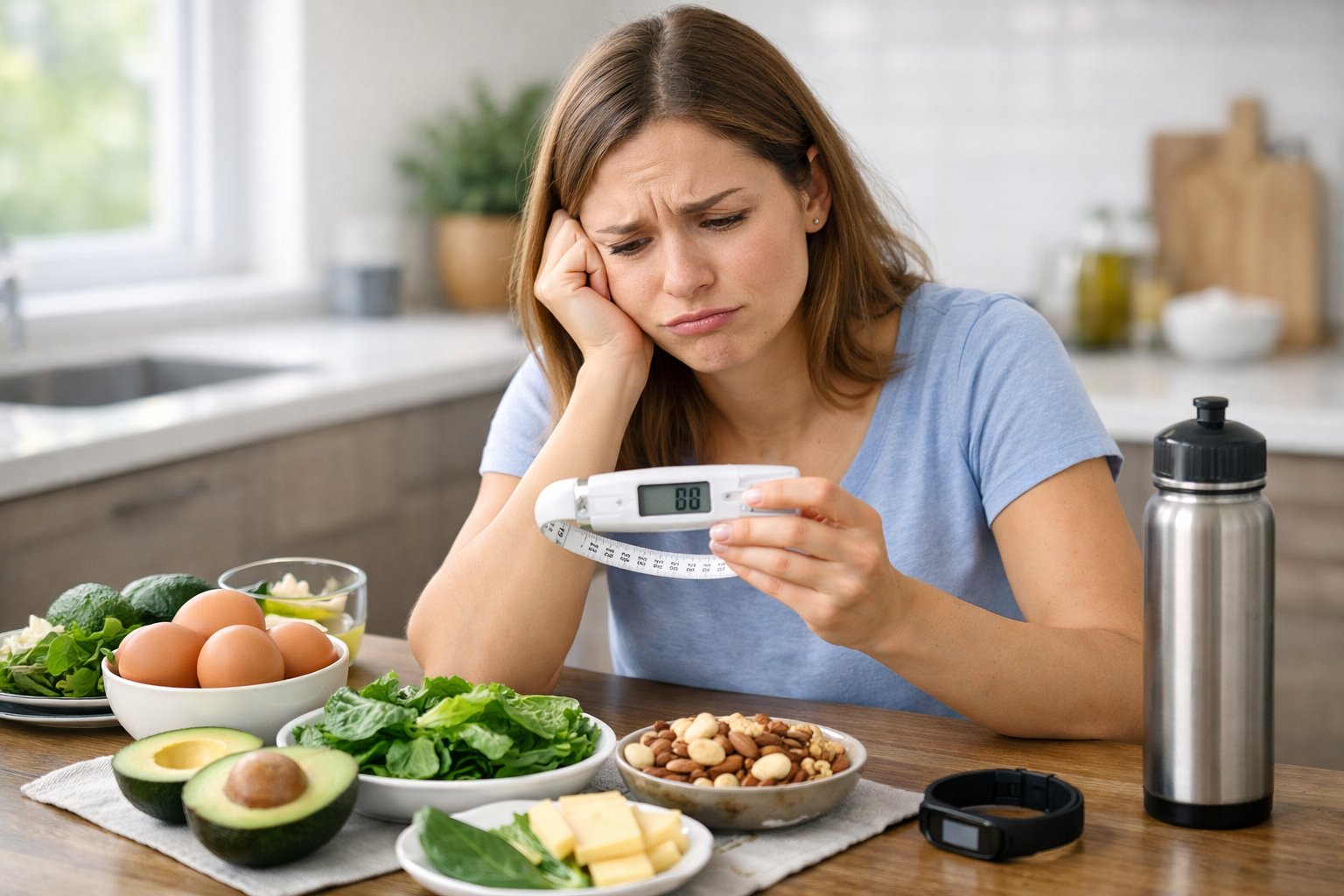
This article examines why you can be doing keto “correctly” on paper and still not losing weight in real life. It breaks down the most common breakdown points between keto theory and actual fat loss.
By the end, you will understand where keto execution most often fails, how to identify what is blocking your progress, and what kind of strategy is required when generic keto rules stop producing results.
This problem usually fits into a broader pattern of execution failure explained in our main breakdown of why keto is not working for me across real-world cases.
Key Takeaways
- Weight loss can stall even when keto rules look correct
- Small details can block fat loss without notice
- Progress depends on habits, health, and the individual body
Doing Keto but Not Losing Weight: Why “Doing Everything Right” Still Fails

Plenty of people stick to the keto playbook and still see zero movement on the scale. The plan seems solid, but the little stuff gets in the way. Bodies change, and so do results.
Why keto feels correct but results don’t follow
Keto sounds simple: cut carbs, eat fat, lose weight. But that belief hides a lot of problems. Sometimes the scale won’t move because your body’s hanging onto water, not fat. Stress, tough workouts, and bad sleep can all make that happen.
Hidden carbs sneak in, too. Sauces, dressings, and “low-carb” snacks add up quick. Even tiny extras can mess with fat burning if your carbs are already low.
Alcohol? That’s another snag. Your body burns off alcohol before fat, so even if you’re eating right, weight loss can stall for days after a few drinks.
Common blind spots
- Sauces and marinades
- Snack foods labeled “keto”
- Frequent alcohol use
Many people experiencing this phase are actually repeating the same patterns outlined in why am I not losing weight on keto without realizing it.
The difference between keto theory and real-world execution
Theory says hormones and carb control are everything. Real life throws in calories, habits, and portion sizes. High-fat foods are sneaky; they’re energy dense and not always filling. Nuts, cheese, and cream can send calories through the roof before you realize it.
Eating more fat doesn’t force your body to burn its own fat. Usually, it just burns the fat you eat. Stuff like butter coffee, fat bombs, or heavy cream can tip the balance.
Tracking for a bit helps spot these gaps. Not forever—just long enough to get your bearings.
| Keto Idea | Real Outcome |
|---|---|
| More fat boosts results | Extra fat can stall loss |
| No need to track | Intake still matters |
| Low carbs fix all | Calories still count |
Early progress vs. stalled outcomes
That first keto drop? It’s mostly water. Carbs store water, so when you cut them, the scale drops fast. Then it stops.
After that, fat loss slows down. Sometimes the scale doesn’t budge even when your clothes fit better. It’s not failure—it’s just how bodies work.
Real stalls happen, too. The body gets used to lower intake and steady routines. Progress kicks back in after you tweak something—tighter carb control, less snacking, fewer drinks.
Weight loss on keto is rarely a straight line. Long plateaus can still mean you’re losing fat, just not seeing it on the scale.
Why Keto Weight Loss Plateaus Happen

Plateaus show up even when you’re following the rules. Keto can work, but tiny gaps between theory and reality slow things down. Biology, food choices, and even your own expectations can get in the way.
How keto is supposed to drive fat loss
Keto drops your daily carbs way down, often under 30–50 grams. This forces your body to burn fat for fuel instead of glucose. As insulin drops, stored fat becomes easier to access.
Fat and protein help you feel full, so a lot of people eat less without even trying. That helps create a calorie deficit. Early weight loss feels fast, mostly because your body dumps water linked to carbs.
To keep losing fat, you’ve got to stay in ketosis. Carbs, calories, and food quality all matter. Let any one of these slip, and progress stalls.
Many stalls are misinterpreted because people misunderstand when keto actually starts working versus when water loss ends.
Where execution typically breaks down
Most stalls happen from eating more than you realize. Keto staples like cheese, nuts, oils, and cream are calorie bombs in tiny portions. You can overeat them without feeling full.
Research published by the National Institutes of Health shows that metabolic adaptation can significantly alter fat-loss response even when calorie intake appears controlled.
Carbs creep up, too. Sauces, snacks, and packaged “keto” foods sneak in hidden carbs that can knock you out of ketosis. These foods usually lack fiber and nutrients, too.
Common breakdown points include:
- Large portion sizes
- Frequent high-calorie snacks
- Heavy use of processed keto products
- Low daily movement or no exercise
Stress and bad sleep pile on. High stress boosts cortisol, which can slow fat loss and make you hungrier. Not exactly a winning combo.
At this stage, most people benefit from a personalized keto planning system rather than relying on another generic macro template.
Short-term drops vs. true metabolic fat loss
The first few weeks of keto usually show big drops on the scale, but that’s just water. Stored carbs hold onto water, so when you cut them, you lose water weight fast.
Real fat loss is slower. It needs a steady calorie deficit and time. If you’re gaining muscle from exercise, the scale won’t move, but you’re still losing fat.
The scale isn’t the whole story. Waist size, how your clothes fit, and body measurements show progress first.
A plateau isn’t failure. It just means you’ve moved from fast water loss to slower, real fat loss. This part takes more patience and a little more attention to detail.
The Hidden Carb Problem That Sabotages Keto

Keto stalls come from carbs sneaking in under the radar. These stealth carbs hide in everyday foods, “keto” products, and sloppy tracking. Each little slip adds up and can totally stall fat loss, even when you’re trying hard.
One of the most common execution gaps comes from hidden carb sources that sabotage keto even when meals look compliant.
The most common sources of sneaky carbs
Hidden carbs love to lurk in foods that seem innocent. Ketchup, BBQ sauce, and salad dressings can pack in sugar by the spoonful. Dairy, especially flavored stuff like yogurt or milk, brings natural sugars that bump up your carb count.
Watch those veggies, too. Onions, tomatoes, and carrots are fine in small amounts, but big servings add up. Nuts and seeds? Same deal—easy to overdo, and they’ve got carbs.
Even sugar substitutes can trip you up. Some, like maltitol, still raise blood sugar. A few “harmless” sources can push you over your daily carb limit without you realizing it.
How “keto” products quietly block ketosis
Packaged foods labeled keto-friendly often have more carbs than you’d guess. Companies use starches, fibers, or sugar alcohols for taste and texture, but those can still mess with blood sugar or insulin for some folks.
Serving sizes? Don’t trust them. A “keto” bar might look good on paper, but who eats just one bite? Multiple servings can wipe out your calorie deficit and blow up your carb count.
Processed keto foods also lower the quality of your diet. They swap whole foods for low-fiber, less satisfying options. That can leave you hungrier and make weight loss even harder, even if your carb math looks fine.
Why tracking often fails in real life
Tracking trips people up when they skip details. Oils, butter, and cream slip by unmeasured. They add calories—and sometimes carbs—but lots of folks forget to log them.
Eating out is tricky. Menus rarely list everything, and sauces usually have sugar or starch. Even careful guesses can be way off.
Then there’s tracking fatigue. After a while, you might eyeball instead of measure. Tiny mistakes add up. That gap between what you think you’re eating and what you actually eat? It’s often why the scale won’t budge, even when you’re trying your best.
Calorie Intake and the Keto Miscalculation

Plenty of people get stuck on keto because fat calories add up fast, portion sizes creep up, and your body still needs the right cues to burn fat. Cutting carbs alone doesn’t solve these issues.
How fat calories quietly erase deficits
Fat has more than double the calories of protein or carbs. Oils, butter, nuts, and cheese can push your intake sky high without filling you up. You can stay under 20–30 grams of net carbs and still eat too much.
Small extras matter. One tablespoon of oil? That’s 120 calories. A few “keto snacks” can wipe out your calorie deficit for the day.
Common high-calorie keto items
| Food | Typical serving | Calories |
|---|---|---|
| Olive oil | 1 tbsp | ~120 |
| Butter | 1 tbsp | ~100 |
| Macadamia nuts | 1 oz | ~200 |
| Cheese | 1 oz | ~110 |
Keto can curb hunger for a lot of people, but it doesn’t override basic calorie math. If you eat as much as you burn—or more—weight loss hits a wall.
Errors often come from not knowing how to calculate keto macros correctly once fat loss slows.
Portion distortion and “keto overconsumption”
Keto foods feel like a free pass, so portions tend to creep up. People eyeball servings instead of measuring. Eating out? Restaurants love to use heavy fats that you never see.
Packaged “keto” stuff brings its own headache. Lots of fat, lots of sweeteners, and the labels focus on net carbs, not calories.
Here’s where portions drift in daily life:
- Cooking with oil but not measuring
- Snacking on nuts or cheese throughout the day
- Calorie-rich coffee add-ins (hello, heavy cream!)
Tracking for a week or two can reset your sense of portions. It’s eye-opening, honestly.
Why keto still requires metabolic alignment
Ketosis isn’t a magic bullet. Your body still cares about sleep, stress, and protein. Bad sleep or high stress raise hunger and blood sugar, which can slow or stop weight loss.
Protein’s a balancing act. Too little and you lose muscle, which slows your burn. Too much and you might crowd out your calorie deficit. Most folks do best with steady protein at every meal.
Meal timing matters, too. Constant snacking keeps insulin up, even on keto. Some people find a shorter eating window helps line up intake with what their body burns.
Keto works best when carbs are low and calories, protein, sleep, and stress are all in check. It’s a lot, but that’s real life.
Lifestyle Factors That Undermine Keto Results
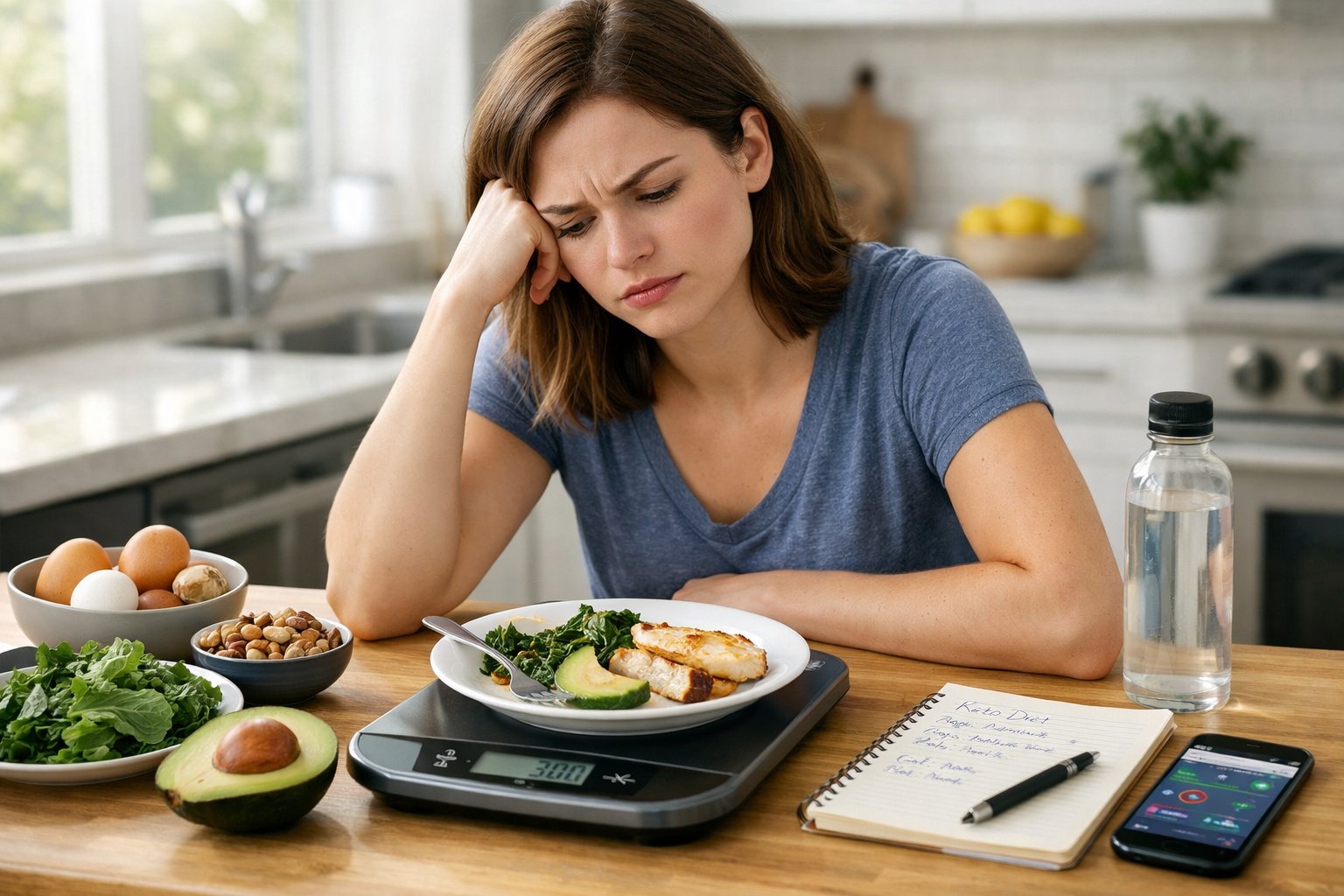
Even if you’re strict with carbs and food choices, daily habits can totally block fat loss. Sleep patterns and how much you move might drive hormones and energy use even more than the food itself.
Sleep debt, cortisol, and fat-loss resistance
Short sleep bumps up cortisol, that stress hormone nobody really wants. High cortisol can slow fat loss and even nudge up blood sugar, keto or not.
It also tends to make you hungrier and crave junk the next day. Poor sleep messes with insulin, which can chip away at the benefits of low-carb eating.
And honestly, most of us move less and snack more when we’re wiped out.
Common sleep-related blocks
| Issue | Effect on fat loss |
|---|---|
| Less than 6 hours | Higher cortisol |
| Late bedtimes | Worse blood sugar control |
| Broken sleep | Lower daily energy |
Consistent sleep matters more than perfect macros. Fixed bedtimes, dark rooms, and skipping that late coffee can make a real difference.
The relationship between keto and sleep quality strongly influences cortisol output and fat-loss resistance.
Low-output lifestyles and stalled metabolism
Keto doesn’t erase the effects of low movement. Sitting for hours tanks calorie use and weakens insulin sensitivity.
Even if you hit the gym, a super-inactive day can still slow things down. The body adapts to low output by burning fewer calories at rest.
This stall can happen even if your food hasn’t changed. Steps, standing, and just moving around—those count.
Signs of low daily output
- Fewer than 6,000 steps per day
- Long sitting blocks without breaks
- Exercise only a few hours per week
Short walks after meals, standing up more, and knocking out a few chores help. These little things support fat loss without adding extra stress.
Individual Differences That Make Generic Keto Fail
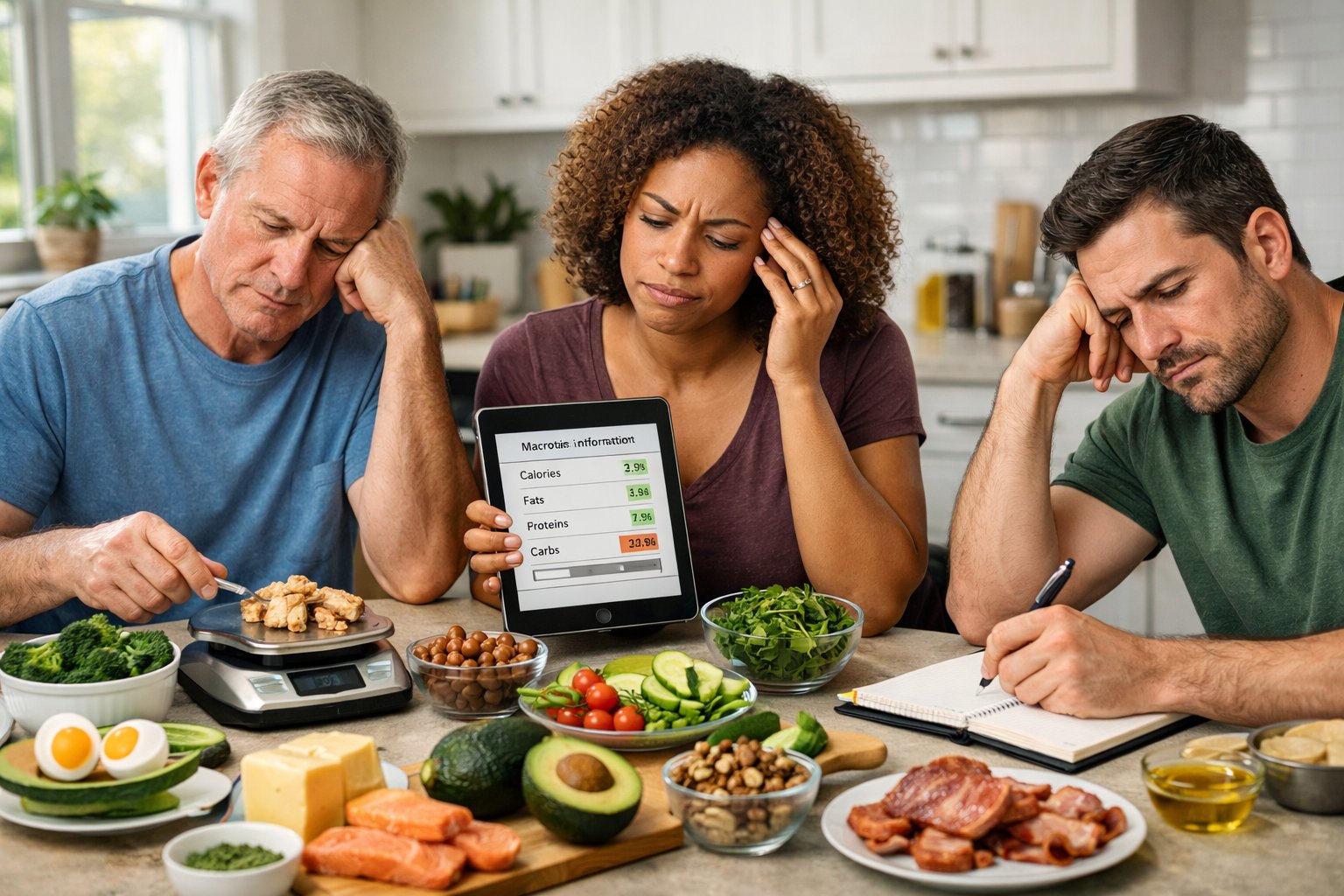
Some folks follow keto to the letter and still see nothing budge. Biology, health history, and daily stress can block fat loss, even with low carbs and all the tracking in the world.
Hormonal environments and carb sensitivity
Hormones run the show when it comes to fat and energy. If these signals are off, keto weight loss can stall hard.
Insulin resistance is a biggie—here, even tiny carb amounts can spike insulin and slow fat burning. Other hormones matter too.
High cortisol from stress or bad sleep? That pushes the body to hold onto fat, especially around the middle. Thyroid hormones set metabolic speed, and low output means you burn fewer calories.
Common hormone-related barriers include:
- Insulin resistance: slows fat release
- High cortisol: raises blood sugar and hunger
- Low thyroid output: lowers daily energy use
Some people react to dairy or sweeteners, which can sneakily raise insulin or appetite—even if carbs look low.
Metabolic history, medications, and hidden barriers
Your dieting past shapes how your body reacts to keto. Long stretches of very low calories can slow your metabolism.
Drop calories again, and weight loss just doesn’t happen as fast. Some meds get in the way too—stuff for blood sugar, mood, blood pressure, or inflammation can all mess with hunger, water retention, or metabolism.
Keto can’t override those effects. Other hidden issues?
- Low nutrient intake from processed keto foods
- Water retention masking fat loss on the scale
- High fat intake preventing a calorie deficit
Age and muscle mass count as well. Less muscle means you need fewer calories. If you don’t adjust, keto calories can still be too high for fat loss.
When keto feels right but nothing is changing, the real issue is usually that your plan isn’t aligned to your metabolism, carb tolerance, and fat-loss response patterns. so it may be time to build a personalized keto plan designed around your metabolism rather than generic rules.
Assessing Diet Quality Beyond Macros

Hitting your carb, fat, and protein numbers doesn’t guarantee fat loss. Food quality, inflammation, and daily habits play a bigger role than most realize.
Food selection, inflammation, and metabolic signaling
Keto meals might hit the macros but still slow fat loss if food quality is low. Processed “keto” foods often sneak in extra calories, low fiber, and additives that can boost inflammation.
Confusion between dirty keto vs lazy keto approaches often leads to metabolic inputs that block consistent fat loss.
Inflammation messes with insulin and appetite control. Whole foods, on the other hand, help keep metabolic signals more stable.
Fiber from low‑carb veggies helps with fullness and gut health. Lean proteins keep calories in check. Fats from fish and plants tend to support hormones better than lots of saturated fat.
Higher-quality keto choices
- Non-starchy vegetables (leafy greens, broccoli)
- Whole proteins (fish, eggs, poultry)
- Unsaturated fats (olive oil, avocado, nuts in measured portions)
- Fermented foods in small amounts
Lower-quality traps
- Packaged keto snacks and desserts
- Heavy butter and oil use without portions
- Frequent processed meats
| Choice type | Effect on appetite | Effect on calories |
|---|---|---|
| Whole foods | Improves fullness | Easier to control |
| Processed keto | Triggers overeating | Adds quickly |
Why sustainability determines long-term fat loss
Fat loss sticks when the plan is actually livable. Super low carb can mess with sleep, mood, and workouts, which just raises stress hormones and stalls progress.
If you can’t stick with it, the weight creeps back. Sustainable plans balance structure with flexibility.
A modified keto can work if there’s enough veggies, protein, and calories to function. Consistency trumps perfect ketosis any day.
Key signs you can keep going? Steady energy, cravings you can manage, and decent sleep. If those are missing, fat loss rarely lasts.
What to Do When Keto Isn’t Working Anymore

If weight loss stalls, the issue’s usually in the execution—not the effort. Progress comes back when you shift from strict rules to looking at real data and what fits your life.
Identifying your specific execution gaps
Most stalls are from a handful of repeat issues, even for people tracking everything. Hidden carbs, oversized fat servings, and missed calories add up fast.
Lots of “keto” foods still bump up intake without making you full. Here are the usual suspects:
- Daily carbs sneaking above 20–50 grams (think sauces, dairy, snacks)
- Fat portions too generous—oils, butter, nuts, cheese
- Calories higher than you’d guess, even with low carbs
- Sleep and stress bad enough to drive up hunger
- Movement too low to keep fat loss rolling
Short-term tracking (like, two weeks) spots the pattern. Logging oils, drinks, and snacks is eye-opening.
Shifting from generic keto rules to personalized strategy
Generic keto treats everyone the same, but bodies don’t work that way. Some people lose weight outside of ketosis, while others stall if carbs get too low.
Personal tweaks can include:
- Raising carbs a bit for more energy and better appetite control
- Cutting back on fat to create a calorie gap
- Boosting protein to protect muscle and keep you full
- Adding more low-carb veggies for volume and fiber
Here’s a quick comparison:
| Focus | Generic Keto | Personalized Keto |
|---|---|---|
| Carbs | Fixed low target | Adjusted to response |
| Fat | As high as possible | Enough, not excess |
| Protein | Limited | Adequate and steady |
A dietitian can help you figure out which lever matters most for you.
Structuring a plan that adapts to your body
What works now might not work in a few months. Weight loss slows, so intake, movement, and habits need to shift too.
A practical plan should include:
- Weekly check-ins (look at weight trends, hunger, energy)
- Simple meals (repeat foods to cut down on mistakes)
- Regular movement (daily walks, light strength work)
- Sleep targets (aim for 7–9 hours if you can)
Instead of just tightening the rules, adjust based on feedback. If hunger spikes, tweak calories or carbs. If weight stalls, trim portions or move more. It’s all about progress, not perfection.
Frequently Asked Questions

People get stuck on keto for all sorts of reasons—hidden carbs, too many fat calories, stress, lousy sleep, and not enough movement. Hormones, food quality, and habits play a bigger role than most realize.
Why am I doing keto but not losing weight anymore?
Weight loss usually slows after the first few weeks. The body adapts to fewer calories and burns less at rest.
Most folks also start drifting from strict carb limits without noticing. Even small changes can stall fat loss.
What usually causes a keto weight loss plateau?
Hidden carbs, big fat servings, and poor sleep are top culprits. Stress and low movement sneak in too.
Medical stuff like insulin resistance or thyroid problems can slow things down. Those need a doctor, not just stricter dieting.
Can eating too much fat stop keto weight loss?
Yep. Fat has more than double the calories of carbs or protein per gram.
Big servings of oils, butter, nuts, and fatty meats can wipe out a calorie deficit. Keto still needs portion control if you want results.
How do hidden carbs block keto progress?
Hidden carbs bump up blood sugar and slow fat burning. A lot of “keto” foods have fillers, sugar alcohols, or starches lurking inside.
Condiments, dairy, nuts, and low‑carb snacks add up quickly. Tracking usually reveals them.
Does exercise matter if keto isn’t working?
Exercise helps by keeping muscle and improving insulin sensitivity. It doesn’t have to be hardcore to work.
Daily walking or simple strength training can get things moving again. Plus, moving more helps with stress and sleep.
How do stress and sleep interfere with keto fat loss?
Chronic stress cranks up cortisol, which encourages fat storage. It also triggers cravings and bigger appetite.
Poor sleep throws off hunger hormones. That makes it way tougher to control portions and stick to your plan.
Conclusion
A lot of people stick to keto rules but never see the scale budge. It’s frustrating, right?
Hidden carbs sneak in, or maybe it’s just too many calories from fats. Even little habits—like lousy sleep or too much stress—can quietly sabotage progress, even if your meals look on point.
Here’s something that’s easy to forget: keto doesn’t erase the need for a calorie deficit. Fat packs more calories per gram than carbs or protein, so yeah, portions still matter.
Those packaged “keto” snacks, nuts, oils, and dairy? They can really ramp up your calorie intake before you realize it.
Lifestyle stuff makes a difference too. Not moving much, skimping on sleep, or being stressed for weeks can mess with hunger and fat storage.
And sometimes, the body just has its own plans—like thyroid issues or insulin resistance. That can make things tricky.
Common reasons keto weight loss stalls include:
- Eating more carbs than you think
- Going overboard on dietary fat
- Choosing low-quality or super processed foods
- Letting sleep, stress, or daily activity slide
- Health or hormone issues hiding in the background
Keto really works best when it fits your life, not when you’re twisting yourself to fit the diet. Honestly, sometimes a less strict plan that still keeps calories in check and supports habits you can live with is just smarter.
Once you understand your execution gaps, the fastest path forward is a keto structure that adapts as your body adapts instead of forcing static rules.