
Why Am I Experiencing Hair Loss on Keto? Possible Causes and What to Check
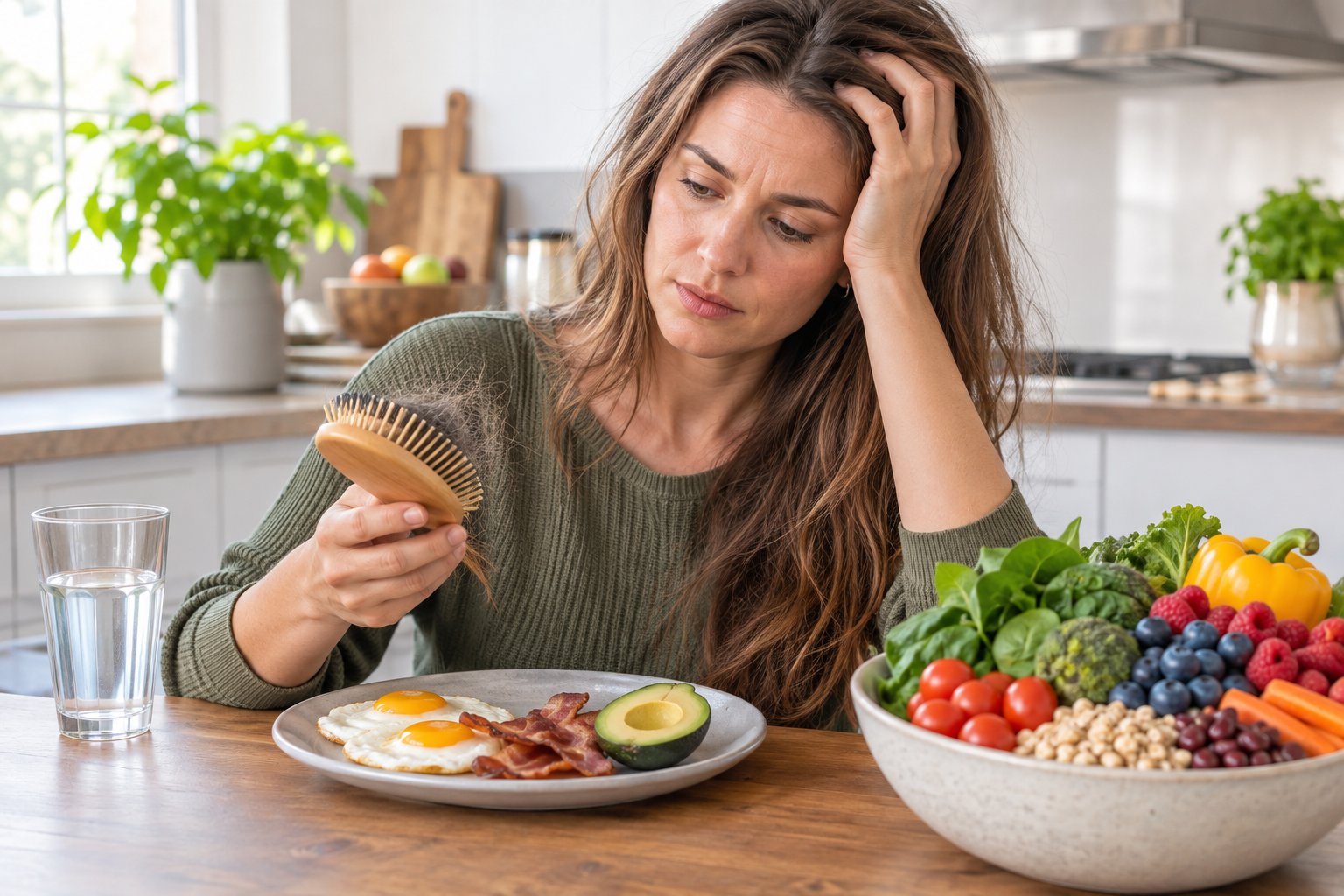
Hair loss on keto can be concerning, particularly when increased shedding begins after changing your eating habits. However, the timing alone does not establish that the ketogenic diet itself is responsible.
Rapid weight loss, excessive calorie restriction, inadequate protein, limited nutritional variety, recent illness, and physical or psychological stress can all be relevant. Some forms of temporary hair shedding may also become noticeable months after the original trigger.
This guide examines the possible connections between keto and hair shedding, explains what to review in your dietary routine, and identifies situations where another medical or hormonal cause may need attention.
Hair Loss on Keto: Why Shedding Can Happen

Hair shedding on keto most often follows the body changes that come with the diet, such as rapid weight loss or lower food intake. The diet label matters less than what your body experienced while following it.
Is It Hair Loss or Increased Hair Shedding?
Shedding means hairs fall out from the root more often than normal. Most healthy people lose up to about 100 hairs a day. With telogen effluvium, that number can climb to around 300. You notice it in the shower drain, on your pillow, or in your brush.
Hair loss is a broader term. It can mean shedding, but it can also mean hair that stops regrowing, thins in a pattern, or falls out in patches. These have different causes, so the difference shapes your next step.
Why Hair Shedding Can Appear After a Major Dietary Change
A big change in eating can stress the body. Fad diets low in protein and rapid weight loss are both known triggers for telogen effluvium. When the body is under strain, more hairs than normal move into their resting phase at once. A few months later, those hairs fall out together.
Why Keto Itself Is Not Automatically the Cause
Many people lose weight quickly in the first months of keto, and some cut calories or protein too far. Those factors are linked to shedding on any diet. If you eat enough food and enough protein and lose weight at a steady pace, there is little evidence that being in ketosis alone causes hair thinning after starting keto.
Triage — What Does Hair Loss on Keto Look Like?
The pattern of your hair loss is the fastest way to sort likely causes.
Increased Shedding Across the Scalp
- Hair falls out evenly across the scalp, often most noticeable on top.
- More hair in the brush, drain, or pillow than you are used to.
- Scalp looks healthy: no rash, pain, itching, or flaking.
- Hairline usually stays intact.
- Began fairly suddenly, a few months after a stressor.
- Most consistent with: telogen effluvium.
Hair Thinning That Has Developed Gradually
- Slow thinning over months or years, without big shedding episodes.
- Women: a widening part or thinning over the crown.
- Men: a receding hairline or thinning spot at the top of the head.
- Family history of similar thinning.
- Most consistent with: hereditary (pattern) hair loss, which keto does not cause but which shedding can make more visible.
Hair Loss That Deserves Closer Evaluation
- Round or smooth bald patches.
- Loss of eyebrows, eyelashes, or body hair.
- Scalp pain, burning, redness, scaling, or small black dots.
- Shedding that lasts longer than six months or keeps getting worse.
- Other symptoms such as fatigue, feeling cold, weight changes you can’t explain, or heavy periods.
- Next step: see a clinician or board-certified dermatologist.
Diagnostic Summary — What May Be Behind Hair Loss on Keto?
Match your recent history to the most likely contributor below, then read the matching section.
Rapid Weight Loss or Excessive Restriction May Be Contributing
Likely if you lost weight fast, often 20 pounds or more, or ate very little in your first months. Go to Cause #1.
Your Protein or Overall Nutritional Intake May Be Inadequate
Likely if your meals lean heavily on fat, skip regular protein, or repeat the same few foods. Go to Causes #2 and #3.
Recent Illness or Physical Stress May Be Responsible
Likely if you had a fever, infection, surgery, childbirth, or a hard emotional period two to four months before shedding began. Go to Cause #4.
Another Hair or Health Condition May Be Involved
Likely if your hair loss is patchy, patterned, painful, or long-lasting, or comes with other symptoms. See the sections on non-keto causes and medical evaluation.
If hair shedding appears alongside other difficulties with your keto routine, a broader review of why keto may not be working for you can help you examine the wider pattern.
→ why keto may not be working for me
Cause #1 — Rapid Weight Loss or Excessive Calorie Restriction
Fast weight loss is one of the best-known triggers of temporary shedding, and early keto often produces exactly that. Dermatologists list losing 20 pounds or more among the situations where hair usually regrows on its own.
How Rapid Weight Loss Can Trigger Temporary Hair Shedding
When your body goes through a quick drop in weight, a large share of growing hairs can switch into the resting phase early. Up to 70% of growing hairs can make this shift after a major stressor. The shedding shows up later, once those resting hairs release.
Why Aggressive Calorie Restriction Adds Physical Stress
Keto lowers appetite for many people. That can make it easy to eat far less than your body needs without noticing. Skipping meals, long fasting windows, and heavy exercise on top of a low intake all add to the strain. Hair growth is not essential for survival, so it is one of the first places that strain becomes visible.
The Difference Between Sustainable Weight Loss and Under-Fueling
| Sustainable pace | Signs of under-fueling |
|---|---|
| Steady loss over weeks and months | Large drops week after week |
| Regular meals with protein | Frequent skipped meals or one small meal a day |
| Stable energy and sleep | Constant tiredness, feeling cold, dizziness |
| Normal menstrual cycle | Missed or irregular periods |
If the right column sounds familiar, eating enough to slow your rate of loss is a reasonable first change.
When weight loss involves substantial food restriction, it is worth understanding the wider consequences of eating too little on keto before making further dietary changes.
Cause #2 — You’re Not Getting Enough Protein

Low protein intake is a recognized trigger for shedding, and some versions of keto push protein lower than you might expect. Keto is a high-fat plan, but it is meant to include moderate protein.
Why Protein Matters for Normal Hair Growth
Hair is made mostly of a protein called keratin. Your follicles need a steady supply of protein to keep producing it. When intake falls short, the body sends protein to more vital tasks first.
Protein intake deserves attention when meals are consistently inadequate, and this guide explains what can happen when you don’t eat enough protein on keto.
How Restrictive Eating Can Reduce Protein Intake
Some people limit protein out of fear that it will block ketosis. Others fill up on fat bombs, butter coffee, and oils, which leave little room for protein-rich food. A smaller appetite makes the gap wider.
Signs Your Keto Meals May Be Too Low in Protein
- Many meals are built around fat, with little meat, fish, eggs, or dairy.
- You often replace a meal with coffee or a fat-based drink.
- You feel weak or lose strength during workouts.
- You get hungry soon after eating despite high fat intake.
As a rough reference, many adults need at least 40 to 60 grams of protein a day, and needs rise with body size and activity. Keto-friendly sources include eggs, chicken, beef, pork, salmon, sardines, Greek yogurt, cottage cheese, hard cheeses, tofu, and tempeh.
Reviewing Protein Intake Before Considering Supplements
Track what you eat for a few typical days before buying any product. If your protein falls short, adding a palm-sized portion of protein food to each meal is a simple fix.
Collagen and protein powders are not required, and they do not address other causes of shedding.
When a genuine protein-intake gap has been identified and food-based options are difficult to manage, this guide to the best keto protein powders can help you compare convenient options, although protein powder is not a treatment for hair loss.
Cause #3 — Your Diet May Not Provide Adequate Nutritional Variety
A narrow food list can leave gaps in vitamins and minerals that support hair, even when calories and protein look fine.
How Restrictive Food Choices Can Affect Nutritional Adequacy
Keto removes grains, most fruit, beans, and starchy vegetables. If you replace them with the same few foods every day, your intake of some nutrients will drop. Eating mostly processed “keto” snacks narrows variety further.
Iron and Other Nutrients Relevant to Hair Health
Too little iron, zinc, protein, or biotin is linked to noticeable hair loss. Iron deficiency is the most common of these, especially in people with heavy periods. Keto-friendly foods that add variety include:
- Iron: red meat, liver, clams, sardines, spinach
- Zinc: beef, oysters, pumpkin seeds, hemp seeds
- Vitamins and minerals in general: leafy greens, broccoli, cauliflower, avocado, nuts, berries in small portions
Biotin deficiency is rare. Severe deficiency has never been reported in healthy people eating a normal mixed diet.
Why Overall Dietary Quality Matters Beyond Protein
Hair growth relies on many nutrients working together. A plate with protein, a non-starchy vegetable, and a whole-food fat covers more ground than a plate of cheese and processed meat alone.
Why Nutritional Supplements Should Follow Identified Needs
Dermatologists advise taking iron, zinc, or biotin only when a blood test shows you are low. Extra iron can cause iron poisoning. Too much vitamin A or selenium can itself cause hair loss. High-dose biotin can interfere with lab tests, including thyroid tests, and give falsely normal or abnormal results. If you take biotin, tell your clinician before any blood work.
Cause #4 — Recent Illness or Physical Stress May Be the Trigger
Your shedding may trace back to an event that had nothing to do with food. Because of the delay, many people have fully recovered from the stressor before their hair starts falling.
Fever and Significant Illness
High fever and severe infections are classic triggers of telogen effluvium. A bad flu, COVID-19, or another illness two to three months before your shedding began is a strong candidate.
Surgery or Other Major Physical Stress
Major surgery, childbirth, and a serious injury place heavy strain on the body. Stopping birth control pills can also shift hormones enough to start shedding.
Psychological Stress and Major Lifestyle Changes
Strong emotional stress, such as a divorce, a death in the family, or a job loss, is a known trigger. Starting keto during a stressful period stacks two stressors together, which makes the cause harder to pin down.
Why Hair Shedding Can Start Months After the Trigger
Shedding from telogen effluvium shows up weeks to months after the event because of how the hair cycle is timed.
Understanding the Hair Growth Cycle
Each hair follicle cycles through three stages on its own schedule:
- Anagen (growth): lasts up to several years; about 80% to 90% of hairs are here.
- Catagen (transition): a short stage where growth stops; about 5% of hairs.
- Telogen (resting): the hair stays in place until it sheds; about 5% of hairs.
What Happens During Telogen Effluvium
A stressor pushes many growing hairs into the resting stage early. These hairs stay put for a while, then fall out together. A clinician can sometimes confirm this with a gentle pull test, which shows more hairs than normal coming out with small white bulbs at the roots.
The British Association of Dermatologists’ guide to telogen effluvium explains how physical and psychological stressors can disrupt the hair-growth cycle, why shedding may appear months after a trigger, and what recovery can involve.
Why Shedding Often Appears Two to Four Months After a Stressor
Resting hairs hold on for a couple of months before they release. That is why the shedding you notice in November often points back to something in August or September. Look back at that window first.
How Long Temporary Shedding and Regrowth May Take
Acute shedding lasts less than six months and resolves in about 95% of cases. Two separate timelines are at work:
- Shedding slows once the trigger has passed, often within a few months.
- Visible fullness returns more slowly, since new hair grows only about half an inch a month. Many people see normal density return over 6 to 9 months after shedding stops.
Short new hairs along your part are a sign of regrowth. Individual timelines differ, and shedding lasting longer than six months is classed as chronic and calls for evaluation.
When Hair Shedding May Have Nothing to Do With Keto
Many causes of hair loss can begin while you happen to be on keto. Comparing your symptoms to these patterns helps you see what to raise with a clinician.
Thyroid Conditions and Hormonal Changes
Both an under-active and an overactive thyroid can cause thinning hair. Other clues include fatigue, weight changes, and feeling too hot or cold. Hormonal shifts such as polycystic ovary syndrome (PCOS), stopping birth control, or perimenopause can also thin scalp hair.
Thyroid and hormonal conditions can influence hair health, so it is important to consider these possibilities separately from dietary execution; see this discussion of keto and hormones for additional context.
Iron Deficiency and Other Nutritional Problems
Iron deficiency can develop from heavy periods, blood donation, or digestive problems, regardless of diet. Tiredness, shortness of breath, and pale skin can come with it. Only a blood test confirms it.
Hereditary or Patterned Hair Loss
Hereditary hair loss is the most common cause of hair loss worldwide. It thins hair slowly in a set pattern. A bout of shedding can make it noticeable for the first time, and sometimes shedding is an early sign of it.
Alopecia Areata and Other Hair Conditions
Alopecia areata is an immune condition that causes smooth, round bald patches. Other causes include scalp infections, scalp psoriasis, tight hairstyles (traction alopecia), and scarring alopecias, which can cause permanent loss if not treated early.
Medication Changes and Other Medical Factors
Some medications are linked to shedding, including retinoids, beta-blockers, calcium channel blockers, antidepressants, and NSAIDs. If you suspect a medication, ask your prescriber. Do not stop a prescribed drug on your own.
Why Multiple Causes Can Occur Together
You can have more than one cause at once. For example, rapid weight loss may cause obvious shedding while early hereditary thinning sits underneath it. This is one reason a dermatologist exam helps when the picture is unclear.
When Hair Loss Needs Medical Evaluation
Patchy loss, scalp symptoms, shedding beyond six months, or shedding alongside other symptoms all call for a visit to a clinician or board-certified dermatologist.
Sudden or Patchy Hair Loss
Round bald spots or loss of eyebrows and eyelashes point away from diet and toward conditions like alopecia areata. Early treatment improves results.
Scalp Pain, Itching, Redness, or Inflammation
Telogen effluvium leaves the scalp looking healthy. Pain, burning, scaling, or redness suggests infection, psoriasis, or an inflammatory condition that needs treatment to protect the follicles.
Persistent or Progressive Hair Shedding
Get checked if shedding continues past six months, keeps getting heavier, or does not ease after you fix your intake. Fatigue, unexplained weight change, or heavy periods add to the case for a visit.
When a Clinician May Consider Blood Tests or Other Assessments
A clinician starts by asking about your timeline, diet, illnesses, and medications, then examines your scalp and nails. Tests are chosen based on that history. Depending on your symptoms, they may check iron stores, thyroid function, or hormone levels. A scalp biopsy is reserved for unclear cases. Many cases of telogen effluvium are diagnosed with no tests at all.
Why Treatment Depends on Identifying the Actual Cause
Each cause needs a different approach. Diet-related shedding often settles once intake improves. Minoxidil, a topical treatment, is used for some diagnoses such as hereditary hair loss, and a dermatologist decides whether it fits your case. It is not a routine fix for shedding linked to diet.
How to Review Your Keto Diet When Hair Shedding Appears
Start with the factors you can change today, and make one adjustment at a time.
Reassess Your Rate of Weight Loss
Compare your weight now with three to four months ago. Fast early losses suggest the shedding is a delayed reaction. A slower, steadier pace going forward lowers strain on your body.
Review Total Food and Protein Intake
Log a few normal days in a tracking app. Check that you eat regular meals and include a protein food at each one, such as eggs at breakfast, chicken or fish at lunch, and beef or tofu at dinner.
Reviewing your actual intake against your individual requirements is more useful than guessing, and how to calculate macros for keto provides a framework for assessing your nutritional targets.
Check Whether Your Food Choices Are Too Restrictive
Count how many different whole foods you eat in a week. Rotate in leafy greens, cruciferous vegetables, seafood, nuts, seeds, and the occasional serving of berries to widen your nutrient intake within keto limits.
Consider Illness and Other Stressors From Previous Months
Look at your calendar from two to four months before shedding began. Note any fever, infection, surgery, medication change, or major life event. Bring this list to any appointment.
Avoid Making Further Dietary Restrictions Without a Clear Reason
Cutting more foods or starting a new fast in response to shedding adds stress. Skip high-dose single-nutrient supplements unless a test shows a need. A basic multivitamin is a lower-risk option if your diet is limited.
Dietary adjustments should reflect individual needs and circumstances rather than follow a rigid formula; this guide to personalizing your keto diet explains why the overall approach needs to be workable for the person following it.
Conclusion: Investigate the Cause of Hair Shedding Before Assuming Keto Is Responsible
Hair shedding on keto is most often tied to rapid weight loss, low intake, low protein, a narrow diet, or an illness or stressor from a few months earlier.
Diffuse shedding with a healthy scalp usually points to temporary telogen effluvium, while patterned thinning and patchy loss suggest other conditions.
Check your weight-loss pace, protein, and food variety, and look back two to four months for triggers. If your shedding is patchy, painful, or lasts more than six months, book a visit with a board-certified dermatologist and bring your food log and timeline.
Once you have reviewed your nutritional intake and identified areas where your current meal structure may need improvement, a personalized keto plan may help you organize your food choices around your individual needs and daily routine.