
5 Keto Diet Mistakes That Stop Results (And How to Fix Them)
Most people don’t fail the keto diet because it doesn’t work.
They fail because they don’t realize where execution breaks down—especially when following a custom keto plan.
If your weight isn’t dropping, energy feels off, or results are inconsistent, the issue is rarely the diet itself.
It’s usually one of a few predictable keto diet mistakes that disrupt ketosis, delay adaptation, or prevent your body from responding.

In many cases, these mistakes explain exactly why keto may not be working at all, even when you’re following the rules.
This guide breaks down the exact mistakes that cause early keto failure—and helps you identify whether you’re on track, still adapting, or already off course.
Table of Contents
What Are the Most Common Keto Diet Mistakes?
The most common keto diet mistakes include consuming hidden carbs, using low-quality fats, eating too much protein, misreading adaptation symptoms, and failing to personalize the diet.
- Hidden carbs that disrupt ketosis
Small amounts of overlooked carbohydrates can raise insulin levels and prevent your body from staying in fat-burning mode. - Poor fat quality (“dirty keto” execution)
Relying on processed foods and low-quality fats reduces metabolic efficiency and leads to unstable energy and slower results. - Too much protein blocking ketosis
Excess protein can be converted into glucose, making it harder for your body to maintain ketosis. - Misreading adaptation symptoms as failure
Early fatigue, brain fog, and slow progress are often part of the adaptation phase—not signs that keto isn’t working. - Following a plan without personalization
A keto plan that doesn’t match your body, lifestyle, or response will eventually lead to stalled or inconsistent results.
Why Most Custom Keto Plans Fail Early

Many people assume that following a custom keto plan automatically leads to results.
In reality, most early failures happen not because the plan is wrong—but because how the plan is executed doesn’t match how the body responds.
A custom plan gives structure, but it does not eliminate the need for correct execution. Small mistakes—like underestimating carbs, mismanaging protein, or ignoring adaptation signals—can quietly prevent ketosis from stabilizing.
This is why two people can follow similar plans and experience completely different outcomes. One adapts and starts losing fat. The other feels stuck, fatigued, or confused about why nothing is changing.
To understand why small mistakes matter, you need to understand how ketosis actually works, and why even minor deviations can disrupt the process.
Top Keto Diet Mistakes That Stop Results
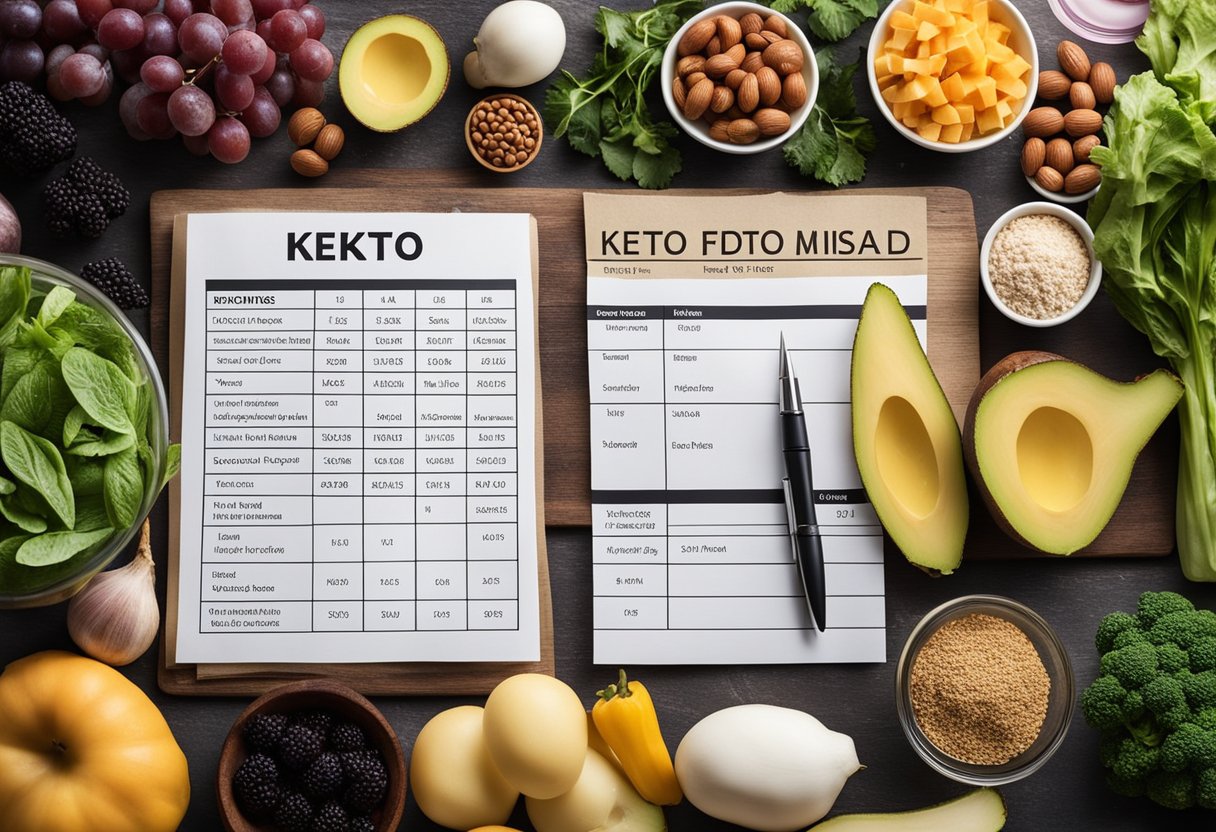
Now that you’ve seen the most common keto diet mistakes at a glance, the real issue is understanding how these mistakes actually stop results.
They come from doing a few critical things slightly wrong—consistently enough to block results.
These keto diet mistakes often go unnoticed because they don’t immediately break the diet. You may still be eating “low carb,” following your plan, and trying to stay consistent. But beneath the surface, these small errors can prevent your body from fully entering or sustaining ketosis.
What makes this more confusing is that early keto symptoms—like fatigue, slow progress, or inconsistent energy—can look the same whether you’re adapting correctly or making a mistake.
That’s why identifying the exact mistake matters more than trying to “push harder” or stay more disciplined.
Below are the most common execution failures that stop keto from working—especially when following a custom plan.
Mistake #1: Hidden Carbs That Disrupt Ketosis
One of the most common keto diet mistakes is consuming more carbohydrates than you realize. Even small amounts of hidden carbs can raise insulin levels enough to prevent your body from staying in ketosis.
These carbs often come from foods that appear “keto-friendly” but aren’t strictly low-carb in practice—such as sauces, dressings, processed snacks, and even certain vegetables consumed in excess. Over time, these small miscalculations add up and quietly block fat-burning.
The problem is not always obvious. You may still feel like you’re following the plan correctly, but your body never fully transitions into efficient fat metabolism.
This is why understanding how ketosis works is critical. Ketosis depends on consistently low carbohydrate intake—once that threshold is exceeded, even slightly, the process is disrupted.
Mistake #2: Poor Fat Quality and Dirty Keto Execution
Another common keto diet mistake is focusing on fat quantity instead of fat quality.
Many people assume that as long as they keep carbs low, any high-fat food will support ketosis. This often leads to a “dirty keto” approach—relying on processed meats, low-quality oils, and packaged keto snacks that technically fit macros but undermine overall metabolic efficiency.
While you may still enter ketosis this way, results are often inconsistent. Energy levels fluctuate, hunger increases, and fat loss slows down because the body is not receiving nutrient-dense fuel.
This is where confusion between different approaches becomes a problem. Understanding the differences between dirty keto vs lazy keto helps clarify why food quality still matters—even when carbs are controlled.
In practice, successful keto execution depends on combining low carbohydrate intake with high-quality fat sources that support stable energy and better metabolic response.
Mistake #3: Too Much Protein Blocking Ketosis
Many beginners assume that eating more protein will accelerate fat loss.
In reality, consuming too much protein can interfere with ketosis.
When protein intake exceeds what the body needs, a portion of it can be converted into glucose through a process called gluconeogenesis. This raises blood sugar and insulin levels, making it harder for the body to remain in a fat-burning state.
This mistake is common among those transitioning from traditional dieting, where high-protein intake is often encouraged. On keto, however, the goal is not high protein—it is controlled protein with sufficient fat to support ketosis.
The challenge is that this imbalance is not always obvious. You may be eating clean, avoiding carbs, and still not seeing results because your macronutrient balance is working against you.
Mistake #4: Misreading Adaptation Symptoms as Failure
One of the most misunderstood keto diet mistakes is assuming the diet isn’t working—when in reality, your body is still adapting to using fat as fuel.
In the early stages, it’s common to experience fatigue, brain fog, low energy, or slow weight changes. These symptoms are often interpreted as signs of failure, when they are actually part of the normal transition into ketosis.
The problem arises when this adaptation phase is misunderstood. Many people quit too early, change their plan unnecessarily, or assume something is broken—when their body simply hasn’t completed the transition yet.
This is why understanding the keto adaptation timeline is critical. Early discomfort does not always mean the diet is failing—it often means your body is still learning how to efficiently burn fat.
The key is distinguishing between temporary adaptation and actual execution errors. Without that distinction, it’s easy to misinterpret normal signals and disrupt your own progress.
Mistake #5: Following a Plan Without Personalization
A custom keto plan only works when it actually matches your body, lifestyle, and metabolic needs.
One of the biggest keto diet mistakes is treating a plan as fixed instead of adaptive.
Many people follow their plan exactly as written but ignore how their body is responding. They don’t adjust for hunger, energy levels, activity, or progress. Over time, this creates a mismatch between the plan and the person—leading to stalled results.
This is why two people can follow the same structure and experience completely different outcomes. Keto is not just about following instructions—it’s about responding to feedback and making adjustments.
Without personalizing your approach, even a well-designed plan can fail to produce consistent fat loss. What works in theory doesn’t always work in practice unless it is adapted to the individual.
Learning how to approach keto as a flexible system—rather than a rigid set of rules—is what separates early frustration from long-term success.
Why These Mistakes Stop Keto From Working

Each of these keto diet mistakes may seem small on its own, but together they create a pattern that prevents your body from fully entering or sustaining fat-burning mode.
Hidden carbs raise insulin and interrupt ketosis. Poor fat quality reduces metabolic efficiency. Excess protein shifts your body away from fat metabolism. Misreading adaptation symptoms leads to premature changes. And lack of personalization creates a growing mismatch between your plan and your actual needs.
The result is a confusing experience where you feel like you’re doing everything right—but your results don’t reflect it.
In many cases, this is exactly why keto appears to “not work.” Not because the diet is ineffective, but because these underlying issues are quietly blocking progress.
If you’re unsure which of these factors is affecting you, the next step is to step back and identify what stage you’re actually in—whether you’re adapting, stalling, or making a structural mistake.
If these patterns feel familiar, this breakdown will help you understand why keto is not working for you—and what’s actually causing the problem beneath the surface.
Diagnostic: Are You Adapting, Stalling, or Failing?

At this stage, the goal is not to guess—it’s to identify exactly what’s happening in your body.
Most keto experiences fall into one of three categories:
1) Adapting (Normal Transition Phase)
- You’ve recently started keto (within the first 1–3 weeks)
- Energy levels fluctuate
- Weight loss is inconsistent or slow
- You may experience fatigue or brain fog
This usually means your body is still learning to use fat as its primary fuel source.
2) Stalling (Progress Has Slowed or Stopped)
- Initial weight loss happened, but progress has slowed
- Energy is stable, but results are inconsistent
- You’re following the plan but not seeing continued fat loss
This often points to subtle execution issues or lack of adjustment.
3) Failing (Execution Breakdown)
- Little to no progress since starting
- Persistent fatigue or low energy
- Results do not match effort
This typically indicates one or more of the core mistakes are actively blocking ketosis or fat loss.
If your results feel inconsistent or your plan doesn’t match how your body responds, the issue may not be effort—it may be personalization, meaning your plan doesn’t match how your body responds.
At this point, continuing without adjusting your approach often leads to repeated frustration or stalled progress.
If you’ve identified that your plan doesn’t match your body or lifestyle, the next step is correcting that mismatch.
What to Do If Your Keto Plan Isn’t Working

Once you’ve identified where you stand—adapting, stalling, or failing—the next step is not to start over, but to correct the specific issue affecting your results.
If you’re still adapting, the priority is consistency. Give your body enough time to transition before making unnecessary changes.
If you’re stalling, small adjustments often make the difference. This may include tightening carbohydrate intake, rebalancing protein and fat, or refining food quality.
If you’re failing, the focus shifts to identifying which mistake is actively blocking progress—whether it’s hidden carbs, poor execution, or a mismatch between your plan and your body.
In many cases, the problem is not a lack of effort—it’s a lack of alignment. When your plan doesn’t reflect your individual needs, progress becomes inconsistent or stops entirely.