
Keto Electrolyte Powder vs. Capsules: How to Choose the Right Format
If you are considering an electrolyte supplement on keto, you may be deciding between a powder that you mix with water and capsules that you take with a drink.
Powder may feel more convenient when you want a flavored drink, while capsules may be easier to carry and use without preparation. But the format alone does not tell you which product is more suitable.
Two electrolyte products can provide very different amounts of sodium, potassium, and magnesium even when they come in the same format.
Serving sizes, the number of scoops or capsules required, added sugars, sweeteners, other ingredients, and cost per complete serving can all affect the comparison. A product that looks convenient may also provide a different mineral profile from the one you expected.
It is also worth asking whether supplementation is necessary in the first place. Not everyone following keto needs an electrolyte supplement, and symptoms such as fatigue or muscle cramps do not automatically establish an electrolyte deficiency.
People with kidney conditions, certain heart conditions, or relevant medication requirements may need individualized guidance before using products containing substantial amounts of particular minerals.
The useful question is not whether powder is always better than capsules, or vice versa. It is which formula provides an appropriate amount of each electrolyte, fits your routine, and makes sense in the context of your overall intake and health circumstances.
Keto Electrolyte Powder vs Capsules: What’s the Difference?

The main difference between powder and capsules is how you take them, and that difference shapes how much mineral fits into one serving.
A scoop of powder can hold more material than a capsule, so powders often pack more sodium or potassium per serving.
Capsules spread the dose across several pills, which is easy to carry but harder to scale up.
| Factor | Electrolyte Powder | Electrolyte Capsules |
|---|---|---|
| Preparation | Mix with water | Swallow with water |
| Typical dose flexibility | Adjust by scoop | Adjust by capsule count |
| Sweeteners or flavors | Common | Rare |
| Portability | Bulky tub or stick packs | Small bottle or pill case |
| Mineral room per serving | More space | Limited per capsule |
How Electrolyte Powders Fit Into a Daily Routine
Powders work well if you already drink water at set times, such as with breakfast or during a workout. You stir a scoop into a glass or bottle and sip it over time.
Many people like that it turns plain water into something flavored, which helps them drink more. The trade-off is that you need a container, a scoop, and a few minutes.
When Electrolyte Capsules May Be More Convenient
Capsules suit you if you travel, work long shifts, or dislike sweet or salty drinks. You can carry a day’s dose in a pill case and take it with any water you have.
They also avoid sweeteners almost entirely. If a serving calls for four or more capsules, though, the routine gets less convenient fast.
Why Format Alone Doesn’t Determine Effectiveness
Dissolving a mineral in water does not make it work better once it reaches your gut. Your body absorbs most dietary potassium, around 85% to 90%, whether it comes from food or supplements.
A capsule breaks down in your stomach and releases the same minerals a drink would. Some slow-release tablets do absorb more slowly, but standard capsules are designed to dissolve.
Why the Actual Formula Matters More Than the Packaging
Two powders can differ more than a powder and a capsule do. One product might give you 1,000 mg of sodium per serving, while another gives 200 mg plus vitamins you didn’t need.
The minerals, their amounts, the serving instructions, and your own health situation decide whether a product fits you. The format is a convenience choice layered on top.
Triage — Which Electrolyte Format Fits Your Needs?
Use these quick checks to sort yourself into one of three groups.
Powder May Fit Your Routine Better
- You want a higher sodium amount in one serving.
- You like flavored water and drink more when it tastes good.
- You mostly supplement at home or at the gym.
- You want to adjust the dose with partial scoops.
- You tolerate the sweetener the product uses.
Capsules May Fit Your Routine Better
- You travel often or need something for a desk drawer.
- You want no flavor, sweetener, or sugar alcohol.
- Your target dose is modest and fits in two or three capsules.
- You dislike salty drinks.
- You want a dose you can count exactly.
You May Not Need an Electrolyte Supplement
- You salt your food freely and eat leafy greens, avocado, nuts, or meat.
- You don’t sweat heavily or exercise in the heat.
- Your early keto symptoms have already faded.
- You take medicines or follow a diet plan that limits sodium, potassium, or fluid.
- You were planning to buy one only because others on keto do.
Diagnostic Summary — What Should Determine Your Choice?
Your main reason for buying should pick the format, and each reason points to a different first step.
Your Main Priority Is Convenience
Pick capsules if you’re away from a kitchen most of the day. Pick single-serve powder packs if you prefer drinks but still need portability. Check that the capsule count per serving is something you will take every day.
Your Main Priority Is a Specific Electrolyte Amount
Start with the number, then pick the format. If you need several hundred milligrams of sodium per dose, powder fits that amount more easily. If your target is small, capsules can deliver it precisely.
Ingredient Content Is Your Main Concern
Capsules usually have the shortest ingredient list. If you choose powder, look for an unflavored version or one that uses a sweetener you know you tolerate.
Your Symptoms Are Driving the Purchase
Pause before buying anything. Fatigue, headaches, and cramps have many causes. If symptoms are strong, lasting, or include heart palpitations or confusion, talk with a clinician first.
Once you have identified what matters most—mineral amounts, ingredients, serving size, convenience, or cost—the next step is comparing electrolyte products by their actual formulas and suitability rather than choosing by format alone.
→ Keto Electrolyte Supplements
How to Compare Electrolyte Amounts on the Label
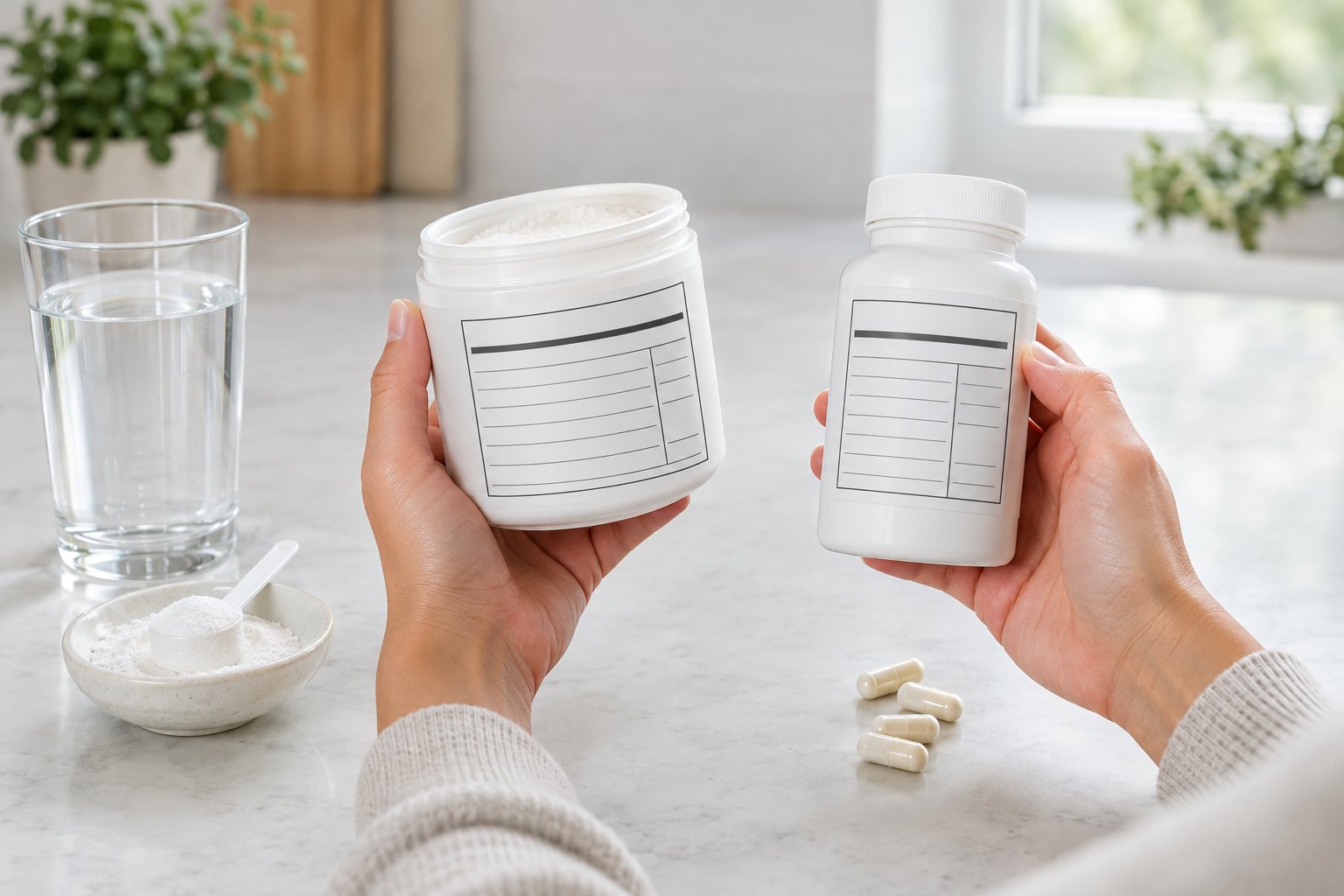
The Supplement Facts panel is the fairest way to compare a powder against a capsule. Read it the same way for both.
Compare Sodium Per Complete Serving
Find the sodium line and note the serving it refers to. A powder may list 1,000 mg per scoop, while a capsule product may list 200 mg per two capsules. Those numbers only compare well once you match servings.
Also note that adding more water to a powder makes the drink taste weaker, but you still swallow the same milligrams of sodium.
Check Potassium and Magnesium Amounts Separately
Look at each mineral on its own line. Many potassium supplements stay at or below 99 mg per serving, which is about 2% of the 4,700 mg Daily Value.
Magnesium deserves a close look too, since the upper limit for magnesium from supplements is 350 mg a day for adults. Higher amounts often cause diarrhea.
Confirm the Number of Capsules or Scoops Per Serving
Labels can say “Amount Per 2 Capsules” or “Per 1 Scoop.” Read this heading first. A product that seems strong may need four capsules to reach its listed amount, which also cuts the number of servings in the bottle.
Distinguish Actual Mineral Amounts From Compound Weights
The Supplement Facts panel must list the weight of the mineral itself, called the elemental amount. The ingredient list may name a compound such as potassium citrate or magnesium glycinate.
The compound weighs more than the mineral inside it. Compare the elemental milligrams on the panel, and ignore larger compound weights that appear in marketing copy.
Avoid Assuming Every Electrolyte Product Contains a Balanced Formula
Some products are mostly sodium. Others focus on magnesium or trace minerals with little sodium at all. “Electrolyte” on the front does not tell you the ratio.
Products that add vitamins or dozens of trace minerals are not proven to hydrate you better.
Which Ingredients Matter for Keto Compatibility?
Carbs and sweeteners are the main keto concerns, and they show up mostly in powders.
Check Total Carbohydrates and Added Sugars
Look for total carbohydrates and added sugars on the panel. Some drink mixes made for illness or sports use glucose on purpose. A keto-friendly powder usually lists 0 to 1 g of carbs per serving. Capsules rarely contain meaningful carbs.
Review Sweeteners and Sugar Alcohols
Common sweeteners include stevia, monk fruit, sucralose, and erythritol. Sugar alcohols such as erythritol, xylitol, or sorbitol cause gas, bloating, or diarrhea in some people because the body absorbs them only partly. Check the ingredient list, since ingredients appear in order by weight.
Check Flavorings, Fillers, and Other Added Ingredients
Powders may include citric acid, natural flavors, or anti-caking agents. Capsules may use gelatin or plant-based shells, plus fillers like rice flour in small amounts. These rarely affect ketosis, but they matter if you avoid animal products or certain additives.
Why a Sugar-Free Label Doesn’t Tell You Everything
“Sugar-free” means little or no sugar, but a product can still contain sugar alcohols or other carbs. It also says nothing about sodium or potassium levels. A product can be keto compatible and still be a poor fit if you have a sodium limit or take a medicine that affects potassium.
Choose According to Your Tolerance and Dietary Preferences
If sweeteners upset your stomach, an unflavored powder or a capsule removes the issue. If you enjoy flavor and tolerate stevia or monk fruit, a flavored powder is a reasonable choice. Pick the product that you will take as directed without side effects.
Powder vs Capsules: Preparation, Hydration, and Convenience

Day-to-day handling is where the two formats differ most.
Mixing, Measuring, and Preparing Powder
Powder needs a measured scoop and enough water to taste right. A strong salty taste is a sign the drink is concentrated, not that it is more effective. If the taste is too strong, add water. You get the same minerals in a milder drink.
If you are specifically interested in drink mixes and how they fit into a keto routine, the keto electrolyte drink guide can help you compare that format with other hydration options.
Carrying and Taking Capsules While Traveling
Capsules fit in a pocket or pill case and don’t spill. Keep them in their labeled bottle when you fly, so you can show what they are. Heat and humidity can soften some capsule shells, so store them in a cool place.
Why Capsules Still Need Appropriate Fluid Intake
Capsules give you minerals, not water. If you swallow them with a small sip and drink little else, you have not replaced fluid lost through sweat. Take them with a full glass of water and keep drinking normally through the day.
Don’t Assume a Powder Is Better Absorbed Simply Because It Is Dissolved
A drink delivers water and minerals together, which is handy. Your gut still absorbs those minerals in much the same way it handles the contents of a capsule taken with water.
Research on rehydration points to fluid volume and sodium content as the main factors, not whether the minerals arrived dissolved.
Consider Your Routine at Home, Work, and During Exercise
At home, powder is easy. At work, capsules or stick packs avoid tubs and scoops. During long or hot workouts, a powder lets you sip fluid and sodium together, which many people find practical.
Which Format Fits Different Everyday Situations?
The best format often changes with the setting, and some people keep one of each.
For Regular Use at Home
A tub of powder is simple and cheap per serving. You can mix one bottle in the morning and drink it through the day.
For Workdays and Busy Schedules
Capsules take seconds and need no cleanup. Stick packs are a middle ground if you want flavor without carrying a tub.
For Travel and On-the-Go Convenience
Capsules are the easiest to pack. Single-serve powder packets travel well too, but they take more space for the same number of servings.
Around Exercise and Sweating
Heavy sweating removes both water and sodium. A powder mixed into your water bottle covers both at once. Capsules also work if you drink enough plain water alongside them.
When a Drink Mix or Capsule Is Less Convenient Than Expected
Powders lose appeal if you dislike the taste or forget to mix them. Capsules lose appeal when a serving means swallowing four or five pills, or when the dose you want would take a handful. Think about which problem you’re more likely to give up over.
How to Compare Value Without Being Misled by Package Size
A big tub or a 120-count bottle can look like a deal until you divide by real servings.
Calculate Cost Per Complete Serving
Divide the price by the number of servings listed, not by scoops or capsules. A $30 bottle of 120 capsules at 4 capsules per serving gives 30 servings, or $1 each.
Compare Equivalent Mineral Amounts
A cheaper serving with half the sodium is not cheaper per milligram. For a fair check, divide cost per serving by the milligrams of the mineral you care about most.
Check How Many Servings the Product Actually Provides
Read “servings per container” on the panel. If you plan to take two servings a day, the product lasts half as long as the label suggests.
Account for Preparation, Portability, and Waste
Single-serve packets cost more but cut waste from spilled scoops or abandoned tubs. Capsules you carry but never take are wasted money too.
Why the Cheapest Package Isn’t Always the Best Value
The cheapest option is a poor value if its sweetener upsets your stomach or its dose doesn’t match your needs. Value comes from a product you’ll finish at the amount you meant to take.
Do You Actually Need Extra Electrolytes on Keto?
Many people on keto don’t need a supplement once they adjust their eating habits.
Start With Your Overall Diet and Fluid Intake
Most US adults already eat more than 2,300 mg of sodium a day. Keto cuts out bread and many processed foods, so your sodium may drop, but salting meals often makes up the gap. Leafy greens, avocado, nuts, fish, and meat provide potassium and magnesium.
Consider Changes in Sweating and Activity
Hot weather, hard training, or a sweaty job raise your losses. These are the clearest reasons to add sodium, either through food or a supplement.
Why Keto Flu Symptoms Don’t Confirm a Deficiency
Headaches, tiredness, and cramps in the first weeks have many causes, including fewer calories, poor sleep, and less fluid.
Only a blood test can show an electrolyte problem. Feeling better after salty broth is not proof of a deficiency.
If electrolyte concerns are part of a broader pattern of stalled progress or persistent problems following keto, reviewing why keto is not working for you can help you assess the wider execution problem rather than assuming a supplement will resolve it.
Review Your Existing Supplements and Other Sources
A multivitamin or a separate magnesium pill already adds minerals. Salt substitutes can contain 440 to 2,800 mg of potassium per teaspoon. Add these up before buying another product.
Avoid Adding Electrolytes Solely to Chase a Ketone Reading
Electrolytes don’t raise ketone levels. Taking more to change a meter or strip reading adds minerals without a purpose.
Common Mistakes When Choosing an Electrolyte Format
The most frequent errors come from skipping the label.
Assuming More Minerals Are Always Better
Too much magnesium causes diarrhea, and too much potassium can be dangerous for some people. Higher numbers on a label are not a sign of quality.
Choosing by Format Instead of Mineral Content
Picking capsules because they seem tidy, or powder because it seems stronger, skips the step that matters. Compare milligrams first.
Ignoring Serving Size and Total Daily Intake
A product that suggests three servings a day can push your sodium or magnesium far past what you planned. Count every serving you take.
Treating Every Cramp or Fatigue Episode as an Electrolyte Problem
Cramps can come from overuse, dehydration, or medicines. Fatigue can come from sleep or calories. Adding electrolytes each time can hide another cause.
Buying Multiple Products Without Reviewing Their Combined Contents
Using a powder at the gym and capsules at work is fine, but the minerals add together. Total them across both labels.
Before combining a powder, capsules, and other electrolyte products, reviewing common keto electrolyte mistakes can help you recognize why total intake and overlapping ingredients deserve attention.
When to Seek Individual Guidance Before Supplementing
Some health conditions and medicines make self-guided supplementing risky.
Kidney Conditions and Potassium Management
Your kidneys remove extra potassium and magnesium. If they don’t work well, these minerals can build up to unsafe levels. Ask your doctor before using any electrolyte product.
Potassium-containing electrolyte products require particular caution for people with kidney disease or those taking certain medications, because excess potassium can become dangerous when the body cannot regulate it properly; the NIH guidance on potassium and supplement safety explains these risks.
Blood Pressure, Heart Conditions, and Relevant Medications
ACE inhibitors, ARBs, and potassium-sparing diuretics such as spironolactone can raise potassium. Loop and thiazide diuretics can lower potassium and magnesium. Magnesium also interferes with some antibiotics and osteoporosis drugs. Check with your clinician or pharmacist.
Prescribed Sodium or Fluid Restrictions
If you’ve been told to limit sodium (such as 1,500 or 2,300 mg a day) or fluids, a high-sodium powder can work against that plan, even if it is keto friendly.
Persistent Symptoms That Don’t Improve
Ongoing weakness, numbness, confusion, or an irregular heartbeat needs a medical check. An electrolyte blood panel can show what’s off.
When to Follow a Clinician-Directed Electrolyte Plan
If you have POTS or another condition where a doctor manages your salt and fluid intake, follow that plan. Keto product labels are not a substitute for it.
How to Choose Between Electrolyte Powder and Capsules
Work through these steps in order.
Define the Reason You Want Supplementation
Name it: heavy sweating, travel, low salt intake, or something else. If you can’t name a reason, you may not need a product.
Compare the Actual Mineral Amounts
Line up sodium, potassium, and magnesium per complete serving. Use elemental milligrams from the Supplement Facts panel.
Check Ingredients and Serving Instructions
Look for carbs, sugar alcohols, and sweeteners. Note how many capsules or scoops make one serving and how many servings a day the label suggests.
Choose the Format That Fits Your Routine
Choose powder for higher doses and home or gym use. Choose capsules for portability and no sweeteners.
Reassess Whether Supplementation Is Still Necessary
After a few weeks, check whether your reason still applies. If your early keto symptoms are gone and you aren’t sweating heavily, you can stop.
If electrolyte decisions are part of a broader effort to make keto easier to follow, a guided meal-plan approach may help you organize everyday food choices and build a more consistent routine. It is not a substitute for individualized electrolyte guidance when a medical condition or medication makes that necessary.
Conclusion: Choose the Formula and Format That Fit Your Needs
Powder fits you if you want a larger mineral dose and enjoy a drink; capsules fit you if you want portability and no sweeteners. Neither format hydrates better on its own. Compare elemental milligrams per complete serving, check carbs and sweeteners, and confirm the capsule or scoop count.
If you salt your food and don’t sweat much, you may not need either one. If you take blood pressure medicine, have kidney problems, or follow a sodium or fluid limit, talk with your clinician before you buy.