
Keto Stopped Working After Two Weeks: Key Reasons and Proven Fixes
Many people experience an encouraging start on keto, followed by a sudden slowdown or complete stop around the two-week mark. When early weight loss disappears, it often feels like keto has “stopped working.”
In most cases, this moment is not failure. It is the transition point where water loss and glycogen depletion end and real metabolic fat loss is supposed to begin.

This article explains what is actually happening when keto stalls after the first two weeks, why early success often fades, and which execution breakdowns appear at this stage.
By the end, you will understand the difference between early keto changes and real fat loss, how to recognize what is blocking progress, and what kind of strategy is required once generic keto rules stop producing results.
This early stall often fits into the broader pattern outlined in our central guide on why keto is not working for me across real-world cases.
Key Takeaways
- Most early keto weight loss is water, not fat.
- Small diet or lifestyle slip-ups can stall things quickly.
- You might still be making progress even if the scale isn’t budging.
Keto Stopped Working After Two Weeks: Why Early Success Often Disappears

People usually notice fast changes those first couple weeks on keto, then—bam—progress slows down. It’s usually water loss, body adjusting, or simple stuff like calories, carbs, or sleep that gets overlooked.
Why the first two weeks feel promising
At first, your body burns through stored carbs. Each gram of stored carb hangs onto water, so when those stores empty, the scale drops quickly. That’s why you see big numbers early on—even if you haven’t lost much fat yet.
Hunger drops for a lot of people. High-fat meals fill you up, and fewer options usually mean you eat less overall. Some folks even feel more energetic as those blood sugar spikes calm down.
It’s exciting, honestly. Clothes fit better. The scale keeps moving. You start expecting that pace to last, but that’s just not how fat loss usually goes after your body settles in.
What most people misunderstand about early keto results
It’s easy to think that first big drop is all fat. Nope—it’s mostly water. When things slow down, it feels like keto quit on you.
Little mistakes sneak in after two weeks. Portions get a bit bigger. Extra carbs slip in from sauces or snacks. Sometimes protein is too low, which can slow your metabolism.
Other stuff matters too. Bad sleep makes you hungrier. Not moving much means you burn fewer calories. Oddly, eating way too little can also stall things by slowing down your body’s energy use.
Common early mistakes
- Hidden carbs everywhere
- Not hitting protein targets
- Calories too low (or too high)
- Not enough sleep or movement
Confusion often comes from misunderstanding when keto actually starts working versus when early water loss ends.
The difference between water loss, adaptation, and real fat loss
Water weight drops fast, but it’s over just as quickly. Fat loss is slower and needs steady habits. There’s also a weird middle ground—adaptation—when your body’s learning to use fat for fuel.
During adaptation, the scale might stall, but you could still be losing fat. Sometimes your measurements or how your clothes fit change before the numbers do.
Real fat loss? That’s all about sticking to the basics over time.
| Change type | What drops | How long it lasts |
|---|---|---|
| Water loss | Scale weight | Days to 2 weeks |
| Adaptation | Energy swings | 1–3 weeks |
| Fat loss | Body fat | Weeks to months |
Why Keto Stops Working After Two Weeks

Lots of people drop weight quickly at first, then hit a wall. It’s usually about water balance, how your body’s using fuel, and that early metabolic adaptation—not because keto itself failed.
What actually drives the initial drop on keto
The first weight loss is mostly water, not fat. Cutting carbs means your body burns through stored glycogen, and each gram of that holds onto water.
When those stores empty, you lose water weight fast—sometimes in just a few days. It looks like you’re burning fat like crazy, but you’re not. Not yet.
This phase usually includes:
- Lower insulin
- More trips to the bathroom (seriously)
- A quick drop on the scale
Ketosis might kick in, but real fat loss hasn’t really started. When the water loss ends, the scale stalls. That’s normal, but it feels like a shock.
Many people who stall at this stage are experiencing the same execution issues discussed in why am I not losing weight on keto.
The shift from glycogen loss to metabolic fat loss
After two weeks or so, your body’s done burning through most of its glycogen. Now, any weight loss comes from fat. That’s a much slower process.
At this stage, most people benefit from a personalized keto planning system rather than continuing with generic macro rules.
Fat loss still needs a calorie deficit—even on keto. Eating too much fat can slow you down. Keto swaps your fuel source, but it doesn’t make you immune to overeating.
This means:
- Weight loss slows down
- Your body’s hydration levels even out
- You’re burning more fat for energy
The scale might stall or bounce around. That’s usually a plateau, not a problem with ketosis or your effort.
How early biological adaptation creates the illusion of “failure”
Your body adapts to new eating patterns pretty quickly. This is called metabolic adaptation. As you lose weight and eat differently, your energy use gets more efficient.
Your hunger hormones might change too. You could feel hungrier, or you might just move less without realizing it. These little shifts slow down fat loss.
During this time:
- Your calorie needs might drop
- Fat burning keeps going, just slower
- The scale isn’t the best way to track progress anymore
Research published by the National Institutes of Health shows that metabolic adaptation can significantly alter fat-loss response even when calorie intake appears controlled.
Are You Really in Consistent Ketosis?

Plenty of people think they’re nailing keto, but their body never settles into steady ketosis. Tiny carb mistakes, bad tracking, or weird food choices can trip you up—even in the first couple of weeks.
Many early stalls are driven by hidden carb sources that sabotage keto without people realizing it.
Why surface-level keto rules often fail
Lots of folks stick to “eat fat” or “no bread” and call it good. But ketosis depends on net carbs, protein, and your total intake—not just the types of food you eat.
Too much protein can bump up your blood sugar and knock you out of ketosis. Eating way too little food can also slow fat loss. Guessing your portions? That almost always means you’re eating more net carbs than you think.
Common surface-level mistakes
- Not tracking net carbs
- Overdoing protein
- Trusting “keto” labels blindly
- Stopping tracking after the first week
Signs your ketosis is unstable or incomplete
If keto felt great for a few days but then fizzled, you might be slipping in and out of ketosis. Weight loss stalls, hunger creeps back, and your energy drops. These are pretty classic signs your body isn’t staying in ketosis.
Blood ketones are a better clue than urine strips. If your readings are low or bounce around, your fat burning isn’t steady. When you’re in real ketosis, numbers are usually pretty stable for days at a time.
Other signs? Cravings, brain fog, bad workouts. Doesn’t mean keto failed—just that carbs might be sneaking in or your protein is off.
Possible signs of unstable ketosis
- Big hunger between meals
- Craving sweets or snacks
- Blood ketones all over the place
- Feeling wiped out after eating
How hidden carbs quietly disrupt fat burning
Hidden carbs are a sneaky reason for early keto stalls. They’re everywhere—in foods labeled “low carb” or “keto friendly.” Sauces, dressings, and packaged snacks often sneak in hidden sugars.
Net carbs add up quickly. Sugar alcohols, starches, and weird fillers can spike blood sugar for some people. Even “safe” foods can push you out of ketosis.
Tracking helps spot these issues. Cronometer and Carb Manager list fiber and sugar alcohols clearly. MyFitnessPalworks too, but you’ll need to double-check labels.
| Food Type | Common Hidden Carbs |
|---|---|
| Sauces | Sugar, starch |
| Snacks | Maltitol, syrups |
| Dairy | Lactose |
| Nuts | Extra net carbs |
Hidden carbs are often the reason ketosis fades after a couple of weeks.
The Most Common Execution Errors After Week Two
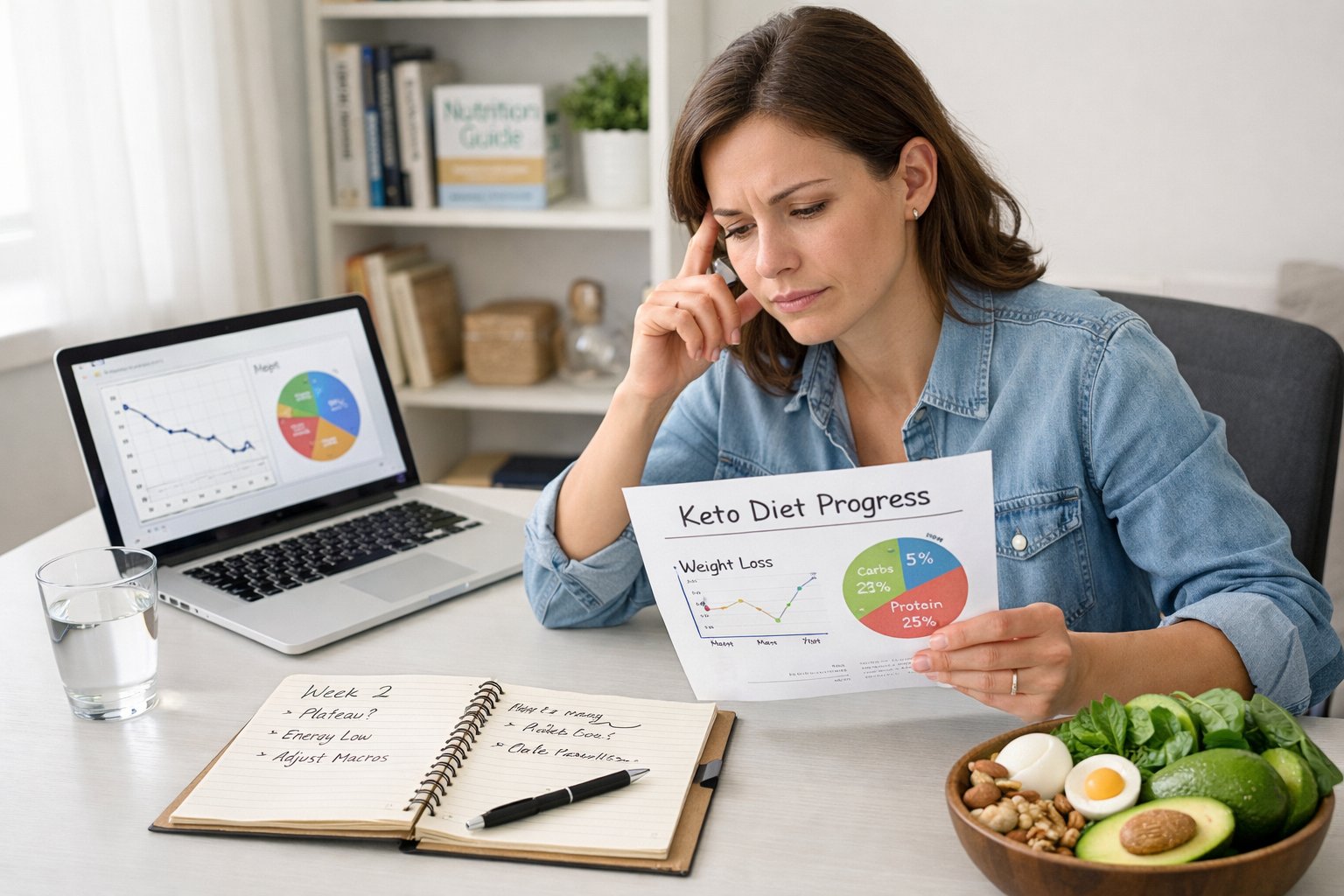
Most people stick to keto rules early on, but little habits shift over time. That’s when carbs sneak back in, low-quality foods show up, or fat intake creeps too high for what your body actually needs.
Carb creep and unconscious exposure
Carb creep usually starts with tiny choices that seem harmless. Sauces, dressings, and flavored drinks often have hidden sugars. Even small amounts can push you over your daily carb limit.
Packaged keto snacks, bars, and shakes are tricky too. The label might say “net carbs,” but sugar alcohols and starches still hit some people hard. Portions matter—a little extra here and there adds up fast.
Watch out for:
- Condiments and marinades
- Full-fat yogurt with added sugar
- Nuts that you don’t measure out
Sticking with simple keto-friendly foods helps keep you on track. Whole foods and basic keto recipes make it easier to avoid surprise carbs and keep ketosis steady.
Processed “keto” foods and dirty keto traps
It’s surprisingly common to slip into dirty keto after the first couple of weeks. People hit their carb targets but start leaning hard on processed foods instead of the real stuff.
This shortcut tends to stall progress and can ramp up cravings. Honestly, those “keto” snacks are everywhere, but they rarely help in the long run.
Processed keto foods usually pack in refined oils, fillers, and sweeteners. They digest quickly, don’t give steady energy, and it’s way too easy to overeat them without feeling satisfied.
If you care about results, food quality matters:
- Grass-fed meats and wild-caught fish
- Full-fat dairy (skip the weird additives)
- Fermented foods—think sauerkraut
These options help digestion and keep appetite in check. You’re less likely to reach for snacks between meals, which is always nice.
The difference between clean keto versus dirty keto becomes much more important once early drops disappear.
How fat-heavy eating silently erases progress
Sure, keto needs fat, but piling it on can backfire. After those first pounds drop, your body might just burn what you’re eating instead of dipping into its own fat stores.
One common trap is adding fat to every meal just because you can. Pouring olive oil, coconut oil, or MCT oil over everything can send calories through the roof.
Fat calories still count, keto or not. There’s no magic loophole there.
It’s better to keep fat balanced:
- Cook with healthy fats, but don’t go overboard
- Pick whole sources like avocado
- Combine fat with protein and veggies
Eating just enough lets your body tap into its own fat, keeping ketosis rolling.
Protein, Calories, and Metabolic Misalignment

Early keto weight loss is usually water, not fat. After a couple of weeks, fat loss slows down and suddenly protein, calories, and energy needs just don’t line up anymore.
Too much or too little protein and stalled fat loss
Protein’s a big deal for fat loss on keto. Too little, and you lose muscle, your metabolism drops, and hunger creeps in. Too much, and you risk higher insulin or just plain overeating.
Most people do best with moderate protein—not massive amounts, not rabbit food. How much you need really depends on your size, age, and how active you are.
Common protein mistakes
- Going super lean and ending up tired or hungry
- Stacking big protein servings at every meal
- Assuming protein is unlimited just because carbs are low
Getting protein right helps keep muscle and curb appetite. Fat should fill in the rest, not take over protein’s job.
After the first phase, most people need to reassess how to calculate keto macros correctly instead of relying on static templates.
Undereating, metabolic downshifts, and false “starvation mode” beliefs
Lots of folks slash calories way too hard when starting keto. Hunger drops, meals get tiny, and suddenly energy tanks. This slows weight loss, but not because of some mythical starvation mode.
The body just adapts by burning less energy. You might move less, feel colder, or just burn fewer calories overall. Fat loss grinds down, even with low calories.
It’s not permanent—just your metabolism taking a breather.
Signs of chronic undereating
- Feeling wiped out or cold all the time
- Crummy sleep or mood
- Stalled weight loss even though you’re barely eating
Getting enough protein and calories helps bring things back to normal and keeps fat loss moving.
Why tracking alone doesn’t correct metabolic mismatch
Tracking your macros and calories can show you patterns, but it won’t fix them by itself. The numbers don’t tell the whole story—stress, sleep, hormones, they all matter too.
Two people can eat the same thing and get totally different results. Activity, diet history, age—it all changes what works.
Some people find intermittent fasting helps them eat less without thinking about it. For others, it just adds stress and makes them more tired.
Tracking works best when it’s a guide, not a rulebook
- Keep protein steady
- Eat enough to fuel your day and recover
- Fasting is optional—don’t force it
Keto clicks when your intake matches what your body actually needs, not just what some app tells you.
Lifestyle and Hormonal Barriers That Appear Early

Early stalls aren’t always about food slip-ups. Sometimes it’s the inside stuff—insulin sensitivity, hormones, stress—that slows down fat loss, even if your keto game is tight.
Insulin sensitivity shifts and blood sugar volatility
In the first couple weeks, insulin sensitivity can swing fast. Some people get better control, while others deal with blood sugar ups and downs as their body gets used to low carbs.
If protein spikes or you’re eating all day, insulin can stay high—which slows fat release, even if you’re in ketosis. Hidden carbs from sauces or nuts don’t help either.
Blood sugar dips can zap your energy and trigger cravings. That’s when people tend to snack, keeping insulin levels up.
Common early triggers
- Big protein servings every meal
- Eating all day without real hunger
- Not enough sodium, which cranks up stress hormones
Regular meals, enough salt, and real breaks between eating help settle things down.
Hormonal environments that resist fat loss
Hormones can block fat loss right out of the gate, even if your macros are on point. This is especially true if you’ve got PCOS, thyroid issues, or a recent diet history.
With PCOS, insulin resistance tends to run deeper. Keto can help, but sometimes the scale just sits still until hormones catch up.
For women, shifts in estrogen and progesterone can change how fat is released—especially during the luteal phase or perimenopause.
Cortisol, the stress hormone, can also get in the way. When it’s high, your body wants to store, not burn.
It’s biology, not failure.
Sleep debt, stress load, and adaptive slowdown
Poor sleep and stress can kill keto progress fast. Your body reads stress as danger and slows down energy use to compensate.
Lack of sleep makes you hungrier and less satisfied. That’s a tough combo for sticking to your plan.
Managing stress is just as important as counting carbs. A few simple tools can really help lower cortisol and support fat loss:
| Tool | Effect |
|---|---|
| Walking | Lowers stress hormones |
| Meditation | Improves cortisol rhythm |
| Yoga | Reduces tension and blood sugar spikes |
Short, daily sessions work better than marathon efforts once in a while. It’s the consistency that counts.
The relationship between keto and sleep quality plays a major role in whether early progress stabilizes or collapses.
Why Most Plateau Fixes Don’t Solve the Real Problem

Most early keto stalls aren’t because fat burning just stopped. Usually, it’s daily habits drifting off course while the diet itself stays the same.
Quick fixes might change one thing, but they skip over how food, movement, and recovery all work together.
Short-term tweaks vs. long-term execution correction
It’s tempting to cut carbs lower, add fasting, or skip meals when progress stalls. You might see the scale drop, but it’s often just water weight.
These quick moves rarely fix the real issue. If portions got bigger, fats crept up, or tracking slipped, fat loss slows—even in ketosis.
A keto app like MyFitnessPal, Cronometer, or Carb Manager can make these patterns obvious.
- Eating more fat than you need just “because it’s keto”
- Missing carbs from sauces, nuts, or snacks
- Logging less and less after the first couple weeks
Fixing these habits brings back steady fat loss, no extreme changes needed.
Why random adjustments create temporary movement, not resolution
Random tweaks just muddy the waters. One week you add fasting, the next you walk more, then you slash calories. The scale might move, but you have no idea why.
When you see a drop after a random change, it’s often just:
- Glycogen and water loss
- Less food in your gut for a few days
- Short-term calorie dips that bounce back
It’s not real fat loss. Without clear tracking, you won’t know what actually worked.
Consistent habits give real feedback. Random moves just create noise.
The risk of chasing tactics instead of diagnosing causes
Tactics feel productive because you can change them fast. But real progress needs honesty and a look at the data. Most plateaus come from what you’re eating, not your metabolism.
Instead of piling on new strategies, check these basics:
- Average daily calories for the past week or so
- Actual—not estimated—carb intake
- Protein intake for your body size
Tracking tools aren’t there to restrict you. They help you see what’s really happening. Chasing tactics just delays the real fix. Diagnosing the actual cause gets you moving again, without extra stress.
When keto progress fades this early, the issue is rarely effort—it is usually that the plan is not aligned to how your body is adapting, so it may be time to build a personalized keto plan that adjusts with your metabolism instead of forcing generic rules.
Choosing the Right Keto Strategy After Early Failure

If keto stalls after two weeks, it’s probably a structure problem, not a lack of effort. Food choices, intake, and your daily routine need to match how your body is reacting right now.
Why generic keto structures stop working
Lots of people start with a generic keto plan they found online. These push high fat without checking in on hunger, calories, or food quality.
That first weight drop? Mostly water. When it’s gone, the same plan can leave you stuck.
Hidden carbs, big portions, and constant snacking sneak in fast. Nuts, cheese, sauces, and bars add up before you know it.
One-size-fits-all plans also ignore food sensitivities. Some folks just don’t do well with dairy, sweeteners, or processed low-carb stuff.
Signs a generic plan isn’t cutting it:
- Hunger comes back quickly
- Energy tanks
- Cravings get worse
- Weight stalls after 10–14 days
Matching food structure, intake, and routine to your physiology
Keto really clicks when your food structure matches who you are. Protein needs shift with your age, size, and how active you are.
Fat’s there to help you feel satisfied, not to drown out everything else.
Some folks do best with simple meals. Others need more bulk, usually from non-starchy veggies—think spinach, broccoli, or zucchini.
Routine matters, too. Eating just because it’s lunchtime, not because you’re hungry, can slow you down.
Late-night snacking? That’s a common stall culprit.
A quick reset can help you spot what’s tripping you up. Some people go strict low-carb for a bit.
Others try a short carnivore phase to cut out plant foods and sneaky carbs.
| Focus Area | What to Adjust |
|---|---|
| Protein | Eat enough to feel full |
| Fat | Reduce if weight stalls |
| Vegetables | Use non-starchy options |
| Timing | Eat when hungry |
Transitioning from rigid rules to adaptive planning
Rigid keto rules? They fall apart after a couple weeks.
Your body adapts, but if your plan doesn’t, things get stuck.
Adaptive planning is about listening to your body’s feedback.
If you’re less hungry, make meals smaller. If your energy tanks, maybe you need more protein or a pinch of salt.
This way, keto stays flexible without going off the rails.
Some people eventually add a few whole foods but keep carbs low. Others stick to the basics and keep it strict.
It’s not about perfection—just tuning in to your own signals. That’s often enough to get things moving again.
Signs Keto Is Progressing Even When the Scale Isn’t

Keto can drive fat loss even when your weight won’t budge. Sometimes, your body changes shape or you get better hunger control and more energy before the scale shows anything.
Body composition, appetite signals, and energy regulation
During a keto stall, you might lose fat but hold onto water or build a bit of muscle. The scale doesn’t always catch that right away.
Your clothes might fit looser, especially around your waist or hips.
Hunger is usually the first thing to shift. Fewer cravings and longer stretches between meals? That’s a good sign your blood sugar’s steady and insulin is low.
Energy perks up, too. More stable focus, no afternoon crash, maybe even better workouts—those all point to better fat burning.
Common non-scale signs of progress include:
- Smaller waist or looser clothing
- Reduced hunger between meals
- More stable energy during the day
- Less bloating or water retention
These usually pop up when you’re in ketosis, even if the scale won’t play along.
Why sustainable fat loss looks different after adaptation
After the first couple weeks, your body adapts to keto. Most early weight loss is just water, not fat.
Once that’s gone, fat loss slows down and doesn’t always show up week to week.
It can feel like keto’s not working anymore, but really, your metabolism is just settling in. Your body’s learning to use fat and ketones better, and that can stall the scale for a bit.
Long-term keto weight loss is about trends, not daily numbers. Fat loss shows up more in steady measurements than in dramatic drops.
What often changes after adaptation:
| Early Phase | Adapted Phase |
|---|---|
| Rapid scale drop | Slower scale change |
| Water weight loss | True fat loss |
| Hunger swings | More appetite control |
Frequently Asked Questions
A lot of people see quick changes in the first couple weeks on keto, then get confused when things slow down. Most of those early results are water loss, while later stalls usually come from carbs, calories, sleep, stress, or just habits.
Why does keto stop working after two weeks for many people?
The first two weeks, you drop water as your body burns through stored carbs. When that’s over, the scale drops off, too.
Meanwhile, your body’s switching to fat burning, which can actually lower your energy use for a bit. That makes weight loss less obvious.
Is early keto weight loss real fat loss?
Not really—it’s mostly water at first. Your body lets go of water when it uses up stored glycogen.
Fat loss kicks in later and goes slower. That’s why it might feel like keto just stopped working, when it actually didn’t.
What usually causes a stall this early on keto?
Usually, it’s too many carbs sneaking in, not eating enough calories, or missing out on protein. Bad sleep and little movement don’t help, either.
All of that can push you out of ketosis or slow fat burning. Even little slip-ups can pile up fast.
Can hidden carbs stop keto from working even if I track?
Yes, hidden carbs can mess things up, even if you’re tracking. Sauces, drinks, nuts, and packaged foods sneak in extras.
Labels aren’t always exact, and carb counts can get rounded up. Those little bits add up and can block ketosis.
How do hormones and stress affect early keto results?
Too much stress bumps up cortisol, which can make you hungrier and hold onto water. That can hide fat loss on the scale.
Not getting enough sleep messes with hunger hormones, too. It’s just harder to stick to your targets when you’re tired.
What should change when keto stops working after the first phase?
It’s worth checking your carbs, calories, and protein. Just cutting fat usually isn’t enough.
Better sleep, more movement, and sticking to whole foods can help get things moving again. Small, clear tweaks tend to work better than big, drastic cuts.
Common issues and simple fixes
Lots of folks notice fast changes during their first couple weeks on keto. Honestly, a big chunk of that early drop is just water weight, not fat loss.
When the scale slows down, it’s usually the body doing its thing and adjusting—not some big failure.
Little slip-ups can get in the way. Hidden carbs sneak in, protein gets too low, or calories drop too much. Any of these can bump you out of ketosis or just make your metabolism drag.
And if you’re not sleeping well or moving enough? Hunger creeps up, and fat loss gets harder.
| Issue | What to fix |
|---|---|
| Carb creep | Track carbs and keep them low |
| Low protein | Add lean protein at each meal |
| Too few calories | Eat enough fats to meet needs |
| Poor sleep | Aim for 7–8 hours nightly |
| Low activity | Move most days of the week |
Sometimes a quick reset helps. That might mean tracking more closely, eating regular meals, or just moving a bit more.
Don’t forget electrolytes and hydration—those can make a surprising difference with fatigue and cravings.
Keto isn’t the perfect fit for everyone forever. Some people feel better adding a few whole carbs after a while. Others stick with keto but change up portions or routines.
It’s the simple stuff done consistently that brings progress. If the plan fits into your real life, results tend to show up—and stick around.
Once the real causes of early keto stalls are clear, the next step is to move away from rigid rules and toward a structure that adapts with your body.