
Keto Troubleshooting Checklist: 7 Things to Check Before You Decide Keto Isn’t Working
When keto doesn’t seem to be working, it’s tempting to assume the diet has failed. In reality, most beginner frustrations can be traced back to one or two overlooked issues rather than a flaw in keto itself.
Small problems such as hidden carbohydrates, inconsistent eating habits, inadequate electrolytes, unrealistic expectations, or measuring the wrong indicators can all make progress appear slower than it actually is. Fortunately, many of these issues can be identified with a systematic review before making major changes.
Instead of guessing what’s wrong, it helps to work through the most common factors one by one. A structured checklist allows you to identify the most likely bottlenecks, focus on the areas that need attention, and avoid unnecessary frustration.
This keto troubleshooting checklist walks through seven essential questions to help you determine whether your progress is normal, whether your approach needs adjustment, or whether it’s time for a more personalized strategy.
Keto Troubleshooting Checklist: 7 Things to Check First
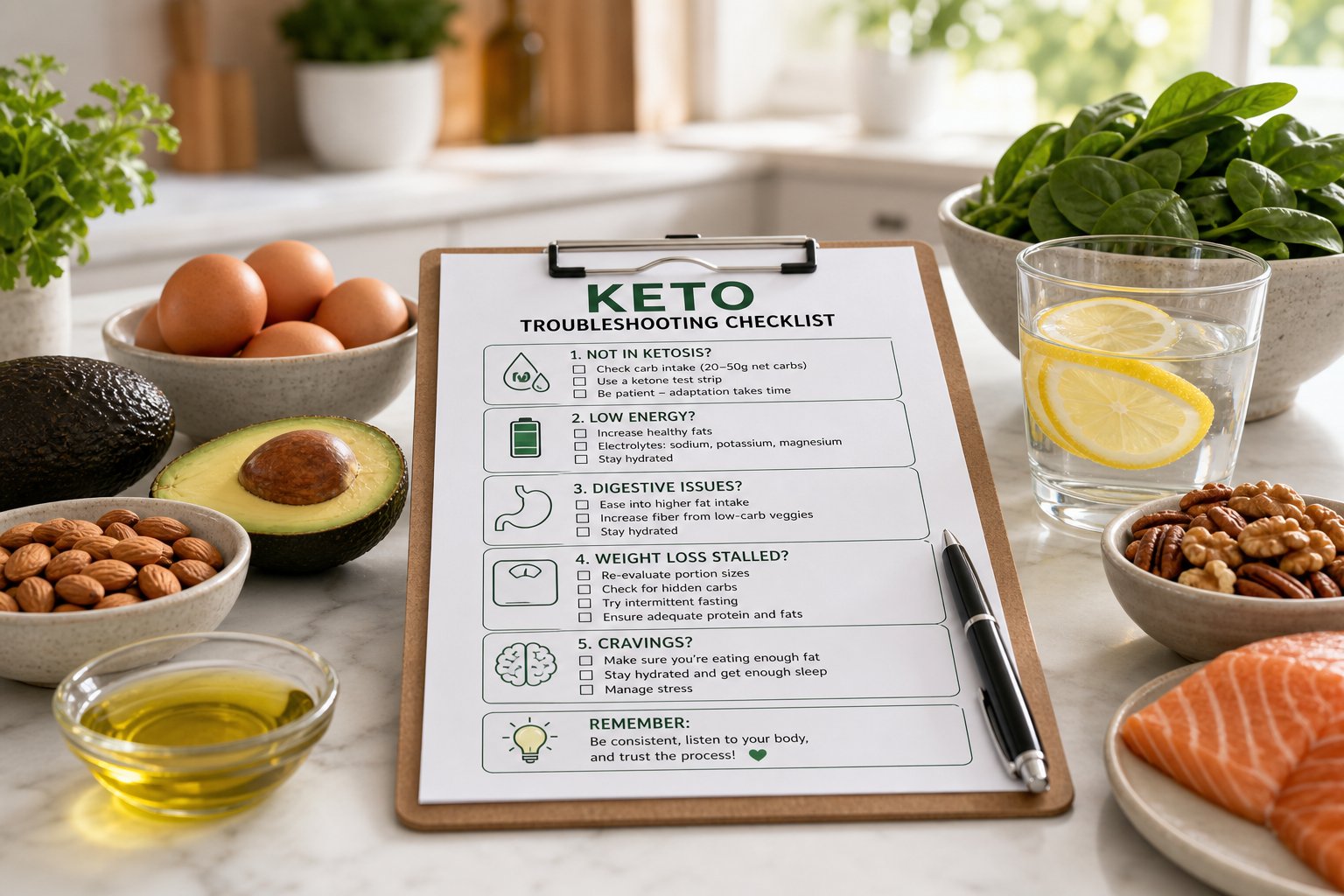
A lot of keto struggles come down to basic setup errors that aren’t really about whether the diet works or not. A simple checklist can uncover fixable problems in most stalled cases.
Why Most Keto Problems Have a Simple Explanation
Most beginner keto issues fall into three buckets: hidden carbs, wrong macros, or not enough time in ketosis.
It’s easy to eat more carbs than you think. Sauces, dressings, and processed foods sneak in extra sugar fast. Even a tablespoon of ketchup has 4 grams of carbs.
Foods like carrots or onions seem healthy but can add up quickly if you’re not careful. Big portions can push you over that 20-30 gram daily limit before you know it.
Protein and fat matter too. Too much protein? Your body can turn it into glucose, which might knock you out of ketosis. Too little food? That can slow your metabolism and stall weight loss.
And honestly, your body needs a good 2-4 weeks to switch over to burning fat. The scale might not move right away, even if you’re doing everything right. Most people quit just as their body is about to adapt.
How This Checklist Can Save You Weeks of Frustration
A keto troubleshooting checklist takes out the guesswork. It helps you pinpoint the real problem in days, not weeks.
Without a system, people tend to change everything at once—cutting calories, adding exercise, swapping foods. That just makes things confusing.
This checklist lets you test one thing at a time:
- Track carbs for three days and spot hidden sources
- Measure ketones to see if you’re actually in ketosis
- Calculate macros based on your real body composition
- Review electrolytes—are you getting enough sodium, potassium, and magnesium?
- Check meal timing and your eating windows
- Look at sleep quality and stress
- Make sure you’re staying hydrated
Check each thing off before moving on. Usually, you’ll find the culprit in less than a week. More often than not, people realize they weren’t in ketosis or were eating foods that caused water retention and hid fat loss.
Don’t Change Your Diet Until You’ve Checked the Basics
Switching diets without troubleshooting wastes all the adaptation you’ve already done.
Start by double-checking your carb counts with a food scale and a tracking app. Eyeballing it? That can be off by 30-50%. Weigh your food for a week to get a real baseline.
After that, test your ketone levels with blood or breath meters. Urine strips don’t work well after week one. Aim for blood ketones between 0.5-3.0 mmol/L to confirm ketosis.
Most “keto flu” symptoms are just electrolyte issues. You need 3000-5000mg sodium, 3000-4000mg potassium, and 300-400mg magnesium daily. Salt and supplements can usually fix this fast.
Drink enough water—about half your body weight in ounces. If you weigh 160 pounds, that’s at least 80 ounces. Not enough water? Stress hormones go up and fat loss slows down.
Triage — Do You Need a Quick Fix or a Complete Troubleshooting Review?
Before you start changing things, figure out if your keto plan just needs a little tweak or a total overhaul. Sometimes it’s a quick fix. Other times, you’ll need to look at your whole approach.
Signs You’re Probably Making Normal Progress
It’s normal for weight to bounce around by a pound or two each week. The scale going up or down a little doesn’t mean keto isn’t working.
Here are some good signs things are on track:
- Energy picks up after the first week or two
- Less hunger between meals
- Better focus and mental clarity
- Your clothes feel different, even if your weight doesn’t budge
- Fat loss is steady over a month or so
Measurements can change before the scale does. You might lose inches from your waist while your weight stays the same. That’s just your body composition shifting—fat going down, muscle staying put or even going up.
Signs You Have One or Two Specific Problems
Usually, one big issue shows up as a clear pattern. If you feel great but the scale won’t move, you might need to cut hidden carbs or calories. If you’re tired all the time but dropping weight, check your electrolytes.
Common single-issue problems:
- Feeling wiped out? Probably missing electrolytes (sodium, potassium, magnesium)
- No weight loss but good energy? Eating too many calories
- Always hungry? Maybe not enough fat or protein
- Digestive issues? Try more fiber or water
These are usually easy to fix if you track your food for a few days.
Signs You Need a Full Troubleshooting Review
If you’ve got a bunch of problems at once, it’s time for a full assessment. No weight loss, constant hunger, low energy, and digestive drama? That’s a sign your whole approach needs a look.
Watch for these red flags:
- No change in weight, measurements, or energy after a month
- Still fighting keto flu after 2-3 weeks
- Can’t stick with it for more than a few days
- Not tracking macros or food at all
- Mostly eating processed keto snacks instead of real food
If that’s you, check all seven troubleshooting points. Make sure you’re actually in ketosis, your macros make sense, and the food quality is high. Restarting with good tracking solves a lot of these issues.
Diagnostic Summary — Which Situation Best Matches Your Experience?
Most people fall into one of four groups when keto troubleshooting gets real. Knowing where you fit makes it easier to find the right fix.
You’re Still in Normal Keto Adaptation
The first two to four weeks on keto can feel weird. Your body is switching from burning sugar to burning fat, and that takes time.
People want instant results and get frustrated when things move slowly. But weight bouncing around or stalling is pretty normal during this shift.
Signs you’re just adapting:
- Some fatigue or brain fog in week one or two
- Lose water weight, then hit a stall
- Hunger goes up and down
- Energy improves after week three
If you’re less than four weeks in and seeing these, you probably just need more time. Patience is rough, but it’s key here. Changing things too soon can actually slow your progress.
One Execution Mistake Is Holding You Back
Sometimes, one mistake is all it takes to block ketosis. Usually, it’s eating more carbs than you think.
Hidden carbs in sauces, seasonings, or processed foods add up. You might think you’re eating 20 grams a day, but it’s actually 40 or 50. That’s enough to keep insulin up and stall fat burning.
Other common mistakes:
- Too much protein (your body turns it to glucose)
- Not tracking what you eat
- Choosing low-fat instead of high-fat foods
- Not testing ketones, or testing the wrong way
Usually, it’s just one thing that’s off. Fixing that can get you back on track within days.
Several Small Problems Are Adding Up
Sometimes it’s not one big thing—it’s a bunch of little ones. None of them is enough to wreck ketosis alone, but together, they stall progress.
Maybe you’re loose with carb tracking, skip meals, eat too many processed meats, and don’t get enough veggies. Each one slows you down a bit.
Common combos:
- Enough fat, but not the right kind
- Good macros, but low on vitamins and minerals
- Decent food, but meals are all over the place
- Eating right, but not sleeping or managing stress
You’ll need to pick out which two or three things matter most and work on those first. Trying to fix everything at once? That’s a recipe for burnout.
Your Current Plan Probably Needs Personalization
Standard keto rules work for most people at first, but everyone’s body is a little different. Eventually, you might need to tweak things to fit your own metabolism or lifestyle.
If you’ve been doing keto for months, sticking to it well, but you’re stuck, it could be time for a more personalized approach. Maybe your body handles carbs differently, or you need different meal timing.
Personal tweaks to consider:
- Adjust your carb limit by 5-10 grams up or down
- Change protein based on muscle and activity
- Try eating carbs around workouts if you’re active
- Look into health issues like insulin resistance or thyroid problems
This isn’t about mistakes—it’s about finding what works for your body. If you suspect a medical issue, it’s worth talking to a professional.
If your answers suggest that more than one issue may be affecting your progress, our complete troubleshooting guide explains how these common keto problems work together and where to begin.
→ Why Keto Is Not Working for Me
Checklist #1 — Have You Given Keto Enough Time?
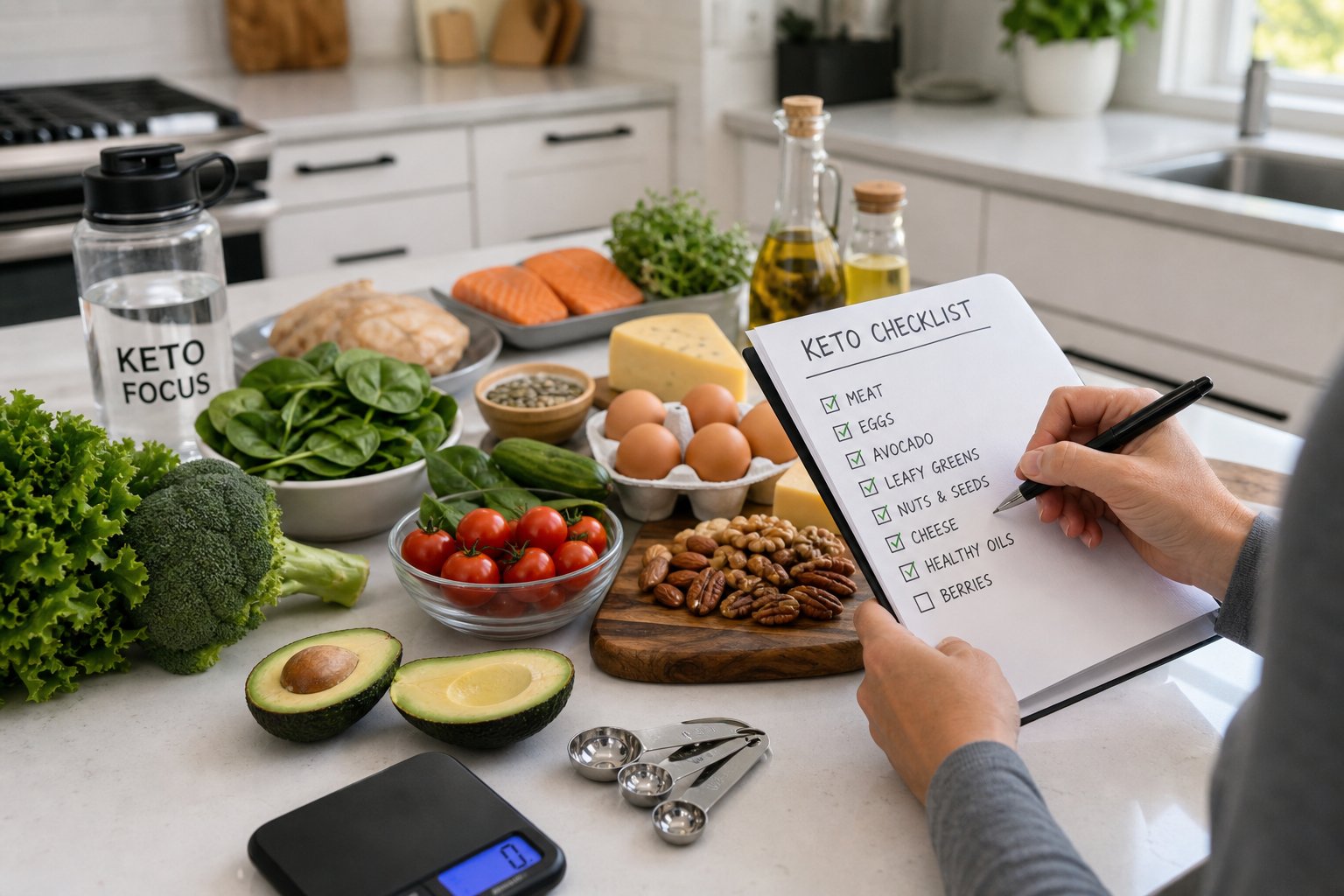
Your body doesn’t flip a switch overnight—it needs time to go from burning sugar to burning fat. Most people need at least three to four weeks to really see if keto is working for them.
Normal Adaptation vs Genuine Lack of Progress
People often expect instant results and get frustrated if the scale doesn’t budge in the first week. Honestly, that’s pretty normal.
The body has to go through several keto adaptation stages before it can really burn fat for fuel efficiently. During the first few days, you’ll mostly lose water weight as your body uses up stored carbohydrates (glycogen).
After that early drop, weight loss usually slows down or even stalls for a week or two. It’s not a failure; it’s just your body adjusting.
A true stall is when there’s zero progress for three months or more while staying on track. Anything less is just part of adapting. The body has some catching up to do—building enzymes and cellular machinery to run on ketones isn’t instant.
Some folks adapt slower than others. Stuff like your dieting history, insulin resistance, and overall metabolic health all play a role in how quickly you get fat-adapted.
What Results to Expect During the First Month
Week 1: Most people drop 2-10 pounds of water weight. You might feel tired as your body gets used to things. “Keto flu” can hit—headaches, fatigue, the works.
Week 2-3: Weight loss usually slows or pauses. Your body’s learning to burn fat. Hunger and cravings should start to chill out.
Week 4: Fat burning gets more efficient. Weight loss often picks up again at a steady 1-2 pounds per week. Energy usually feels better and more stable by now.
Some people see slower results, especially if they’ve got hormonal issues or a history of crash diets. Progress isn’t just about the scale, either—looser clothes, better sleep, less inflammation, and steadier energy all count for something.
Understanding the different keto adaptation stages helps explain why results often appear gradually during the first few weeks.
Checklist #2 — Are Hidden Carbs Slowing You Down?
Lots of people think keto isn’t working, but they’re actually eating more carbs than they realize. Foods that seem safe can sneak in sugars and starches that bump your carb intake over the ketosis threshold.
Foods Beginners Often Misjudge
Some foods look low-carb but can mess things up if you eat them often. Processed meats like sausages or deli cuts sometimes have fillers, breadcrumbs, or sugars that add 1-3 grams of carbs per serving.
Condiments and sauces are sneaky too—ketchup, barbecue sauce, and salad dressings can pack in 3-5 grams of carbs per tablespoon. Even some veggies catch people off guard. Carrots, onions, and bell peppers have more carbs than leafy greens. For example, a cup of cooked carrots is about 12 grams of carbs.
Packaged “keto” products are tricky. Keto bars, cookies, and bread substitutes often use sugar alcohols or fiber that some people count as zero, but these can still spike blood sugar for certain folks. Reading labels closely is worth the time if you want to avoid hidden carbs.
Small Carb Leaks That Add Up
Little carb mistakes don’t seem like a big deal, but they add up fast. A splash of milk in your coffee, a handful of cherry tomatoes, or a few bites of someone else’s food can easily sneak in 10-15 grams of carbs.
If you’re aiming to stay under 20 grams daily, that’s enough to knock you out of ketosis. Eating out can be a minefield. Chefs might add flour to sauces or sugar to marinades without mentioning it. That “plain” grilled chicken could have 5-8 grams of carbs from a hidden glaze.
Common carb leaks include:
- Coffee additives (flavored syrups, sweetened creamers)
- Medications and supplements with sugar coatings
- Breath mints and sugar-free gum
- Seasoning blends with added sugar or maltodextrin
Try tracking everything you eat for three days. Most apps make it easy to spot where those extra carbs are sneaking in.
Learning where hidden carbs commonly appear can help eliminate one of the most frequent beginner mistakes.
Checklist #3 — Are You Getting Enough Electrolytes?

Electrolyte shortages are behind most early keto headaches and muscle cramps. When carbs drop below 50 grams per day, insulin falls and the kidneys flush out sodium, dragging potassium and magnesium along for the ride.
Sodium
Sodium is the first electrolyte to drop on keto, and it’s usually the reason for keto flu. Headaches, fatigue, dizziness, and brain fog? Probably low sodium.
Standard advice says to limit sodium to 2,300 mg daily, but that doesn’t really work on keto. Most people need 3,000 to 5,000 mg per day. When insulin drops, kidneys let go of sodium fast—this can start within the first week.
Quick fix: add 1/4 teaspoon of salt to water and drink it. Most people feel better in about half an hour. Bone broth gives you 800–1,000 mg of sodium per cup. Pickle juice is another option—500–700 mg per 1/4 cup. Salting your food generously throughout the day helps too.
Magnesium
Low magnesium can mean poor sleep, night-time muscle cramps, anxiety, or constipation. Over half of Americans are already low on magnesium, and keto can make it worse.
The body needs 300–400 mg of magnesium daily. Cooked spinach has 157 mg per cup, pumpkin seeds have 156 mg per ounce, almonds give you 80 mg per ounce, and dark chocolate (85% cacao or higher) has 65 mg per ounce.
Supplements can help if food isn’t enough. Magnesium glycinate absorbs well and is easy on the stomach—try 200–400 mg before bed for better sleep. Magnesium citrate also works and can help if you’re constipated. Magnesium oxide isn’t worth it; your body barely absorbs it.
If fatigue, muscle cramps, or poor sleep continue, recognizing the signs of magnesium deficiency on keto may help explain why adaptation feels more difficult.
Potassium
Potassium’s important for muscle contraction, nerve function, and heart rhythm. Low levels can cause muscle cramps, weakness, heart palpitations, or just plain fatigue. The body needs 3,500–4,700 mg per day.
Most high-potassium foods—bananas, potatoes, beans—are too high-carb for keto. You have to get creative. One avocado has 975 mg. Cooked spinach has 839 mg per cup. A 6-ounce salmon fillet has 534 mg. Mushrooms and zucchini are decent sources too.
When sodium is lost quickly, a hormone called aldosterone tries to save sodium by dumping potassium instead. Not ideal. You can use supplements, but keep doses under 100 mg at a time and spread them out during the day.
Many adaptation symptoms improve once common electrolyte mistakes are identified and corrected.
Checklist #4 — Are You Eating the Right Amount of Food?
Getting the right amount of food is just as important as eating the right kinds. Too many calories can stall weight loss, but not eating enough can slow your metabolism and leave you dragging.
The National Institute of Diabetes and Digestive and Kidney Diseases explains that successful weight management depends on following a healthy eating pattern that you can maintain over time, rather than making drastic short-term changes.
Hidden Overeating
It’s easy to eat more than you think on keto, even with healthy foods. Nuts, cheese, and oils are sneaky—they’re calorie bombs in small portions. A handful of almonds is about 200 calories, and it’s so easy to grab another without thinking.
Fat is calorie-dense—9 calories per gram, compared to 4 for protein or carbs. Adding extra butter, cream, or oil can push you over your needs before you know it.
Tracking your food helps catch these hidden calories. Apps like Cronometer or Carb Manager show your daily calories and macros. Even measuring your portions for a week can be eye-opening.
Under-Eating and Poor Energy
Not eating enough brings its own issues. If your body doesn’t get enough food, it slows metabolism to save energy, making weight loss harder—not easier.
Signs you’re under-eating: always tired, trouble focusing, feeling cold, or hair loss. Some folks cut calories way too low, thinking it’ll speed things up, but the body just goes into conservation mode instead.
Most people need at least 1,200–1,500 calories a day for basic functions. It’s better to calculate your needs based on age, gender, activity, and goals than to guess.
Protein Balance
Getting enough protein is key for muscle and metabolism. Too much, though, and it could mess with ketosis—some amino acids turn into glucose if you go overboard.
Most people do well with 0.6–1.0 grams of protein per pound of lean body mass. An active 150-pound person might need 90–120 grams daily. Sedentary folks can aim lower; if you work out, go higher.
Track your protein for a few days to make sure you’re in the right range. Too little can cause muscle loss, but too much might slow ketone production.
Checklist #5 — Are You Measuring Progress Correctly?

The scale doesn’t show the whole keto story. Changes in body composition, health, and measurements often reveal progress that the number on the scale just can’t capture.
Looking Beyond the Scale
The scale can stay the same—or even climb—while you lose fat. Muscle weighs more than fat by volume, so if you’re working out, you might gain muscle and lose fat at the same time.
Water retention messes with scale numbers too. Hormones, salt intake, workouts, and digestion all change how much water you hold. You can gain or lose several pounds of water in a day without changing body fat.
Body measurements tell a clearer story. Measure your waist, hips, thighs, and arms every couple weeks. Clothes fitting looser? That’s progress, even if the scale doesn’t move.
Learning how to measure keto progress beyond the scale makes it easier to recognize improvements that body weight alone may not reveal.
Other Signs Keto Is Working
There are plenty of signs keto’s working besides weight loss. Energy usually picks up after the first week or two. Mental clarity improves, and brain fog fades. Hunger and cravings drop off, making it easier to eat less without forcing it.
Blood sugar and blood pressure often improve within weeks. Inflammation goes down. Some people notice clearer skin or less joint pain.
Lab tests can show even more: fasting glucose drops, HbA1c gets better, insulin sensitivity improves. These changes are huge for long-term health. Even if the scale isn’t budging, you might be getting healthier in ways that matter more.
Looking for the signs keto is working provides a more complete picture than relying on body weight alone.
Checklist #6 — Are Your Daily Habits Supporting Keto?
Keto isn’t just about food choices. Sleep, stress, daily routines, and planning meals all play a direct role in whether you stay in ketosis and burn fat efficiently.
Sleep
Poor sleep can really mess with weight loss on keto. Research shows that sleeping 5.5 hours instead of 8.5 hours cuts fat loss by more than half—even when calories stay the same.
The body loses more muscle and less fat when you’re short on sleep. Lack of rest also raises ghrelin, the hunger hormone, and lowers leptin, which tells you you’re full.
This hormonal shift? It makes sticking to keto macros all day a lot harder. Sleep deprivation also bumps up insulin resistance the next day, so your body handles carbs and fat differently.
It’s easier to get knocked out of ketosis if you’re not sleeping well. People new to keto sometimes find their sleep gets weird, especially waking up at 3 AM, wide awake for no reason.
Low magnesium is often behind those middle-of-the-night wake-ups. Getting at least 7 hours of consistent sleep each night supports ketosis and steadier fat loss.
Stress
Chronic stress raises cortisol, which tells your body to hold onto fat and water. High cortisol means water retention, more belly fat, and higher insulin resistance.
You could eat perfectly on keto and still stall out if your stress is sky-high. Warning signs? Losing inches but not pounds, stubborn belly weight, and feeling tired but wired.
Overtraining does this too—working out intensely more than five days a week can backfire. The body reads hard workouts as extra stress, not always as a good thing.
Sometimes, a brisk 30-minute walk does more for fat loss than another HIIT session. Managing work stress, relationship drama, and emotional stuff matters as much as tracking macros—maybe more.
Consistency
Wild swings in eating patterns from day to day confuse your metabolism. Eating 1,200 calories one day, then 2,500 the next? Your body never settles into predictable fat-burning mode.
Consistency matters for:
- Carb intake (keep it under 20-30g daily)
- Meal timing (try to eat at similar times)
- Sodium (3,000-5,000mg daily on keto)
- Protein (hit the same range each day)
Inconsistent sodium intake causes wild water weight swings. You might “gain” three pounds after a salty meal, then “lose” four pounds two days later. The scale gets unreliable fast.
A keto morning routine can help. Starting your day with a set structure—checking ketones, prepping breakfast, drinking water with electrolytes—makes keto habits stick.
Meal Planning
Winging it with meals often means hidden carbs and bigger portions. If you don’t plan ahead, you end up grabbing whatever looks keto-ish—protein bars with maltitol, dressings with sugar, or “just a handful” of nuts that turns into 400 calories.
Prepping meals ahead removes the guesswork. It makes hitting your macros realistic, not just a nice idea. It also saves you from that 6 PM panic when hunger hits and willpower is gone.
Simple meal planning steps:
- Cook protein in bulk (chicken thighs, ground beef, salmon—whatever you like)
- Pre-portion nuts and cheese into snack containers
- Prep veggies for the week (wash, chop, store)
- Make sauces and dressings from scratch to dodge hidden carbs
Planning doesn’t have to mean fancy recipes or hours in the kitchen. Even basic meal prep—like hard-boiling eggs or grilling a few pounds of meat—saves you from decision fatigue. People who plan their meals tend to stay in ketosis more reliably than those who just wing it.
Checklist #7 — Does Your Keto Plan Fit You?
A plan that works for someone else might not fit your needs, lifestyle, or health. Finding what works often means tweaking the standard keto setup to fit your situation.
Generic Plans Don’t Work for Everyone
Most keto plans use the same formula: 70-80% fat, 20-25% protein, 5-10% carbs. This works for a lot of folks starting out, but everyone’s body reacts differently.
Your age affects how fast your metabolism runs. Someone in their 20s processes fat differently than someone in their 50s. Activity level matters too—an athlete needs more protein than someone with a desk job.
Medical conditions can require special adjustments. People with diabetes need to watch blood sugar closely. Those with thyroid issues might need different macros. Women might need to tweak things around their cycle.
Sleep, stress, and medications all change how your body gets into and stays in ketosis. A generic plan just can’t cover all those variables.
When Personalization Matters
Working with a keto coach or nutritionist can help you figure out what to adjust. They can customize a plan based on your test results, health history, and goals.
Key areas to personalize include:
- Macro ratios for your body and activity level
- Meal timing that fits your schedule
- Food choices for your budget and cooking skills
- Supplements based on your needs
A personalized keto plan should consider what you actually like to eat. If you hate fish, don’t force yourself to eat salmon every day—there are other ways to get omega-3s.
Testing different approaches helps you find what works. Some thrive with intermittent fasting. Others need regular meal times. The right plan fits into your life instead of feeling like a struggle.
What Your Answers Mean

Your answers show where you stand with your keto approach and what you might want to tweak. Each pattern points to different issues.
Mostly “Yes”
If you’re answering yes to most checklist questions, you’ve probably got the basics down. You’re tracking, eating quality foods, and staying consistent. The problem is likely somewhere else.
Common hidden issues include:
- Not giving your body enough time to adapt (less than 3-4 weeks)
- Eating at maintenance calories instead of a deficit
- Undiagnosed medical stuff affecting metabolism
- Stress or sleep problems blocking progress
At this stage, patience and small tweaks matter. Most people need to wait longer before judging results. The body doesn’t switch to fat-burning overnight, even when you’re doing everything right.
If weight loss is still the goal after 4-6 weeks of proper keto, try reducing calories by 200-300 per day. Some folks also benefit from checking thyroid or insulin resistance with their doctor.
A Few “No” Answers
If your answers are mixed, you probably understand keto but have some gaps. These gaps can prevent ketosis or slow things down. The key is to fix the biggest issues first.
Priority fixes based on which questions got a no:
- Not tracking food – Log everything for a week to see your real carb intake
- Eating processed keto foods – Switch to whole foods
- Skipping vegetables – Add leafy greens for nutrients
- Not testing ketones – Use blood ketone strips to check ketosis
Tackle one problem at a time. Trying to fix everything at once is overwhelming and usually doesn’t work. Pick the biggest gap and work on it for a week before moving on.
Mostly “No”
If you answered no to most questions, it’s time for a total reset. You’re not following keto principles yet, but that doesn’t mean you failed—it just means you need clear next steps.
The keto assessment shows these common issues:
- Eating too many carbs (over 50 grams daily)
- Not tracking food at all
- Choosing processed foods
- Skipping meals inconsistently
Start over with the basics. Use a keto calculator to set your macros. Set carbs to 20-30 grams per day. Track every meal in an app for two weeks. Buy whole foods—meat, eggs, veggies, and healthy fats.
Getting into ketosis comes first. Don’t worry about the small stuff until your foundation is solid.
If several items on this checklist raised concerns, reviewing the most common keto problems can help you prioritize what to address first.
Want a simpler way to stay on track? Our free 7-Day Keto Meal Plan helps you build the habits that solve many common keto problems before they become bigger obstacles.
Your Next Step: Follow the Right Troubleshooting Path
Once you spot the main problem, it’s time for specific action. Each issue needs a different fix, and trying to solve everything at once just muddies the waters.
If Hidden Carbs Are the Problem
Track every food and drink for three days with an app. Note portions, cooking oils, condiments—everything. Most people eat more than they realize.
Check processed meats, sauces, and packaged foods. Sugar hides in labels under names like maltodextrin, dextrose, or corn syrup. Even some spice blends sneak in sugar or starch.
Switch to whole foods for a week—meat, eggs, cheese, and low-carb veggies, no sauces or seasonings except salt and pepper. If weight loss restarts, you found the culprit.
Don’t forget restaurant meals. Most have hidden sugars and starches in marinades and glazes. Ask for plain grilled meat and steamed veggies instead.
If Electrolytes Are the Problem
Add sodium right away. Drink a cup of broth or bouillon twice daily. Salt your food until it’s a little saltier than usual. Most need 4,000 to 7,000 mg sodium daily on keto.
Get potassium from food—avocados, spinach, salmon, mushrooms. You can use a salt substitute with potassium chloride, too.
Take magnesium before bed. Start with 200 to 400 mg of magnesium citrate or glycinate. These forms absorb better than magnesium oxide. If you get loose stools, lower the dose.
| Electrolyte | Daily Target | Best Sources |
|---|---|---|
| Sodium | 4,000-7,000 mg | Salt, broth, pickles |
| Potassium | 3,000-4,000 mg | Avocado, spinach, salmon |
| Magnesium | 300-500 mg | Supplements, pumpkin seeds |
If You’re Still Adapting
Give your body at least four to six weeks. Fat adaptation takes time. Your metabolism needs to switch from burning glucose to burning fat.
Some days will feel harder during the first month. Energy often dips in week two or three, then improves. That doesn’t mean keto isn’t working.
Stay under 20 grams of net carbs per day. Don’t stress about calories or fat yet. Just keep carbs low and eat when you’re hungry until you feel satisfied.
Stop weighing yourself every day. Check your weight once a week, tops. Fat loss isn’t linear, and water weight can hide your progress for weeks.
If You’re Unsure Where to Start
Start with the carb check. Hidden carbs are the most common keto problem for new folks. Cut out all packaged foods, sauces, and restaurant meals for a week.
Add electrolytes at the same time. Nearly everyone starting keto needs more electrolytes. This easy fix can solve a bunch of symptoms in days.
If nothing changes, track your food for three days. You might be eating more than you think—nuts, cheese, and oils add up fast if you’re not measuring.
Wait at least two weeks after each change before trying something new. That way, you know what’s working. Most people solve their keto issues by fixing carbs, electrolytes, or portions.
If you’ve worked through this checklist and still aren’t sure what’s preventing progress, a personalized keto plan can help identify your biggest bottlenecks and provide a practical path forward.
Conclusion: Most Keto Problems Can Be Solved Before You Quit
The keto diet works for plenty of folks, but it does take some attention to details. Most of the issues that pop up have pretty straightforward fixes.
When someone feels like keto just isn’t doing its thing, the real culprit is usually hidden carbs, too many processed foods, or not tracking macros correctly.
These are honestly easier to fix than most people expect—once you spot them.
Stress and sleep matter more than people think, too. High cortisol levels can get in the way of fat loss, even if you’re nailing everything else.
Medical stuff like thyroid issues or PCOS can slow things down as well.
Before deciding keto isn’t working, take a look at these:
- Ketone and blood sugar levels
- Daily carb intake and hidden sources
- Protein and calorie amounts
- Quality of food choices
- Stress levels and sleep patterns
- Medical conditions that affect metabolism
- Whether enough time has passed for results
Testing ketone levels takes out a lot of the guesswork. Sometimes you think you’re in ketosis, but, well, not quite.
Tracking what you eat for a few days can reveal sneaky carbs or extra calories you didn’t notice.
Small tweaks usually do the trick for most people. Maybe it’s ditching some keto snacks, measuring portions with a bit more care, or just finding ways to chill out more.
Honestly, sometimes it’s as basic as drinking more water or adding a pinch more salt.
Talking things over with a doctor or dietitian can help rule out anything medical. They can run some tests and give advice tailored to you, not just the average person.