
Why Am I Overeating on Keto Even When My Carbs Are Low?
Overeating on keto can be confusing when your carbohydrate intake remains low. You may assume that choosing keto-friendly foods means you can eat freely, or you may wonder why your portions and snacks keep increasing even though you are following the basic carbohydrate rules.
Low-carb foods are not automatically unlimited foods. Added fats, large portions, repeated snacks, keto desserts, and eating directly from packages can increase total intake without causing a noticeable rise in carbohydrates.
At the same time, not every episode of eating more means you are overeating; genuine hunger, inadequate meals, and excessive restriction can create a different pattern.
The useful question is not simply whether your carbs are low. It is what you are eating, how often you are eating, what happens before and after meals, and whether the pattern is driven by portions, grazing, habit, emotion, or unmet hunger.
Can You Overeat on Keto Even When Your Carbs Are Low?
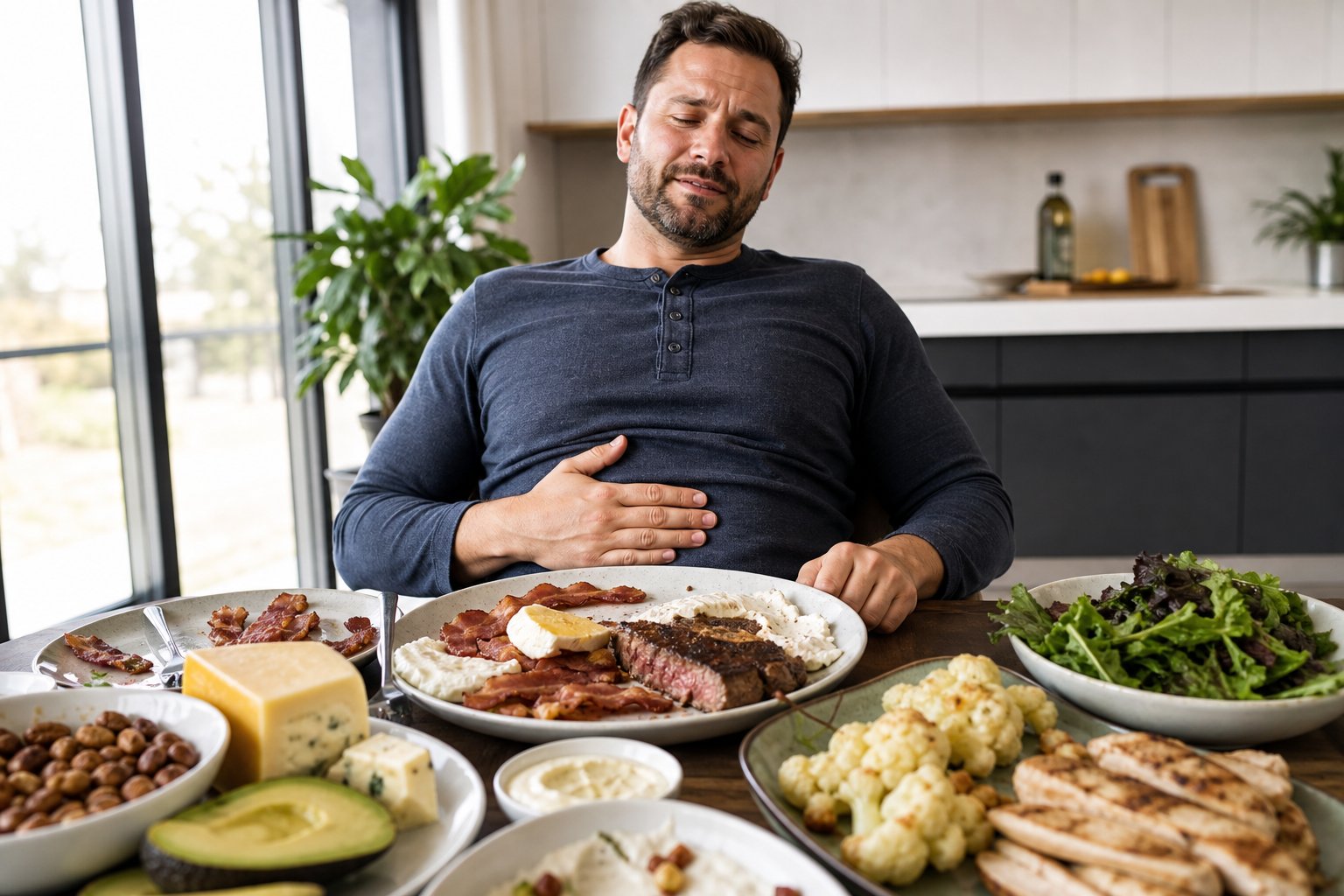
Yes, you can eat too much food on keto while keeping carbohydrates low. Ketosis describes how your body is getting much of its fuel; it does not guarantee a calorie deficit or keto weight loss.
Why Low Carb Does Not Mean Unlimited Food
Carbohydrate intake and total energy intake answer different questions. Your carb limit affects whether you can maintain ketosis. Your total intake affects whether your body must draw on stored energy or has extra energy available to store.
Foods such as cheese, nuts, cream, butter, oils, and avocado fit a keto diet, yet they provide substantial energy in modest portions. If you eat more energy than you use across many days, fat loss can stall and weight may rise.
Scale weight alone needs context. A salty meal, digestive contents, hydration, and changes in carbohydrate intake can shift your weight for several days. Sustained fat gain comes from a repeated energy surplus, not one temporary scale increase.
If you are focusing heavily on carbohydrate totals, reviewing how to count net carbs on keto can help clarify what that measurement does—and does not—tell you about overall food intake.
Why Ketosis Does Not Automatically Prevent Overeating
Ketosis may make meals more filling for you, especially when your meals contain enough protein and whole foods. You can still eat beyond fullness because the food tastes good, sits within reach, or belongs to an established routine.
Liquid calories and small add-ons can also bypass clear hunger cues. Cream in several coffees, spoonfuls of nut butter, cooking oil, and bites taken while preparing food may barely register as eating. Together, they can make keto seem like it is not working.
Overeating while in ketosis is therefore possible. Your ketone status does not measure portion size, calorie balance, or the frequency of unplanned eating.
Why One Large Meal Is Different From a Repeating Pattern
A single large meal has limited value as a diagnosis. Your next weigh-in may rise because of water, sodium, and food still being digested. Returning to your regular meal pattern is a more useful response than fasting to compensate.
A repeating pattern deserves attention when you regularly:
- Eat past comfortable fullness
- Add second servings without checking your hunger
- Snack between most meals
- Consume large amounts of cheese, nuts, oils, or keto treats
- See weight or waist trends moving away from your goal over several weeks
Your average pattern across days gives you more useful information than one dinner.
Triage — What Kind of Overeating Pattern Are You Dealing With?
Your first keto troubleshooting step is to identify where the extra food enters your day.
Your Portions Are Larger Than You Realize
- Your meals contain several dense foods at once, such as fatty meat, cheese, avocado, dressing, and nuts.
- Your serving sizes grow when you use large plates or serve food at the table.
- Your keto portion control changes from day to day because you estimate oils, cheese, and nut butter by sight.
- Your best test is to measure those foods for several days without changing the rest of your meals.
Grazing Is Driving the Extra Intake
- You take small amounts of food throughout the day without treating them as snacks.
- Common examples include nuts at your desk, cheese while cooking, and bites from leftovers.
- Each eating moment feels minor, while the daily total becomes substantial.
- Your best test is to record every eating moment, including drinks with calories.
Automatic or Emotional Eating Is the Main Problem
- You eat in response to a time, place, screen, task, or feeling.
- The urge appears quickly and points toward a specific food.
- You continue eating after physical hunger has eased.
- Your best test is to pause for ten minutes and note what happened before you reached for food.
- Repeated distress or loss of control deserves support from a qualified health professional.
You’re Actually Hungry, Not Simply Overeating
- Your hunger builds over time and several foods sound acceptable.
- Your meals are small, low in protein, or spaced too far apart for your needs.
- Your activity level has increased, or your calorie target is highly restrictive.
- You feel satisfied after a balanced meal and can move on with your day.
- Your best test is to strengthen your meals before reducing portions further.
Diagnostic Summary — Which Pattern Best Fits You?
Choose the pattern that explains most of your extra intake, then apply one focused change for the next week.
Your Main Issue Is Portion Size
- Choose this pattern if: You eat at set meals, yet your plates include several large portions of dense keto foods.
- Do next: Measure oils, cheese, nuts, sauces, and cream for seven days.
- Keep steady: Your meal timing and core protein serving.
- Review: Your fullness and weight trend after two to four weeks.
Grazing Is Adding More Than You Notice
- Choose this pattern if: Much of your food comes from bites, tastes, and unplanned keto snacking.
- Do next: Set clear meals and one planned snack if needed.
- Keep steady: Enough food at meals to reach comfortable satisfaction.
- Review: How many eating moments disappear from your day.
The Food Is Serving a Habit or Emotional Function
- Choose this pattern if: Your eating follows screens, boredom, stress, or a set time despite low physical hunger.
- Do next: Change the cue, such as leaving food outside your work area or closing the kitchen after dinner.
- Keep steady: Regular meals, since severe hunger weakens your plan.
- Review: Which cue still leads to automatic eating.
Hunger May Be the Real Issue
- Choose this pattern if: Hunger builds between meals and settles after a complete meal.
- Do next: Review protein, meal volume, activity, and your current calorie target.
- Keep steady: Consistent low-carb choices that support your goal.
- Review: Whether stronger meals reduce urgent evening eating.
If your overeating pattern may be connected to restrictive eating earlier in the day, reviewing whether eating too little on keto is contributing can help you distinguish excess intake from a response to inadequate meals.
→ Can Eating Too Little on Keto Slow Your Progress?
Why Keto-Friendly Foods Can Still Be Easy to Overeat
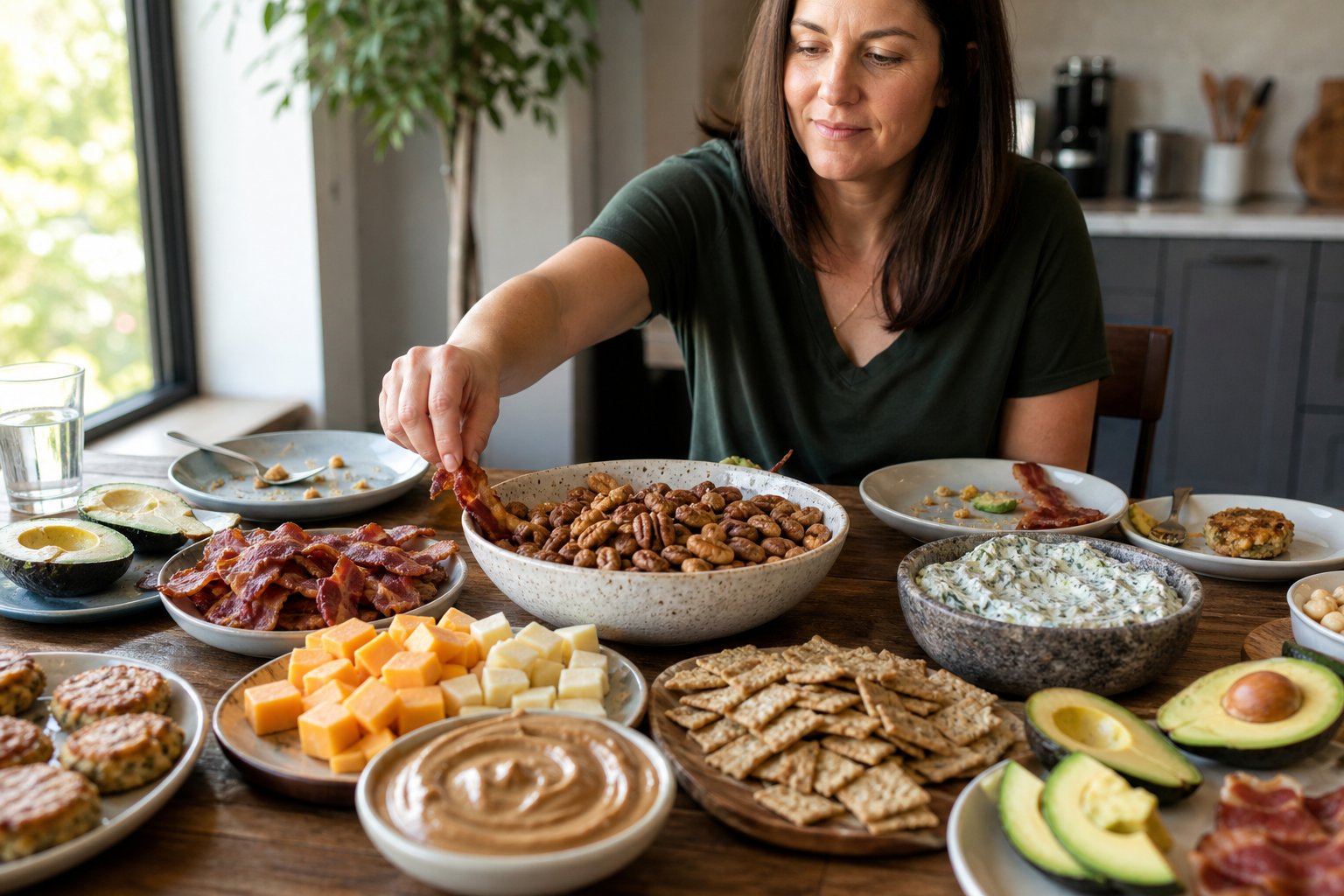
Keto-friendly foods can deliver a large amount of energy before their volume makes you feel full. Their low carbohydrate content does not turn them into unlimited foods.
Calorie-Dense Foods in Small Volumes
Fat provides about 9 calories per gram, while protein and carbohydrate each provide about 4. This makes high-fat foods compact sources of energy.
A handful of nuts, a thick cheese portion, and several spoonfuls of dressing can add hundreds of calories without filling much space on your plate. These foods can fit your plan, but portions deserve attention when weight loss is your goal.
Use visible servings when possible. Put nuts in a small bowl, slice cheese before sitting down, and serve nut butter with a measuring spoon. Eating from a defined portion gives your hunger cues time to catch up.
Added Fats Can Accumulate Quickly
Cooking fat, dressings, cream, mayonnaise, and coffee add-ins are easy to overlook because they support another food or drink. Several modest additions across the day can become a major part of your intake.
You might cook eggs in butter, add cheese and avocado, use dressing at lunch, snack on nuts, and pour cream into coffee. Each choice fits keto. The combined amount may exceed what you planned.
Choose the fats that improve your meal most. You may prefer oil on vegetables while skipping an extra cheese topping, for example.
Keto Desserts and Snack Foods Encourage Repeated Eating
Keto desserts, fat bombs, bars, and packaged snacks are designed to be convenient and appealing. Their sweet taste and small size can encourage another serving even after your physical hunger has eased.
Packaging also shapes intake. A bag of low-carb clusters has no natural stopping point when you eat directly from it. Place one serving on a plate and put the package away before you begin.
Treat these products as planned foods with defined portions. A keto label describes carbohydrate content; it does not measure how filling the product will be for you.
Why “Keto-Friendly” Does Not Mean Unlimited
A food can support ketosis and still work against your energy goal in large amounts. Carb compatibility and portion fit are separate checks.
Ask two questions before adding more:
- Does this food fit your carbohydrate limit?
- Does this serving fit the meal and your current hunger?
That approach preserves food choice while giving portions a clear purpose.
The Most Common Ways Overeating on Keto Happens
Most overeating keto foods develops through small, repeated actions that feel harmless on their own. Finding the action is more useful than blaming your appetite or discipline.
Portion Creep at Meals
Portion creep occurs when your normal serving gradually grows. Extra cheese covers more of the burger, the salad receives another pour of dressing, or the evening nut portion expands from a small handful to a full bowl.
Reset your visual reference by measuring high-impact foods for a few days. You do not need to weigh every leafy vegetable. Focus on oils, butter, cream, nuts, cheese, sauces, and desserts.
Serve your first portion in the kitchen. Wait ten minutes after finishing before deciding whether you want more.
Repeated Snacking and Grazing
Grazing on keto keeps food entering your day without clear starts or stops. The amount is hard to recall because no single eating moment feels like a meal.
Create a boundary around eating moments. Sit down, use a plate or bowl, and record the snack. If you need snacks each day, plan one that contains protein, such as eggs, plain Greek yogurt that fits your carb limit, or sliced meat with vegetables.
Frequent hunger still deserves a meal review. Frequent desire for one specific snack points more strongly toward routine or food appeal.
Eating Directly From Packages
Packages hide the amount you have eaten and make another bite effortless. Nutrition labels may also list a serving much smaller than the amount you pour by hand.
Check the serving weight once, then place that amount in a bowl. Close the package and return it to storage. This extra step interrupts automatic keto snacking without banning the food.
Single-serving containers help only when their stated portion fits your plan. Some bars and snack bags contain more than one labeled serving.
Finishing Food Because It’s Available
You may keep eating because food remains on the plate, a serving dish stays nearby, or leftovers seem too small to save. Availability becomes the cue, even after you feel satisfied.
Start with a smaller serving and keep extra food off the table. Package leftovers before you sit down when you already know how much you intend to eat. At restaurants, you can set part of the meal aside early if the portion is very large.
Comfortable fullness is a valid stopping point, even when food remains.
Is Added Fat Becoming the Main Source of Excess Intake?
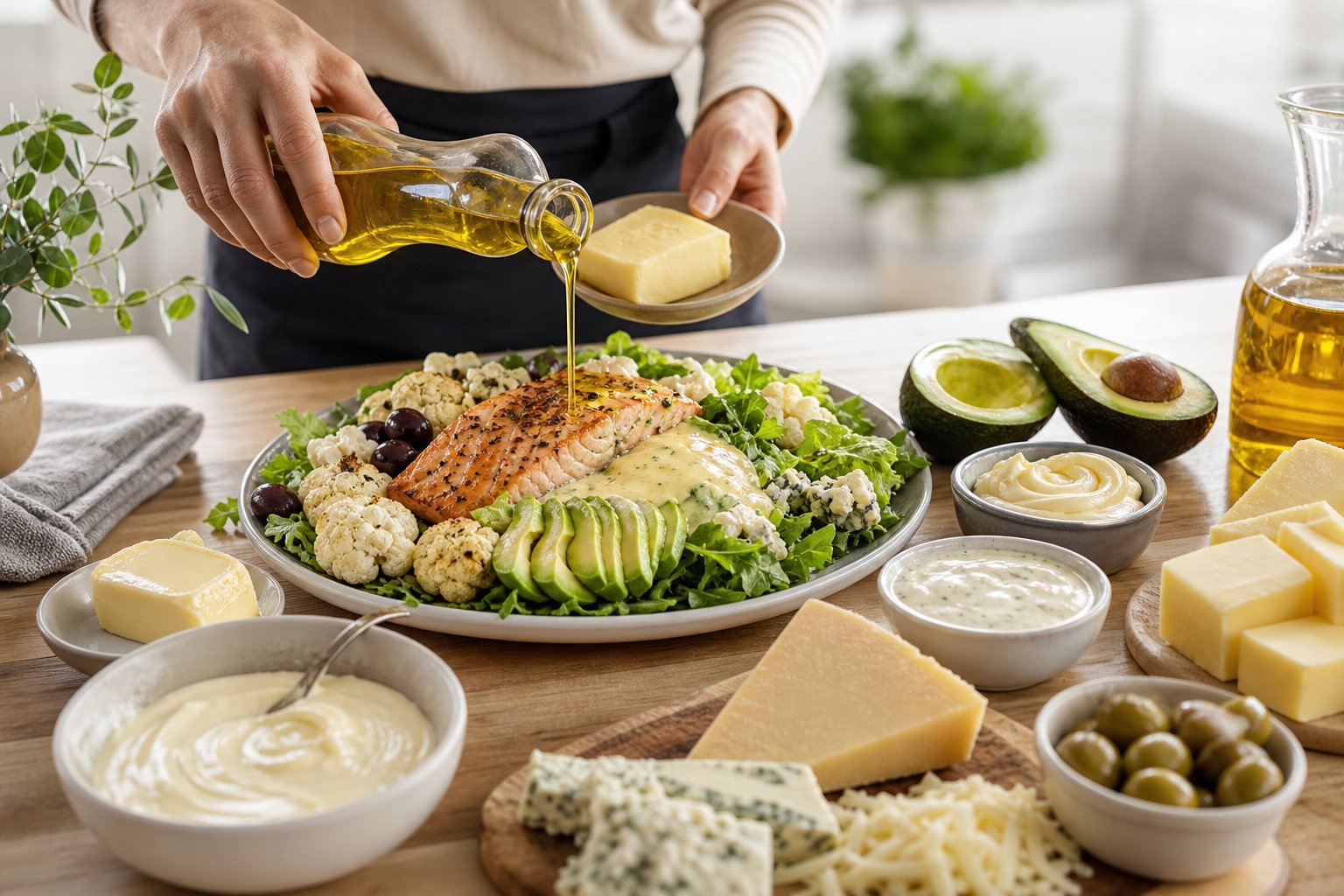
Added fat may be your main source of excess intake when oils, butter, sauces, cream, and toppings appear several times each day. Keto requires carbohydrate control, while your dietary fat amount can be adjusted to your goals and hunger.
When More Fat Is Added Than the Meal Needs
A meal may already contain substantial fat from salmon, ground beef, eggs, cheese, or avocado. Adding butter, oil, mayonnaise, and a creamy sauce can push the meal far beyond the amount needed for taste or satisfaction.
Review the whole plate before adding fat. If your protein is already fatty, use a lighter cooking method or a smaller amount of sauce. If your protein is lean, a measured serving of olive oil or avocado may improve the meal.
Signs worth reviewing include visible pools of oil, repeated butter additions, coffee that functions like a high-calorie drink, and sauces poured without measuring.
If added oils, butter, cream, cheese, or other concentrated fats are contributing substantially to your intake, reviewing whether you are eating too much fat on keto may help you assess the role of portion size and added fat.
Why Fat Is Easy to Consume in Large Amounts
Fat packs substantial energy into a small volume. One tablespoon of oil contains roughly 120 calories, and it disappears easily into cooking or dressing. A free pour may contain several tablespoons.
Liquid and melted fats also provide fewer visual cues than solid food. Your plate may look modest even when cooking oil and sauce have raised its energy content considerably.
Measure oils with a spoon for a week. That brief check helps you relearn what one tablespoon looks like in your cookware and on your plate.
Using Fat Deliberately Rather Than Automatically
Give each added fat a job. It may prevent sticking, improve flavor, or help a lean meal feel satisfying. Once that job is met, another layer may add little value.
You can use a simple order:
- Choose your protein.
- Add low-carb vegetables.
- Check how much fat the main foods already contain.
- Add a measured amount if the meal needs it.
You do not need to chase a high fat total when you already feel satisfied and your meals support ketosis.
When to Review the Balance Between Dietary and Stored Fat
If fat loss is your goal, your body needs opportunities to use stored fat. Eating more dietary fat than your energy needs supplies ample fuel from food, so less stored energy is required.
Review your keto fat intake when your weight and waist trend have stalled for several weeks and your log shows generous added fats. Reduce clear extras first, such as a second tablespoon of oil or a large cream pour. Keep protein and nutrient-rich foods steady.
Persistent diarrhea, reflux, pain, or other digestive symptoms after high-fat meals deserve clinical advice. A qualified clinician can assess causes that a food log cannot settle.
How to Tell Overeating From Genuine Hunger
Genuine hunger builds over time and settles after enough food, while habitual eating follows cues such as time, location, mood, or availability. Your pattern before and after eating helps you tell the difference.
Physical Hunger vs Habitual Eating
Physical hunger may include an empty feeling, reduced energy, or growing interest in a range of foods. You can usually wait long enough to prepare a meal, even if the hunger feels clear.
Habitual eating often begins when you enter the kitchen, open a streaming app, finish work, or see a favorite keto snack. The desire may focus on one item and fade when the cue changes.
Use a brief pause to check:
- When did you last eat a full meal?
- Would protein and vegetables appeal to you?
- Has the urge built gradually?
- Did a sight, task, feeling, or location start it?
Your answers help classify the eating moment without judging it.
What Happens Before and After Meals
Track your hunger before eating and your comfort 15 minutes after finishing. A simple 0-to-10 scale is enough, with 0 meaning no hunger and 10 meaning extreme hunger.
If you start meals near 9 or 10, long gaps or an overly strict target may be setting up large portions. If you begin near 2 and finish uncomfortably full, availability or habit may be driving the meal.
Look for repeated results across several days. A single unusual meal offers little diagnostic value.
Why Meal Satisfaction Matters
A meal can meet a calorie target yet leave you searching for food if it feels incomplete. Adequate protein, vegetables, texture, and enjoyable flavor support keto satiety.
Satisfaction also requires enough food for your body size and activity. Tiny meals followed by constant snacking create more decisions and more chances for intake to drift.
Build a complete plate and eat without constant distraction when possible. Give yourself several minutes after the meal before treating a lingering taste for food as hunger.
If you continue feeling hungry after a meal, reviewing why you may still be hungry after eating a keto meal can help distinguish inadequate satisfaction from habitual or automatic eating.
When Eating More Is Actually Appropriate
More food may be appropriate when your physical hunger stays high after a balanced serving, your activity has increased, or your current intake is too restrictive. Recovery from illness and certain life stages can also change your needs.
Add food in a structured way. Start with more protein, low-carb vegetables, or a planned portion of fat based on what the meal lacks. Then watch whether your hunger settles for a reasonable period.
Seek medical or dietitian support when strong hunger persists despite adequate meals, especially with unusual thirst, fatigue, digestive symptoms, medication changes, or unexplained weight changes.
How to Audit Your Keto Intake Without Guesswork
A short, accurate keto food tracking period shows where your portions and eating moments drift. Seven days is often enough to reveal a useful pattern without turning tracking into a permanent task.
Keep a Short Food and Eating-Moment Log
Record everything you eat and drink for one week, including tastes taken while cooking. Note the time and whether the food was a meal, planned snack, or unplanned eating moment.
Add brief context:
- Hunger before eating, from 0 to 10
- Fullness after eating, from 0 to 10
- Location and activity
- Reason for eating, such as hunger, routine, convenience, or stress
Accuracy serves you better than perfect keto consistency during the audit. Record the day as it happened.
Measure High-Impact Foods and Added Fats
A food scale and measuring spoons are most useful for foods that pack many calories into small servings. Prioritize:
- Cooking oils and butter
- Nuts and nut butter
- Cheese
- Cream and coffee add-ins
- Dressings, mayonnaise, and creamy sauces
- Keto desserts, bars, and fat bombs
You can estimate leafy greens and similar low-energy vegetables unless precise carbohydrate tracking is medically required. The goal is to find meaningful sources of intake.
Look at Protein, Fat, and Carbohydrates Together
Your keto macros give you a fuller picture when viewed together. Carbohydrates help you assess ketosis. Protein supports muscle and meal satisfaction. Fat supplies energy and helps make meals satisfying.
Review actual grams and total calories as separate data points. Macro percentages alone can mislead you because a high fat percentage does not reveal whether your total intake fits your goal.
If you use ketogenic therapy for epilepsy or another medical condition, follow your clinical plan. Therapeutic keto has stricter needs than a self-directed weight-loss diet.
Find the Moments Where Extra Intake Happens
At the end of the week, circle foods or drinks you consumed without planning. Then total the number of snacks, package-eating episodes, second servings, and calorie-containing drinks.
Look for one repeated point of entry. It may be afternoon nuts, cheese while cooking, cream in several coffees, or dessert after a full dinner.
Choose one change based on that pattern. Trying to correct every detail at once makes it harder to tell which adjustment helped.
Build Meals That Make Overeating Less Likely
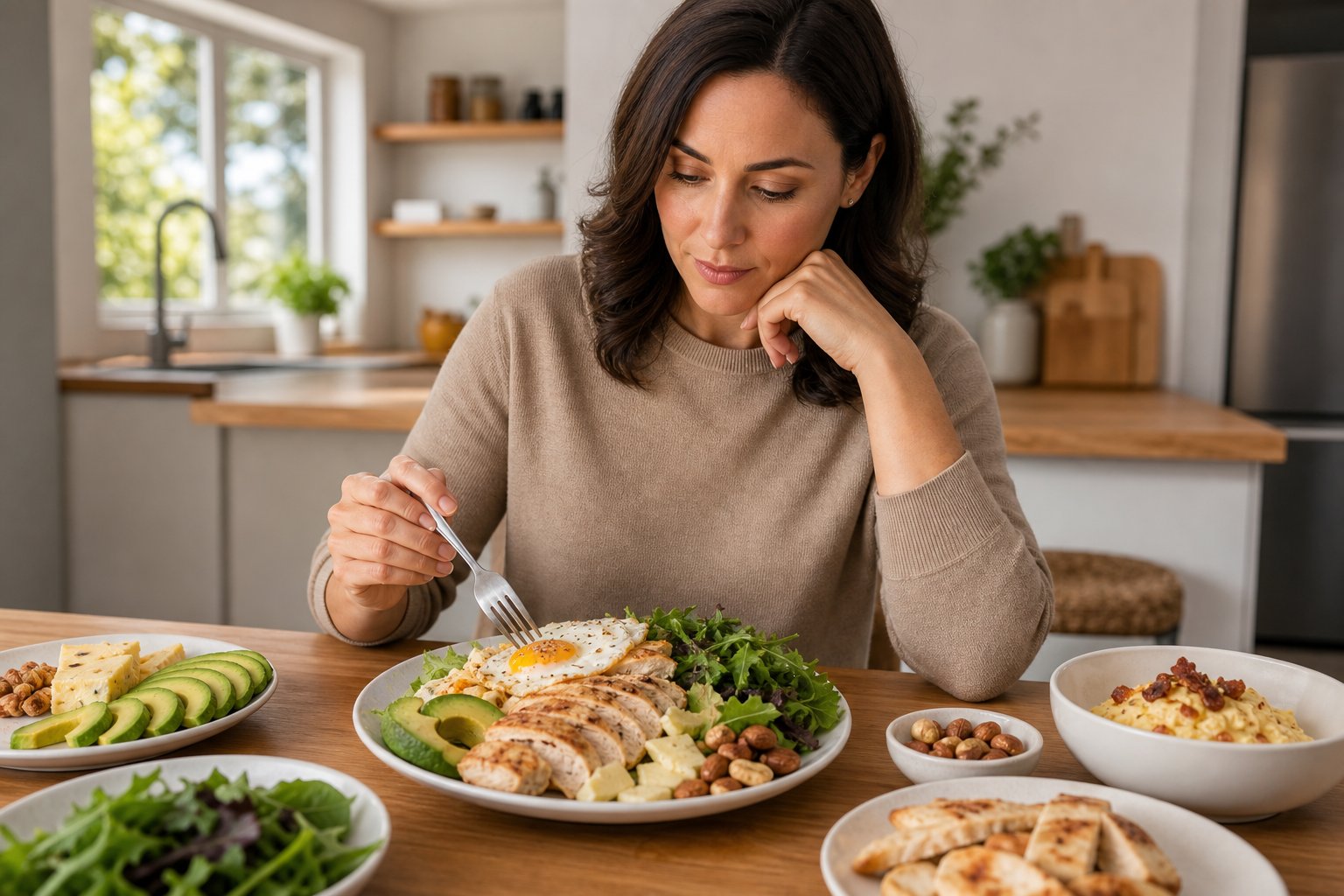
Structured meals reduce overeating by giving you enough protein and volume while keeping calorie-dense additions visible. Your plate should satisfy you without relying on unlimited fat.
Start With an Appropriate Protein Serving
Choose your protein first because it provides the base of the meal. Eggs, poultry, fish, meat, tofu, and lower-carb dairy products can all fit, depending on your preferences and carb limit.
Your protein needs depend on body size, activity, age, and health status. A registered dietitian can set a personal target. As a practical starting point, use a clear palm-sized serving and adjust based on your needs and hunger.
Avoid letting cheese, cream, or fat bombs displace most of your protein. Those foods supply energy, while a protein-centered meal often provides stronger staying power.
Include Low-Carb, High-Volume Foods
Non-starchy vegetables add volume, fiber, color, and nutrients for relatively little energy. Options include leafy greens, broccoli, cauliflower, zucchini, mushrooms, peppers, and green beans.
Fill a generous part of your plate with vegetables that fit your carbohydrate target. Roasting, grilling, steaming, and sautéing all work. Measure the oil used during cooking.
Vegetable volume helps you see and feel that you have eaten a complete meal. Your personal tolerance and medical needs should guide the type and amount.
Add Dietary Fat Intentionally
After choosing protein and vegetables, add enough fat for flavor and satisfaction. A measured dressing, a portion of avocado, or cooking oil may be enough.
Match the addition to the protein. Lean chicken may benefit from olive oil or sauce. Salmon or a fatty cut of meat may need little extra fat.
Serve fat as part of the meal, not as a target you must reach after you feel satisfied.
Plan Snacks Instead of Grazing
A planned snack has a time, portion, and purpose. Grazing has loose boundaries and continues through repeated access.
If meals keep you satisfied, you may not need a snack. If you do, portion it before eating and choose an option that addresses hunger. Examples include a hard-boiled egg, measured plain yogurt, sliced turkey, or vegetables with a defined amount of dip.
Keep snack foods outside your immediate work or relaxation area. The extra step gives you time to decide whether you want the planned portion.
If your eating pattern is becoming difficult to manage because meals are inconsistent or you are relying on repeated snacks, the free 7-day keto meal plan can help you create a more predictable structure for meals and planned eating moments.
Lifestyle Factors That Can Increase Overeating
Sleep, stress, alcohol, and your daily environment can increase food drive or reduce your awareness of portions. Addressing these factors helps your keto habits become easier to repeat.
Poor Sleep and Increased Food Drive
Short or disrupted sleep can leave you hungrier and more drawn to rich foods the next day. Fatigue also reduces your willingness to prepare a full meal, making packaged snacks more convenient.
Keep meal structure steady after a poor night. Eat enough protein at your usual meals and avoid trying to power through intense hunger with coffee alone.
Support sleep with a consistent schedule, a dark room, and a wind-down period. Ongoing sleep problems deserve medical review, especially with loud snoring or severe daytime sleepiness.
Poor sleep can also make overeating more likely by affecting appetite regulation, cravings, and decision-making around food. Research on sleep and appetite regulation explains why insufficient sleep may increase food intake and make high-calorie foods more appealing.
Stress and Emotional Eating
Stress eating on keto may appear as repeated trips to the kitchen, fast eating, or a strong desire for one comforting food. The presence of stress does not prove that every eating episode is emotional.
Identify the point where food enters your stress routine. You may reach for nuts during difficult work or dessert once the day ends. Change that point with a brief walk, a shower, a call, or another activity that creates distance from the food.
If eating feels distressing, hard to control, or closely tied to your mental health, seek support from a qualified clinician. You deserve practical help without blame.
Alcohol and Lowered Food Awareness
Alcohol adds energy and can lower your attention to portions. It may also lead to extra snacking or larger restaurant meals.
Decide your amount before drinking, choose an option that fits your carbohydrate limit, and eat a structured meal. Keep easy-to-overeat snacks off the table once drinking begins.
Alcohol affects people differently on keto, and you may feel its effects with less than you expect. Avoid alcohol when driving, during pregnancy, with interacting medications, or when a clinician has advised you to abstain.
Unstructured Days and Environmental Triggers
Days without clear meal times create more chances for grazing. Visible food, open packages, delivery apps, and shared snack bowls also increase eating cues.
Give weekends and work-from-home days basic structure. Set likely meal times, decide where you will eat, and prepare a few simple options.
Store dense snacks out of sight and place ready-to-eat meal foods where they are easy to use. Your environment should make the planned choice convenient.
What to Do Before Cutting Food Further
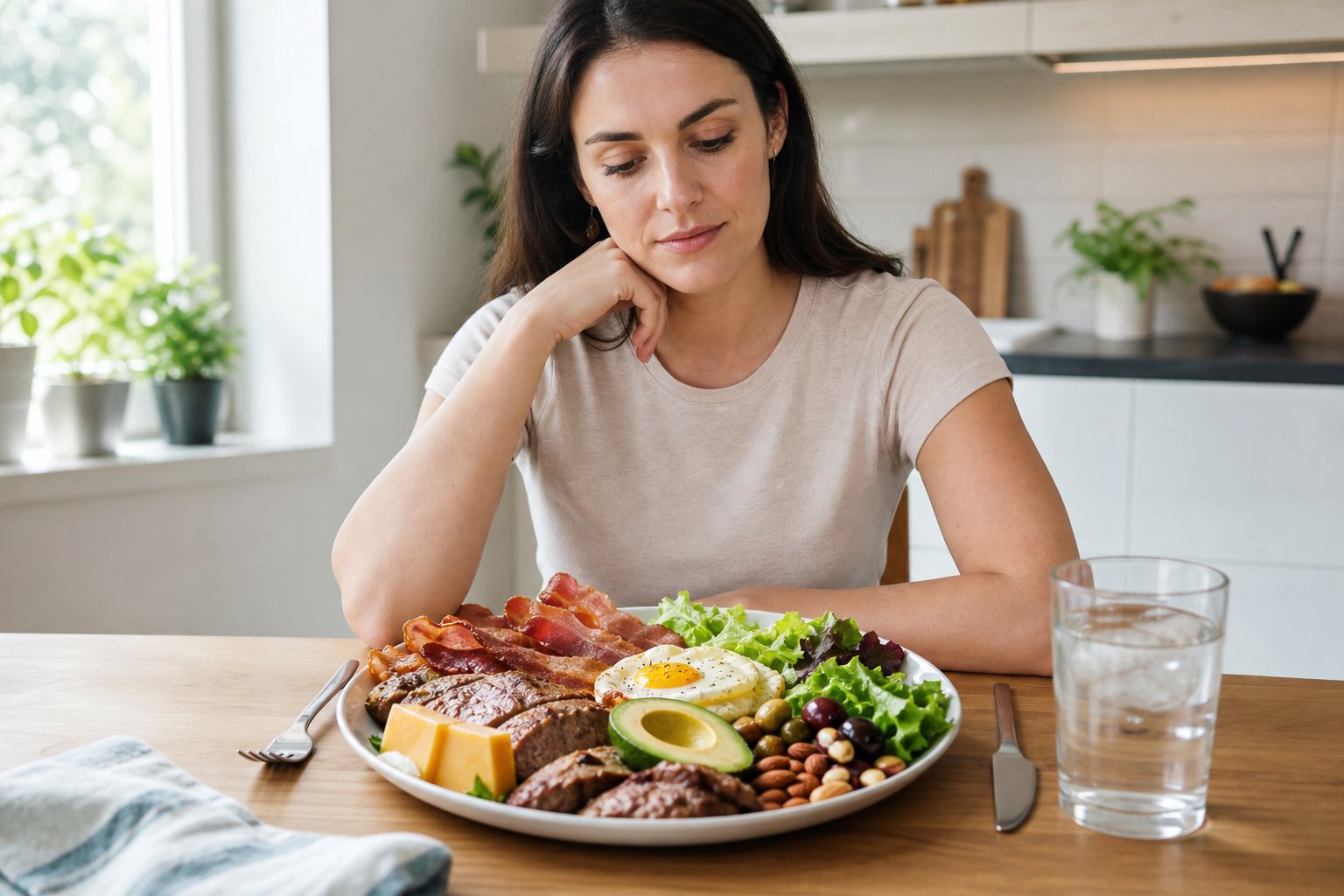
Confirm the source of excess intake before reducing your food target. A stall, one large meal, or a brief scale increase does not prove that you are consistently eating too much.
Check Whether You Are Actually Overeating
Review at least two to four weeks of weight trends when weight loss is your goal. Compare weekly averages under similar conditions, since daily weight reflects water and digestive contents as well as body tissue.
Pair the trend with a seven-day intake log and waist measurements if those feel useful to you. Stable weight may also reflect maintenance needs, menstrual cycle changes, medication effects, or changes in activity.
If your records show no clear excess and your trend remains unexplained, consult a clinician or registered dietitian before making a large cut.
Review Portions Before Eliminating More Foods
Your first adjustment can be smaller servings of the most energy-dense extras. Measure oil, nuts, cheese, cream, sauces, and desserts while keeping balanced meals intact.
This approach preserves variety and makes the test clear. If your intake falls and hunger stays manageable, you have found an effective adjustment.
Eliminating entire food groups adds rules and may leave your meals harder to sustain. Use removal only when a food does not work well for your health, preferences, or portion plan.
Fix Grazing and Automatic Eating Patterns
Set defined eating moments before lowering meal size. Eat from a plate or bowl, sit in one place, and close the eating moment when you finish.
Add friction to automatic eating. Put packages away, portion snacks in advance, and keep food away from your desk or couch. Use your log to target the setting linked to the most unplanned food.
A strong meal followed by fewer eating moments may reduce intake without leaving you hungry.
Avoid Compensating With Extreme Restriction
Severe restriction after overeating can create intense hunger and another large eating episode. Return to your normal meal schedule after an unplanned meal.
Keep your carbohydrates within your chosen plan, drink according to thirst, and eat balanced meals. You do not need a punishing fast or a very low calorie day to correct one episode.
Professional support is appropriate if cycles of restriction and loss of control keep repeating or cause distress.
When Repeated Overeating Means Your Plan Needs Adjustment
Your keto plan needs adjustment when overeating occurs most days or the rules repeatedly create conditions you cannot sustain. Personalization gives you a better chance of consistent execution.
The Pattern Happens Most Days
A daily pattern points to a structural problem. Your portions may be too loose, snacks too available, meals poorly timed, or food choices easy to overconsume.
Choose the largest repeat source from your audit and change it for one week. You might replace free-poured oil with a measured amount or move nuts from your desk to a cabinet.
If the pattern remains, test the next likely source. Sequential changes show you which part of your plan has the greatest effect.
Restriction During the Day Leads to Evening Overeating
Skipping meals or eating very little during the day may leave you with strong hunger at night. The evening intake then reflects both biology and easy access to food.
Move more of your planned food earlier. Include protein in your first main meal and eat a complete lunch if your schedule allows. A planned afternoon snack may help when dinner is late.
Review whether fasting supports your behavior. You can shorten or stop a fasting schedule that repeatedly ends in uncomfortable overeating.
Your Food Environment Makes Consistency Difficult
A plan built around constant exposure to open snacks requires frequent decisions. Change the environment so the choice happens once, during shopping or meal preparation.
Buy smaller packages, portion foods after shopping, and keep shared treats outside your main eating area. Prepare protein and vegetables before busy days.
For restaurant meals, review the menu ahead of time and choose your main order before you arrive. You can request sauces on the side to keep the portion visible.
When Personalization May Be More Useful Than More Rules
Strict keto may be hard to stick to when its limits create repeated overeating, social strain, or constant food focus. A less restrictive low-carb approach may suit you better if it improves meal quality and consistency.
You can also adjust meal timing, protein portions, food variety, or snack structure while staying ketogenic. Change one major variable at a time and judge it through hunger, adherence, health markers, and your longer-term trend.
Medical conditions, pregnancy, medication use, and therapeutic ketogenic diets require professional guidance. A clinician or registered dietitian can help you personalize your intake safely.
If repeated overeating is partly a result of an overly rigid or poorly structured keto routine, a guided meal-plan approach may provide a more practical framework than continuing to add restrictions.
Conclusion: Low Carb Is Not the Same as Unlimited
Low carbohydrate intake can support ketosis, yet your portions and eating frequency still shape your results. Cheese, nuts, oils, cream, keto desserts, and coffee add-ins deserve attention because small servings can accumulate quickly.
Identify your main pattern before changing your diet. Measure high-impact foods for one week, record unplanned eating moments, and build meals around protein plus low-carb vegetables. Add fat with a clear purpose and place snacks into defined portions.
If genuine hunger is driving the pattern, strengthen your meals and review whether your plan is too restrictive. If grazing or automatic eating is responsible, change the cue and food environment. Use several weeks of consistent data before deciding whether you need another adjustment.