
Keto Rash: What It Looks Like, Possible Triggers, and When to Seek Medical Care
Keto rash is a term commonly used for an itchy skin eruption associated with a rare inflammatory condition called prurigo pigmentosa. However, not every rash that appears while following a ketogenic diet is prurigo pigmentosa, and the timing of a skin change does not prove that ketosis caused it.
Prurigo pigmentosa can appear as itchy red bumps or small blister-like lesions, often in a symmetrical, netlike pattern across the upper chest, back, or neck. Darker netlike marks may remain after the inflammation settles. Other skin conditions can produce similar appearances, making self-diagnosis unreliable.
This guide explains what prurigo pigmentosa may look like, what clinical reports have observed about its relationship with ketosis and dietary changes, which other skin conditions may resemble it, and when professional medical assessment is appropriate.
What Is Keto Rash and Why Is It Associated With Ketosis?
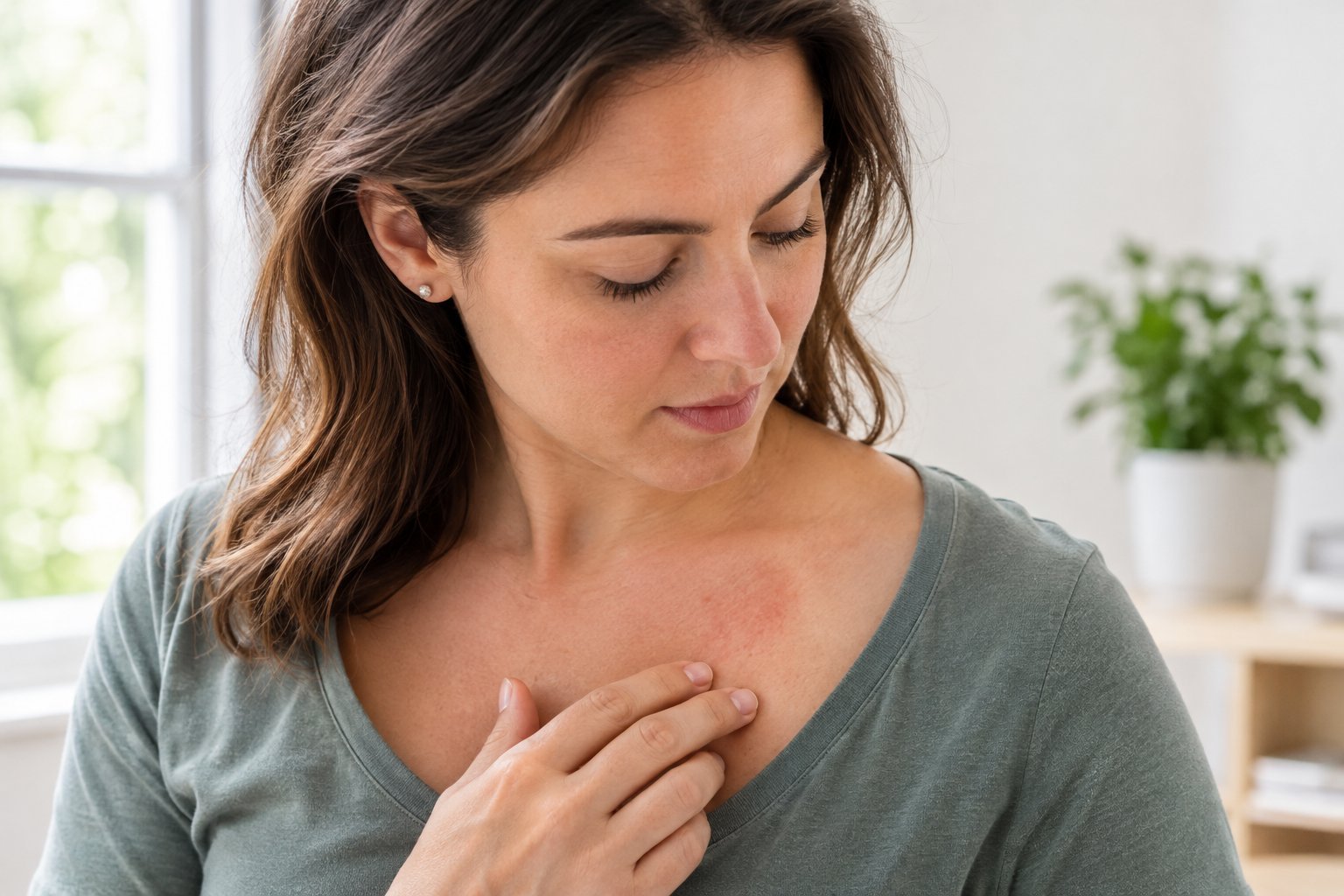
Keto rash is a popular label for prurigo pigmentosa, a skin condition that has been reported in people whose bodies are in ketosis. The name is useful as a starting point, but it is not a formal diagnosis for every rash that appears during a low-carb diet.
What People Commonly Call Keto Rash
When people search for a “keto diet rash” or “ketosis rash,” they usually mean an itchy eruption that started some days or weeks after cutting carbs. Online, the term gets applied to almost any keto skin eruption. In dermatology, it points more narrowly to prurigo pigmentosa, which has a specific pattern and course.
Understanding Prurigo Pigmentosa (Nagashima Disease)
Prurigo pigmentosa was first described in Japan in 1971 and is also called Nagashima disease. Dermatology references describe it as a rare, recurrent, itchy rash with a netlike pattern that leaves darker skin once the redness fades.
For decades, most reports came from East Asia, and young women were described as the group affected most often. As ketogenic diets became more popular, case reports have come from more than 24 countries and include people of many ages, ethnic backgrounds, and both sexes.
Why a Rash During Keto Does Not Automatically Mean Prurigo Pigmentosa
Many common skin problems can begin during the same weeks you start keto. New foods, supplements, sweat from exercise, new clothing, or a recent cold can all play a role. A rash that started after a diet change needs the same careful look as any other new rash.
Triage: Does Your Skin Eruption Resemble Possible Keto Rash?
Use these points to sort your observations before you see a clinician. They are not a way to diagnose yourself.
Features That May Be Consistent With Prurigo Pigmentosa
- Strong itch as the main symptom
- Small red or pink bumps, sometimes with tiny fluid-filled tops
- Both sides of the body affected in a similar way
- Netlike or lacy pattern as bumps cluster
- Upper back, chest, neck, shoulders, sometimes the abdomen or lower back
- Brown, netlike marks left behind as redness fades
- Start within days to weeks of keto, fasting, or rapid weight loss
Features That May Suggest Another Skin Condition
- Rash only where a product, fabric, or jewelry touches the skin
- Dry, scaly patches in elbow or knee creases
- Rash that began soon after a new medication
- Ring-shaped patches with a clear center
- Burrows or itch that is worst at night in skin folds or between fingers
- Welts that appear and vanish within hours
- Rash on the face, palms, or soles as the main site
Skin Changes That Deserve Prompt Medical Assessment
- Rash spreading quickly over hours
- Painful skin, blisters, or skin peeling
- Sores in the mouth, eyes, or genitals
- Fever, chills, or feeling very unwell
- Swelling of the lips, tongue, or face, or trouble breathing (call Emergency Nmber)
- Warm, red, painful area with streaks or pus
Diagnostic Summary: Could This Be Prurigo Pigmentosa or Something Else?
A skin rash after starting keto usually falls into one of four broad possibilities. Each one leads to a different next step.
The Pattern May Be Consistent With Prurigo Pigmentosa
Itchy, symmetrical bumps in a netlike pattern on the trunk, followed by brown marks, fit the classic picture.
Next step: book a dermatology visit and bring your diet history.
Another Inflammatory Skin Condition May Be Responsible
Eczema, contact dermatitis, and other inflammatory rashes can look similar, especially early on. Comparing prurigo pigmentosa vs eczema often needs a trained eye.
Next step: let a clinician examine the rash before you treat it.
The Timing May Be Related to a Dietary or Metabolic Change
Keto rash causes are tied to ketosis in reports, but new supplements, protein powders, or sweeteners added with the diet can also trigger reactions.
Next step: list everything you changed, not just carbs.
The Rash May Have Nothing to Do With Keto
Viral illness, a new detergent, or a medication can cause a rash at any time.
Next step: treat the diet as one clue among several.
If this skin concern is part of a wider pattern of difficulties with your ketogenic routine, the diagnostic framework in Why Keto Is Not Working for Me can help you examine the broader execution and adaptation issues.
→ Why Keto Is Not Working for Me
What Does Keto Rash (Prurigo Pigmentosa) Actually Look Like?
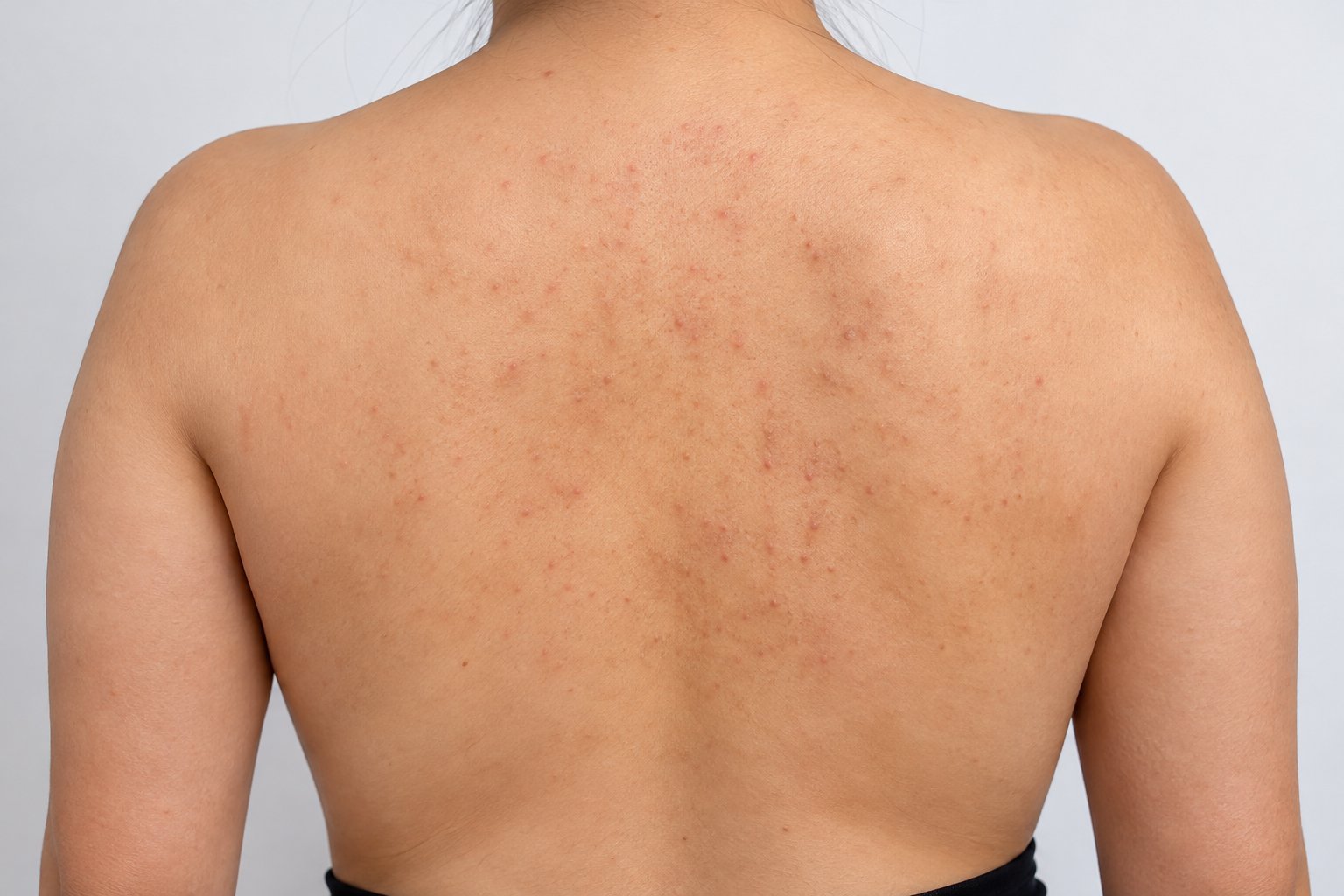
Prurigo pigmentosa looks like clusters of itchy red bumps on the upper body that join into a lacy pattern and later fade to brown marks. Its look shifts with each stage, which is one reason keto rash pictures online can seem so different from each other.
Itchy Red or Pink Papules and Papulovesicles
The rash starts as small raised spots called papules. Some have a tiny blister on top (papulovesicles). Itching is often intense. In one 2026 case report, a man’s itch did not improve with antihistamine pills or steroid cream.
The Characteristic Netlike or Reticulated Pattern
As the bumps multiply, they tend to merge into a web or net shape. Doctors call this reticulated. The pattern is one of the clearest clues, especially when it appears on both sides of the body in a mirror-like way.
Common Locations: Chest, Back, Neck, and Shoulders
Itchy red bumps on the chest and upper back are the most typical finding. The neck, shoulders, abdomen, and the area just above the buttocks can also be involved. The face and limbs are rarely affected, and the mouth, hair, and nails are usually spared.
How Dark Marks Can Remain After the Inflammation Settles
Once the redness calms down, it leaves reticulated hyperpigmentation: flat brown patches in the same netlike shape. These marks are not active rash. They fade on their own over weeks to months.
Why the Appearance Can Change Between Early and Later Stages
Early on, the rash is mostly red and raised. Later, it becomes mostly brown and flat. You may see both at once if new bumps appear while older ones fade. Under the microscope, early and late skin samples also look different, which matters if a biopsy is taken.
Understanding nutritional ketosis helps explain why this topic has attracted attention, although ketone production alone cannot establish the cause of a skin eruption. For a broader explanation, see The Science of Ketosis.
How Are Ketosis and Prurigo Pigmentosa Connected to Keto Rash?
Prurigo pigmentosa has been repeatedly reported in people who are in ketosis, but researchers have not proven that ketosis causes it. The link comes from patterns seen in patient reports.
What Clinical Reports Have Observed
Published cases describe the rash starting anywhere from three days to a couple of months after a diet change. Many people tested positive for ketones in their urine. In several reports, the rash cleared after carbohydrates were added back.
Reported Associations With Ketogenic Diets, Fasting, Carbohydrate Restriction, and Rapid Weight Loss
Ketosis can happen for many reasons, and prurigo pigmentosa has been reported with several of them:
- Ketogenic and very low-carb diets
- Prolonged fasting
- Weight loss surgery (bariatric surgery)
- Diabetes
- Anorexia nervosa and other eating disorders
- Severe vomiting in pregnancy
Rapid weight loss and strict calorie restriction often push the body into ketosis, which is why they show up in these reports.
What Researchers Still Don’t Know About the Mechanism
No one knows exactly how ketosis would lead to this rash. One idea is that ketone bodies gather around small blood vessels in the skin and draw in inflammatory cells. Other proposed triggers include friction from clothing and contact allergies to metals such as nickel. None of these explanations has been confirmed.
Why Association Does Not Establish Direct Causation
Many people follow keto without any rash, so ketosis alone does not explain who gets it. Other factors, such as genetics, skin sensitivity, or other health conditions, may also play a part. Case reports can show that two things happened together. They cannot prove one caused the other.
What Does Recent Dermatological Research Tell Us?
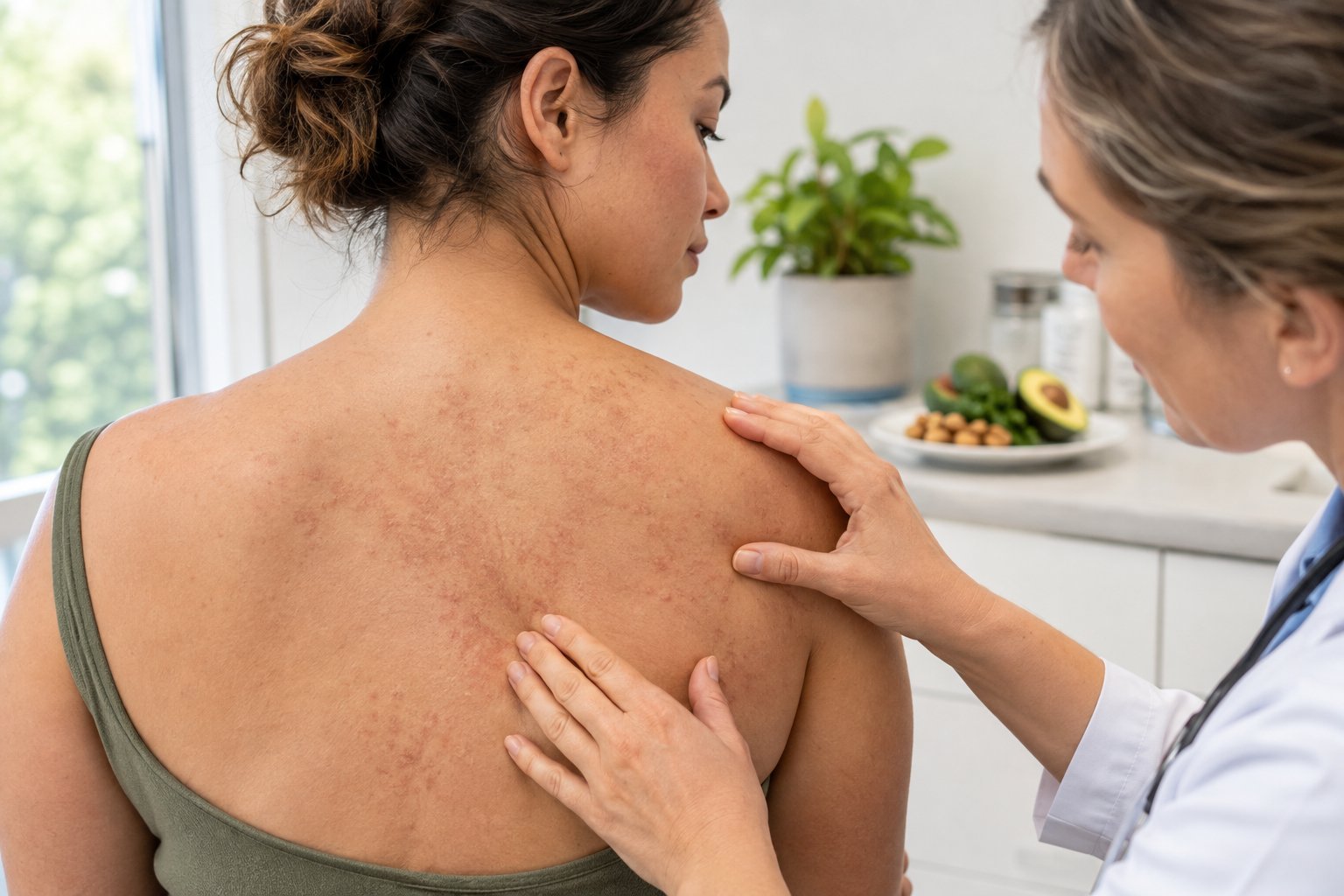
Recent reports in 2026 have raised awareness of prurigo pigmentosa among doctors, but they describe small numbers of patients.
The January 2026 New England Journal of Medicine Clinical Report
A January 2026 clinical report in the New England Journal of Medicine documented a case of prurigo pigmentosa appearing two months after a ketogenic diet was started, with symmetrical papules and reticulated hyperpigmentation across the chest, neck, and shoulders. You can review the NEJM clinical report on prurigo pigmentosa.
Findings From Recent Prurigo Pigmentosa Case Series
A June 2026 case report from Hong Kong described a 44-year-old man who developed the rash three days after starting keto along with hard exercise. His urine showed strong ketones. He chose not to take antibiotics and slowly added carbohydrates back with his clinicians’ support. His itch cleared within two days, and the brown marks faded by six months.
That report also summarized a larger review of 307 biopsy-confirmed cases from earlier literature. In that review, the rash took an average of about 34.5 days to clear, and about 10% of people had a return of the rash within 20 months after treatment.
Why Small Clinical Samples Cannot Establish How Common Keto Rash Is
Case reports and case series collect people who already have the rash. They do not count the many people on keto who never develop it. Because of this, they cannot tell you your personal risk or how common the condition is across everyone who eats low-carb. Underreporting also happens, since many people follow keto without medical supervision.
Why These Findings Should Encourage Recognition, Not Self-Diagnosis
These reports help doctors spot the condition sooner, which spares patients weeks of ineffective creams. For you, they are a reason to mention your diet at an appointment. They are not a checklist for confirming the diagnosis at home.
What Other Skin Conditions Can Look Like Keto Rash?
Several common rashes share features with prurigo pigmentosa, and doctors consider them during a keto rash differential diagnosis.
Contact Dermatitis
Contact dermatitis is an itchy reaction to something that touches the skin, such as a soap, fragrance, metal, or fabric.
When comparing prurigo pigmentosa vs contact dermatitis, the shape of the rash helps: contact rashes often follow the outline of a strap, waistband, or product area.
Eczema and Atopic Dermatitis
Eczema causes dry, itchy, sometimes scaly patches, often in skin creases, and often starts in childhood.
It usually improves with steroid creams, while prurigo pigmentosa tends not to respond to them.
Drug-Related Skin Eruptions
New medications can cause widespread rashes, sometimes days to weeks after starting. Some drug reactions are serious, so any rash after a new prescription needs medical review.
Viral Skin Eruptions
Viral infections can produce red, spotty rashes on the trunk. They often come with fever, tiredness, or a sore throat and fade as the illness passes.
Confluent and Reticulated Papillomatosis
This condition causes brownish, slightly scaly patches in a netlike pattern on the chest and back, much like late-stage prurigo pigmentosa. It is usually less itchy and lacks the earlier phase of red bumps.
Why Appearance Alone Cannot Confirm the Diagnosis
Hives, scabies, and other inflammatory skin conditions can also enter the picture. Since so many itchy rash causes overlap in looks, a clinician weighs the history, the exam, and sometimes lab tests together.
How Does a Dermatologist Assess Possible Keto Rash?
A dermatologist reaches a diagnosis by combining your story with a close look at the rash, and sometimes a small skin sample.
Reviewing Your Diet and Recent Weight Changes
Expect questions about when you started keto, how strict it is, whether you fast, and how much weight you have lost. A simple urine ketone test may be done in the office.
Examining the Rash and Its Distribution
The dermatologist checks where the rash is, whether both sides match, and whether red bumps, brown netlike marks, or both are present.
They also check areas usually spared, such as the mouth and nails.
Discussing Medications, Fasting, and Other Potential Triggers
You will be asked about prescriptions, over-the-counter drugs, supplements, new skin products, and any health conditions such as diabetes. This helps rule out mimics.
When a Skin Biopsy May Be Considered
Many cases are diagnosed from the history and exam alone. A biopsy (removing a tiny piece of skin) may be suggested when the picture is unclear or the rash does not behave as expected. Not everyone needs one, and routine blood panels are not always required.
Why Clinical Findings and Biopsy Results May Need to Be Considered Together
A skin sample from an early red bump shows different cells than a sample from an older brown patch. Some findings also overlap with other conditions, such as pityriasis lichenoides. The pathologist and dermatologist interpret the results alongside what they see on your skin.
What Treatment Options Might a Clinician Discuss?
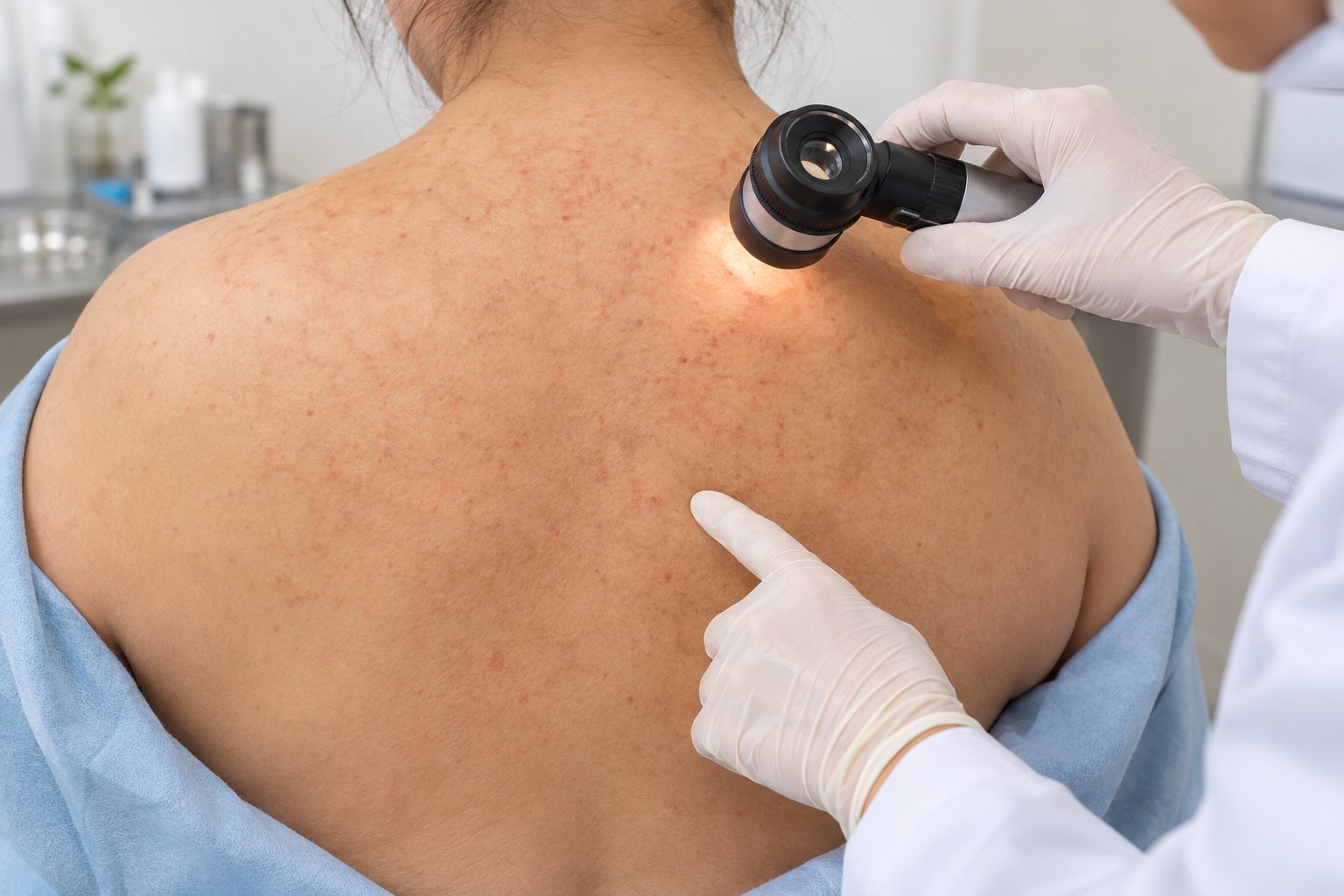
Treatment for confirmed prurigo pigmentosa usually focuses on calming the inflammation and addressing the suspected trigger, under a clinician’s direction.
Addressing the Suspected Underlying Trigger
Because the rash is linked with ketosis, a clinician may discuss adding some carbohydrates back. In some reports, this alone cleared the rash within days to weeks.
Why Diet Changes Should Be Considered With Appropriate Guidance
If your ketogenic diet was prescribed for epilepsy or another medical condition, do not change it without talking to the doctor who manages that condition.
Stopping a medical keto diet suddenly can carry real risks. For anyone, a gradual plan made with a clinician or dietitian is safer than an abrupt switch.
Prescription Treatments for Confirmed Prurigo Pigmentosa
Dermatology references describe certain prescription medicines as effective during the red, inflamed phase. These include tetracycline-type antibiotics, dapsone, and macrolide antibiotics.
They appear to work by calming inflammatory cells, and it is unclear whether their germ-killing action matters.
The choice of drug, dose, and length of treatment belongs to your clinician.
Managing Persistent Itching and Skin Inflammation
Steroid creams and antihistamines are often tried first for itchy rashes, but references report that steroids do not work well for this condition.
If your itch keeps going despite treatment, tell your clinician so the plan can be adjusted.
What to Expect From Residual Dark Marks and Possible Recurrence
The brown netlike marks have no proven treatment, but they fade with time. The rash can return, especially if you go back into ketosis. In the large case review, about 1 in 10 people had a recurrence within 20 months.
When Should You Seek Dermatological Assessment?
You should see a clinician for any rash that lasts, comes back, or worsens, and get emergency care for severe symptoms. The level of urgency depends on what you notice.
| Urgency | What you notice | What to do |
|---|---|---|
| Routine | Mild itchy rash lasting more than a week or two | Book a dermatology or primary care visit |
| Prompt | Spreading rash, strong itch affecting sleep, rash after a new drug | Get seen within a day or two |
| Emergency | Blisters, peeling, mouth or eye sores, fever, face swelling, breathing trouble | Go to the ER or call 911 |
A Persistent or Recurrent Itchy Rash
A persistent itchy rash that keeps returning is worth a visit, even if it seems mild. Correct treatment can shorten weeks of discomfort.
Symmetrical Eruptions With Reticulated Pigmentation
If you see matching rashes on both sides of your upper body with a netlike brown pattern, a prurigo pigmentosa dermatologist visit makes sense.
Rapidly Spreading, Painful, or Blistering Skin Changes
A worsening skin rash that hurts, blisters, or peels can signal a serious reaction. Seek same-day or emergency care.
Fever or Other Symptoms Accompanying the Rash
Fever, chills, joint pain, or feeling very sick with a rash are skin rash warning signs. They point toward infection or a whole-body reaction that needs fast care.
When an Unusual Eruption Needs Assessment Even Without Typical Keto-Rash Features
A rash that does not fit any of the patterns above still deserves medical advice. Unusual rashes are exactly the ones that benefit from an expert look.
What Not to Assume When a Rash Appears During Keto
Several common keto rash misconceptions can delay the right care.
Don’t Assume Every Rash Is Prurigo Pigmentosa
Prurigo pigmentosa is rare. Many keto skin problems turn out to be eczema, contact reactions, or other common conditions.
Don’t Treat Timing as Proof That Ketosis Caused It
A rash that starts after a diet change could still come from a new supplement, detergent, or virus. The rash is also not a normal part of keto adaptation, and it is not a sign of your body “cleansing.”
Don’t Self-Prescribe Antibiotics or Other Treatments
Using leftover antibiotics or someone else’s prescription can cause side effects and hide the real diagnosis. Prescription treatment should follow an exam.
Don’t Rely on Supplements or Detox Products to Treat the Rash
No supplement, detox product, or home remedy has evidence for treating prurigo pigmentosa. Some new products may even irritate the skin further.
Don’t Delay Professional Assessment if Symptoms Persist or Worsen
Waiting can mean more itching and more dark marks. A visit gives you a clear plan.
Changes in the skin cannot reliably establish whether someone is in ketosis or whether a particular metabolic process is occurring. This guide to Signs Keto Is Working provides broader context about the indicators commonly discussed during keto.
How to Prepare for Medical Assessment Before Changing Your Keto Diet
Getting seen before you change your diet gives your clinician the clearest view of the rash and its possible triggers.
Document When the Rash Started
Write down the date the rash appeared, where it began, how it spread, and how itchy it is. Note anything that made it better or worse.
Keep Photographs Showing Its Progression
Take clear photos in good light every few days. Since the rash can change from red bumps to brown marks, photos show your clinician stages they might miss at the visit.
Tell Your Clinician About Dietary and Weight Changes
Bring a list that includes:
- The date you started keto or fasting
- Your typical daily carb intake
- Recent weight loss and how fast it happened
- All medications, supplements, and protein powders
- New skin products, detergents, or clothing
- Any home ketone test results
If you notice things like fatigue or headaches you think are keto adaptation symptoms, mention them too, but keep the focus on the skin.
Follow a Diagnosis-Based Treatment Plan
Once your clinician makes a diagnosis, follow the plan they give you, including any diet changes, and return if the rash comes back.
A skin eruption should not automatically be treated as an ordinary adaptation symptom. For general background on the metabolic transition during keto, see the Keto Adaptation Timeline.
Conclusion: Recognize the Possible Association, but Get the Rash Properly Identified
Keto rash usually refers to prurigo pigmentosa, a rare, itchy, netlike eruption on the chest, back, and neck that leaves brown marks as it heals. It has been linked with ketosis from diets, fasting, and other causes, though the exact cause is still unknown.
Other skin conditions can look very similar, so a clinician should confirm what you have. Seek emergency care for blisters, peeling, fever, or swelling.
For a lasting or returning rash, bring your photos, timeline, diet details, and medication list to a dermatology visit, and make any diet changes with your clinician’s guidance.
If you have discussed your situation with a healthcare professional and continuing a ketogenic eating pattern is appropriate for you, a structured meal plan may help organize everyday food choices around your preferences and routine.