
Keto Eating Out: Why Restaurants Make Keto Harder and How to Stay on Track
Eating keto at home is usually easier to control. You know what ingredients are being used, how much food is on your plate, which sauces are added, and when you are going to eat. Restaurants remove much of that control, which can make an otherwise manageable keto routine harder to follow.
Eating out can create problems that are easy to misread. A meal may look keto-friendly while containing hidden carbohydrates, portions may be much larger than expected, and social situations can make it harder to stick with the choices you intended to make.
The goal is not to find a perfect restaurant meal every time. It is to understand which part of the eating-out environment is creating the problem so you can make more predictable decisions without turning every meal into a complicated keto calculation.
Why Is Keto Harder When You Eat Out?
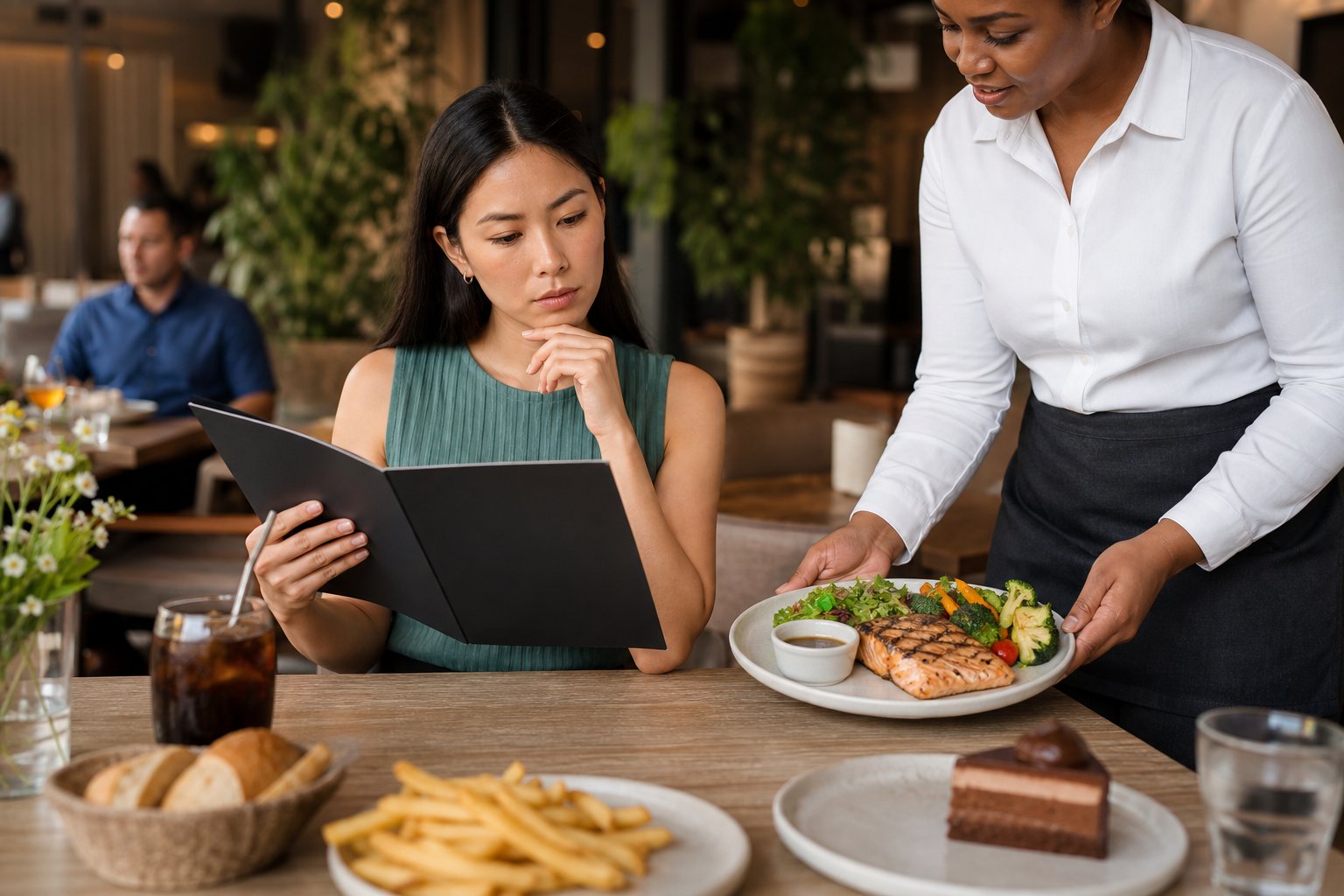
Keto restaurant meals are harder because you lose much of the control that supports keto consistency at home. Ingredient uncertainty combines with larger portions, quick decisions, and social pressure.
Restaurants Remove Control Over Ingredients and Portions
At home, you choose the cooking oil, measure sauces, and know whether a seasoning blend contains sugar. At a restaurant, the kitchen controls those details. A grilled chicken breast may arrive with a sweet marinade, while vegetables may be cooked in a prepared glaze.
Portions create another layer of uncertainty. Your entrée may contain twice the protein or added fat you would serve at home. Side dishes, garnishes, and shared appetizers also make your full intake harder to judge.
You can reduce this uncertainty by choosing meals with fewer components. Grilled steak with broccoli is easier to assess than stuffed steak with a reduction sauce and mixed side dish.
Why Eating Out Creates More Decisions
A menu asks you to make several choices within minutes. You need to assess the entrée, sides, cooking method, sauce, drink, and possible substitutions while other people are waiting to order.
Decision fatigue increases the chance of keto restaurant mistakes. Familiar menu words also create false confidence. “Crispy,” “glazed,” “sticky,” “crusted,” and “smothered” signal ingredients that deserve a question.
A preset rule reduces the mental load: choose a plain protein, swap the starch for a green vegetable, and request uncertain sauces on the side.
The Difference Between a Keto-Friendly Meal and a Predictable Keto Meal
A keto-friendly meal contains foods that can fit your carb limit. A predictable keto meal also gives you a reasonable idea of how those foods were prepared and how much you are eating.
A bunless burger with cheese is both keto-friendly and fairly predictable when the sauce comes on the side. A restaurant salad may look keto-friendly while containing sweet dressing, candied nuts, dried fruit, or breaded chicken.
For steadier keto consistency, favor orders with visible ingredients and easy modifications. Predictability gives you a stronger basis for deciding how much to eat and whether added fat is useful.
Triage — What Usually Derails Your Restaurant Keto Meal?
Your main keto eating out problem will usually fall into one of three areas: ingredients, portion structure, or the dining environment.
Hidden Ingredients Are the Main Problem
- Your weight, hunger, or ketone readings change after meals that appear low carb.
- Your orders include marinades, dressings, gravy, glazes, or prepared sauces.
- You rely on labels such as “healthy,” “sugar-free,” or “keto-friendly.”
- Your best fix is to ask about sugar, flour, breading, and sauce preparation.
- Request uncertain sauces and dressings on the side.
Portion Size and Meal Structure Are the Main Problem
- Your food choices fit keto, yet you leave feeling uncomfortably full.
- Your meals include several rich extras, such as cheese, bacon, avocado, butter, and creamy dressing.
- You graze from shared plates after finishing your entrée.
- Your best fix is to choose one main plate and pause when comfortably satisfied.
- Box part of a large serving early if visual cues affect your intake.
The Environment Is the Main Problem
- Your plan changes when bread, appetizers, alcohol, or dessert reaches the table.
- You order quickly because the group is ready.
- You arrive extremely hungry and eat whatever appears first.
- Your best fix is to review the menu before leaving and decide on your entrée.
- Keep sparkling water, unsweetened tea, or another planned drink in front of you.
Diagnostic Summary — Which Restaurant Problem Fits You?
Your next step should match the pattern behind your keto execution mistakes.
Your Food Choices Are Fine but Ingredients Are Unclear
- Choose this diagnosis if: Your plate looks low carb, yet sauces, seasoning, or preparation remain unknown.
- Do next: Ask one focused question about the highest-risk component.
- Use this wording: “Does the marinade or sauce contain added sugar or flour?”
- Order adjustment: Put the sauce on the side or choose the plain version.
Your Choices Are Appropriate but Portions Get Out of Control
- Choose this diagnosis if: You order meat and vegetables but keep eating past comfortable fullness.
- Do next: Decide your portion before taking the first bite.
- Order adjustment: Limit rich add-ons and box excess food early.
- Track: Notice whether shared plates or alcohol weaken your stopping point.
Social Situations Are the Main Trigger
- Choose this diagnosis if: Your choices change mainly around friends, family, coworkers, or parties.
- Do next: State your order clearly and avoid lengthy diet explanations.
- Use this wording: “I’ll have the salmon with vegetables.”
- Order adjustment: Choose one planned flexibility point, such as a dry drink or a few bites of a shared dish.
Poor Planning Is Creating the Problem
- Choose this diagnosis if: You arrive hungry, review the menu late, or have no workable backup.
- Do next: Check the menu and select your main meal before you leave.
- Backup: Keep a low-carb snack available when timing is uncertain.
- Priority: Build a short list of restaurants where you already know your order.
If restaurant problems are part of a broader pattern where keto is not working as expected, the next step is to look at the wider reasons your approach may be breaking down
→ Why Keto Is Not Working for Me
Cause #1 — Hidden Carbs Are Harder to See at Restaurants
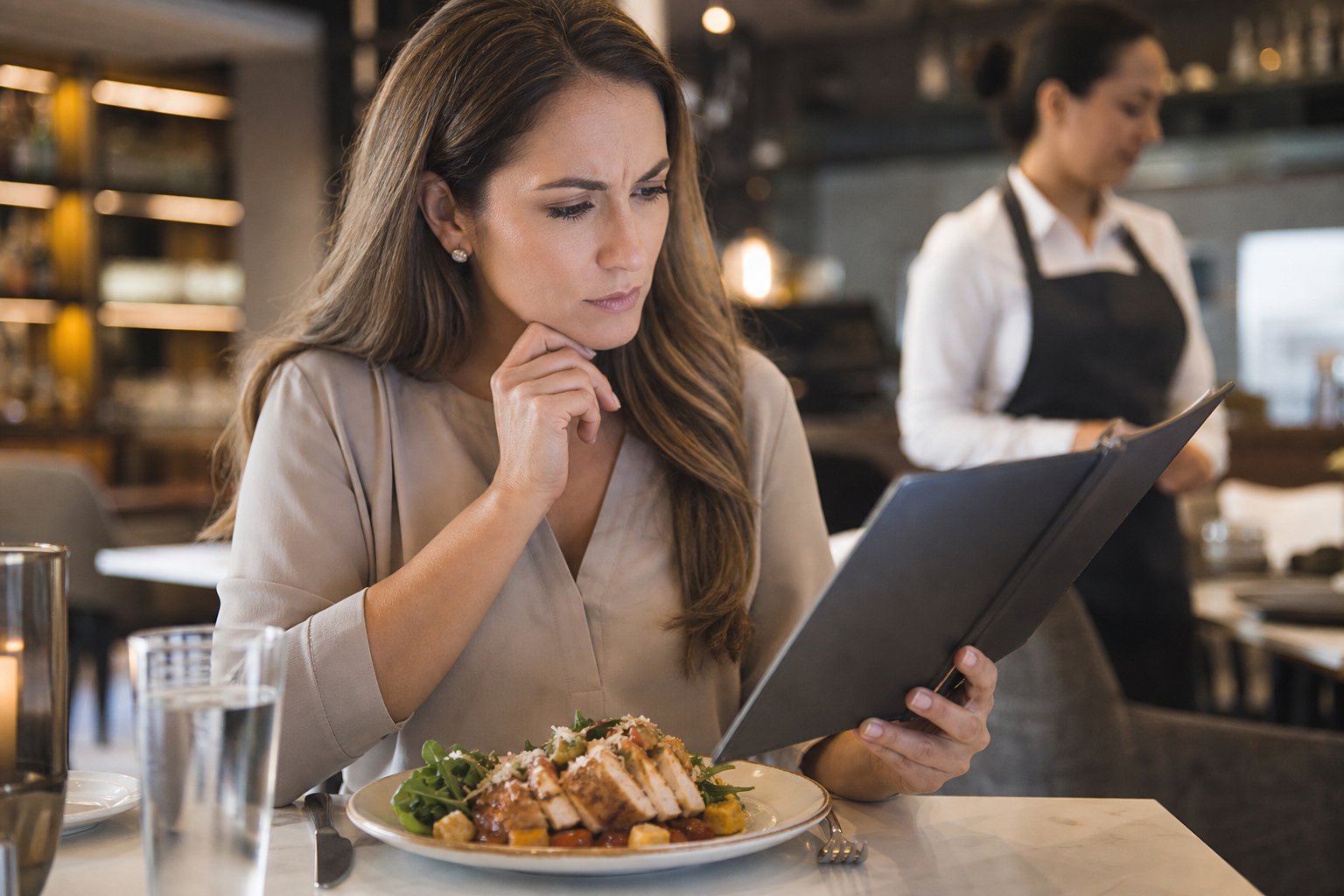
Hidden carbs are difficult to judge because restaurant recipes may use sugar, starch, and flour in foods that look suitable for keto. You can lower the risk by focusing your questions on prepared components.
Restaurant meals can contain hidden carbohydrates that are difficult to spot from the menu alone, especially when sauces, marinades, and dressings are prepared in advance.
Sauces, Dressings, and Marinades
Keto sauces and keto dressings vary widely by recipe. Barbecue sauce, teriyaki sauce, honey mustard, sweet chili sauce, and many glazes contain clear sources of sugar. Cream sauces, gravy, and soup bases may use flour or cornstarch for thickness.
Keto marinades need the same attention. A savory flavor does not prove that a marinade is low carb. Sugar helps browning and balances salt or acid, so kitchens may add it even when the finished meat does not taste sweet.
Ask, “Is this sauce or marinade sweetened or thickened with flour or starch?” If your server is unsure, request plain grilled meat and keep the sauce on the side. Olive oil, lemon, vinegar, butter, and uncomplicated herb sauces give you more predictable options when available.
Breading, Batter, and Flour
“Breaded” and “battered” clearly signal a flour-based coating. Less obvious terms include “crispy,” “crusted,” “dusted,” and “lightly fried.” Meatballs, crab cakes, burger patties, and fillings may also contain breadcrumbs or another binder.
Ask whether the item has any flour, crumbs, coating, or breading. For fried food, removing the coating after cooking still leaves some breading attached. A grilled, roasted, broiled, or pan-seared version gives you a cleaner estimate.
Flour also appears in gravy, bisque, chowder, and thick pan sauces. If the kitchen cannot confirm the thickener, choose a dish with fewer prepared elements.
Sweetened Drinks and Condiments
Liquid carbohydrates are easy to consume quickly. Sweet tea, regular soda, lemonade, juice, frozen cocktails, tonic water, and flavored coffee drinks can add a large amount of sugar without making your meal feel more filling.
Choose water, sparkling water, unsweetened tea, plain coffee, or a verified zero-sugar drink. If you drink alcohol, dry wine and spirits with soda water are lower-carb choices, though serving size and mixers still require attention. Alcohol may also reduce your restraint around appetizers or dessert.
Ketchup, barbecue sauce, cocktail sauce, sweet relish, and many dipping sauces contain added sugar. Mustard, mayonnaise, hot sauce, oil, and vinegar are easier choices when the recipe is standard, but you can still verify house-made versions.
Why “No Sugar Added” Doesn’t Automatically Mean Low Carb
“No sugar added” means no sugar was added during processing or preparation under the label’s stated terms. The food can still contain carbohydrates from milk, fruit, grains, starches, or naturally occurring sugars.
A sauce made with fruit puree may carry that claim while providing enough carbohydrates to affect your daily limit. Milk-based drinks also contain lactose, which is a natural sugar.
When nutrition information is available, check total carbohydrate and fiber. Net carbs are total carbohydrates minus fiber, and some people also subtract certain sugar alcohols based on personal tolerance. At a restaurant without nutrition data, judge the main ingredients and portion size instead of relying on a front-menu claim.
Even when a restaurant describes something as low-carb, counting net carbs on keto can still be difficult when the ingredients and portions are uncertain.
Cause #2 — Restaurant Portions Change the Equation
Large portions can push your energy intake beyond your needs even when every visible food fits your ketogenic diet. Your hunger, goals, and meal schedule should guide how much of the serving you eat.
Why Keto-Friendly Doesn’t Mean Unlimited
Steak, cheese, eggs, avocado, and nuts contain few carbohydrates, yet they still supply energy. Keto supports carb control; it does not make portion size irrelevant.
Protein also deserves a practical portion check. A restaurant steak may be far larger than your usual serving. You can eat until comfortably satisfied and take the rest home. You do not need to finish the plate because the food meets your keto rules.
Pay attention to your hunger after the first half of the meal. A short pause helps you separate physical hunger from the urge to keep eating a large, appealing serving.
Added Fats and Calorie-Dense Extras
Restaurant meals frequently contain cooking oil or butter before visible extras reach the plate. Adding cheese, bacon, avocado, creamy dressing, mayonnaise, and more butter can produce a much richer meal than you planned.
Fat helps with flavor and fullness, but your keto calorie intake can climb quickly when several extras overlap. Choose additions based on the base meal. A lean grilled chicken breast may benefit from dressing or avocado. A fatty steak with creamed spinach may already provide enough.
Request dressing, butter, and rich sauces on the side when you want control over the amount. You can add what improves the meal without pouring on the full serving.
Shared Plates and Grazing
Shared appetizers weaken normal portion cues because you may lose track of how much you have eaten. Wings, cheese plates, cured meats, dips, and nuts can fit a low carb lifestyle while still adding a substantial amount to your meal.
Decide whether the shared plate is part of your meal before it arrives. Place your chosen portion on a small plate and stop reaching into the center. If the appetizer is filling, adjust your entrée portion once it arrives.
Buffets create a similar problem. Build one complete plate, sit down to eat, and reassess your hunger before returning.
Recognizing When Portion Size Is the Bigger Issue
Portion size is the likely issue when your ingredients are clear, your carb choices stay consistent, and restaurant meals leave you far fuller than meals at home. Frequent use of rich add-ons gives you another clue.
Compare your restaurant pattern with a familiar home meal. Look at the protein size, number of extras, drinks, and time spent grazing. Change one variable during your next visit, such as boxing half the entrée or choosing one added fat.
If your goal involves weight change and progress remains stalled, restaurant frequency and serving size deserve attention alongside carbohydrate intake.
Cause #3 — You Have to Make More Decisions Than at Home
A fixed ordering routine protects you from keto decision fatigue when a menu is unfamiliar or time is short. You only need to resolve the choices that have the greatest effect on your meal.
Reading the Menu Under Time Pressure
Scan first for protein categories: burgers, steak, chicken, fish, seafood, pork, eggs, or tofu. Then read the cooking method and description.
Words such as grilled, roasted, broiled, baked, and poached point toward less complicated preparation, though a marinade or sauce may still require checking. Words such as glazed, sticky, honeyed, crispy, battered, and breaded flag likely carbohydrate sources.
Choose the easiest meal to modify. A burger with a bun and fries requires two clear swaps. A pasta dish built around noodles leaves you with little of the original meal after modification.
Choosing Sides and Substitutions
Swap potatoes, rice, pasta, bread, tortillas, or fries for a non-starchy vegetable or side salad. Useful options include broccoli, asparagus, green beans, leafy greens, zucchini, mushrooms, and cauliflower when the preparation is suitable.
Ask how the side is finished. Roasted vegetables may include a sweet glaze, while a salad may come with croutons or sweet dressing. Request those items removed or served separately.
If substitutions cost extra, decide whether the replacement adds enough value. You can decline the starch and order an à la carte vegetable if that produces a more complete meal.
Asking Questions Without Overcomplicating the Meal
Ask about the one or two components with the highest uncertainty. Your server can answer focused preparation questions more easily than a broad request to make the entire meal “keto.”
Useful questions include:
- “Is the chicken breaded or coated with flour?”
- “Does the marinade contain sugar?”
- “Is the sauce thickened with flour or cornstarch?”
- “Can you serve the dressing on the side?”
- “Can I replace the fries with broccoli or a side salad?”
If the kitchen cannot confirm a recipe, choose the plainer dish. You can also say, “Please leave off the sauce,” which gives the server a clear request to enter.
Using a Simple Decision Rule
Use this sequence for keto restaurant ordering:
- Choose protein: Pick grilled, roasted, broiled, or another plain preparation.
- Replace the starch: Select a leafy salad or non-starchy vegetable.
- Check the extras: Verify breading, marinades, sauces, and dressings.
- Set the portion: Decide how much matches your hunger.
- Choose your drink: Use an unsweetened option or a planned low-carb alcoholic drink.
When two meals fit the sequence, choose the one with fewer prepared components. That approach keeps your keto execution workable even without published macros, which are the carbohydrate, protein, and fat amounts in a meal.
If every restaurant meal requires several decisions about ingredients, portions, sides, and substitutions, keto can become harder to stick to than it needs to be.
Cause #4 — Social Pressure Makes Adherence Harder
Social settings make keto adherence harder when group choices, shared food, and alcohol pull you away from your planned meal. A calm decision made before ordering reduces those trade-offs.
When the Group Chooses the Restaurant
Review the menu as soon as you know the location. Look for one workable protein and one side you can change. If the restaurant has a limited menu, eat a small low-carb snack beforehand so your entire plan does not depend on one dish.
You can keep your explanation brief when someone asks about your order: “I feel better keeping my meal low carb,” or “That is what works for me today.” You do not owe the table a detailed defense of your ketogenic diet.
If the venue cannot prepare a full meal for you, eat what fits and complete your meal later. Social participation does not require matching every food choice at the table.
Handling Bread, Appetizers, and Shared Desserts
Ask for the bread basket to remain away from your place setting, or decline it if the group agrees. Keep your chosen drink in front of you while everyone orders.
Review appetizers as part of your full meal. If you choose wings, charcuterie, or another low-carb shared dish, account for that food when your entrée arrives. Check wing sauces and meat glazes because sweet coatings are common.
For dessert, you can order coffee or tea, decline, or choose a planned taste if that fits your personal limit. Make the decision before the dessert menu starts moving around the table.
Staying Flexible Without Abandoning Your Plan
Flexibility works best when you define it. You might choose a glass of dry wine while keeping the food low carb, or accept some uncertainty in a sauce while skipping bread and dessert.
Avoid combining every flexible choice in one meal. Alcohol, appetizers, an uncertain entrée, and dessert create a much larger departure than one selected item.
If your meal contains more carbohydrates than expected, treat it as one data point. Resume your normal keto routine at the next meal without fasting as punishment or cutting food below your needs.
Social meals do not have to be perfect for you to stay on course because keto success depends more on consistency than perfection.
How to Build a Reliable Keto Order
A reliable keto restaurant order combines a plainly prepared protein, a non-starchy side, verified sauces, and enough fat to satisfy your hunger. This structure works across many restaurant styles.
Start With a Simply Prepared Protein
Choose steak, burger patties, chicken, pork, fish, seafood, eggs, or tofu based on your preferences. Look for grilled, broiled, roasted, baked, or poached preparations.
Confirm that the protein has no breading or sweet glaze. For burger orders, request no bun and check whether the patty includes fillers when that information is available. Ask for lettuce wrapping only if you want it; a plate with a fork works just as well.
Prepared mixtures require closer review. Meatballs, meatloaf, crab cakes, sausage, and stuffed meats may contain crumbs, starch, or sweet seasoning.
Choose a Non-Starchy Side
Build the rest of the plate with salad or vegetables that grow above ground. Leafy greens, broccoli, asparagus, zucchini, mushrooms, cauliflower, cabbage, and green beans are useful restaurant choices.
Request no croutons, tortilla strips, candied nuts, or dried fruit on salads. Check whether vegetable sides come with glaze or bread crumbs.
A double serving of vegetables can make the meal more satisfying when the standard plate includes two starches. Some restaurants also allow sliced tomato, avocado, coleslaw, or cottage cheese, though recipes and carbohydrate amounts vary.
Check Sauces, Dressings, and Marinades
Identify every prepared liquid attached to the meal. Ask whether it contains sugar, honey, flour, cornstarch, or fruit concentrate.
Use “on the side” when the recipe seems workable in a small amount but the serving size is uncertain. Use “leave it off” when the sauce is clearly sweet or heavily thickened.
For salad, oil and vinegar offer a predictable fallback. Ranch, blue cheese, Caesar, and other creamy dressings may fit your plan, yet house recipes vary. Verify the recipe or control the portion.
Add Fat Based on the Meal Rather Than Automatically
Assess the protein and cooking method before adding fat. Salmon, ribeye, chicken thighs, cheese-covered burgers, and eggs already provide substantial fat. Lean fish or skinless chicken may need olive oil, butter, avocado, cheese, or dressing for a satisfying meal.
Choose one or two additions that improve the plate. Several rich extras can overwhelm your hunger cues and raise the meal’s energy content.
Your goal is comfortable fullness. Keto does not require you to add butter or cream when the meal already meets that need.
How to Handle Common Restaurant Situations
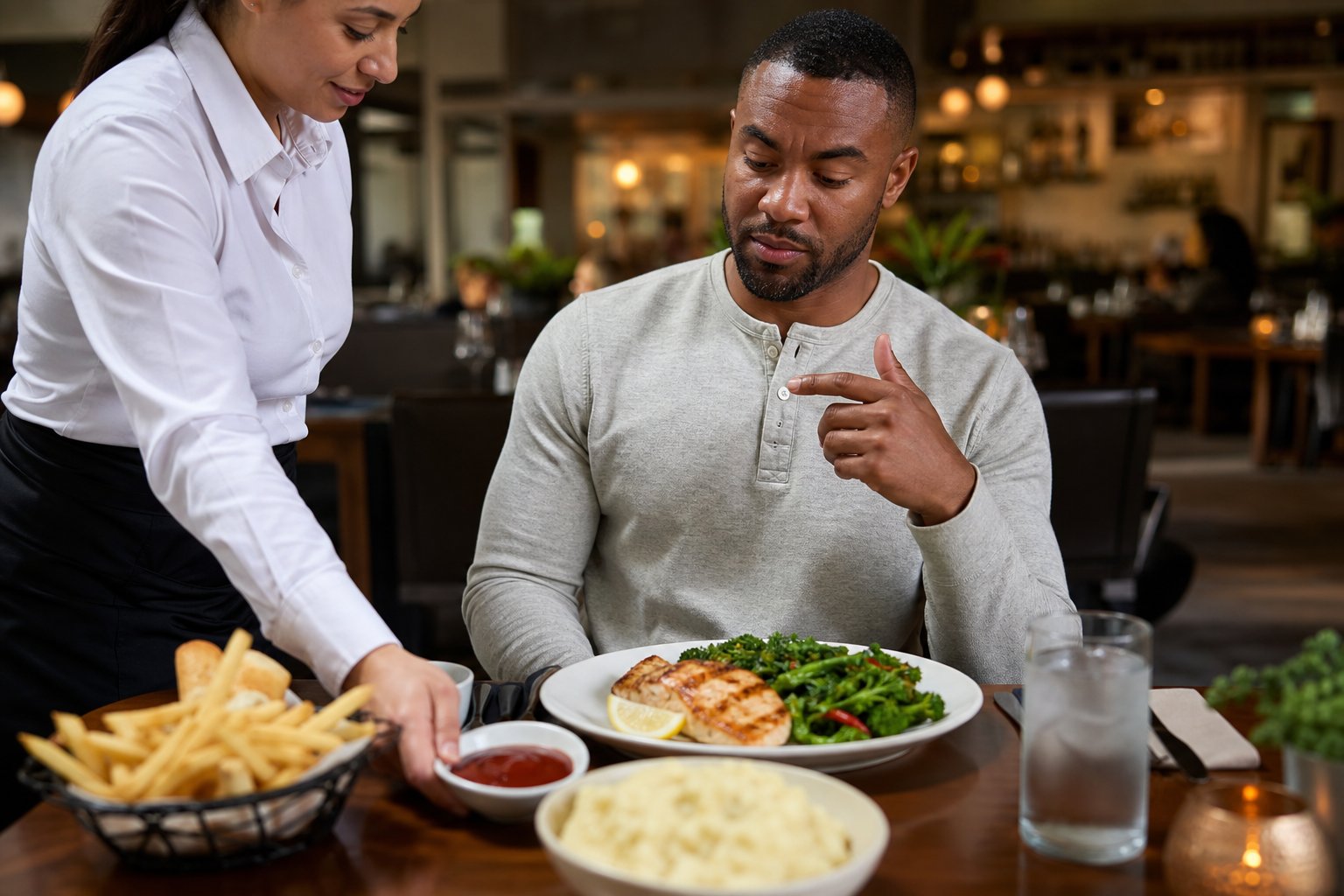
You can handle most restaurant formats by applying the same order structure and then checking the risks specific to that setting.
Fast Food and Quick-Service Restaurants
At burger restaurants, order patties without the bun and remove ketchup or sweet special sauce. Add cheese, lettuce, tomato, pickles, mustard, or mayonnaise according to your plan. Choose a side salad when available, and verify its toppings and dressing.
At Mexican-style quick-service restaurants, build a bowl or salad with meat, leafy greens, cheese, salsa, sour cream, and guacamole. Skip the tortilla, rice, beans, and chips. Sweet salsas and corn-based toppings need closer review.
For chicken, choose grilled pieces over breaded strips or nuggets. Fast-food nutrition calculators can help when the restaurant publishes current data, though local preparation and customization still affect the estimate.
Quick-service meals are one example of keto on the go, where limited choices and time pressure can make planning more difficult.
Steakhouses, Seafood, and Casual Dining
Steakhouses give you an easy base: order steak or another plain protein and replace the potato with vegetables or salad. Ask whether seasoning blends contain sugar and whether butter toppings include a prepared sauce.
At seafood restaurants, choose grilled, broiled, steamed, or baked fish and shellfish. Avoid breading and sweet glazes. Cocktail sauce, teriyaki, and some tropical salsas deserve a carbohydrate check.
Casual dining menus may rely heavily on premade sauces. A burger without the bun, grilled chicken salad, or plain protein with vegetables gives you a dependable fallback. Watch for croutons, fried onions, tortilla strips, and sugary dressing.
Breakfast, Brunch, and Buffets
Eggs are a practical breakfast base. Pair them with bacon, sausage, ham, smoked salmon, avocado, cheese, or non-starchy vegetables. Ask whether omelets contain pancake batter or another mix and whether breakfast meats use a sweet glaze.
Skip pancakes, waffles, toast, biscuits, potatoes, cereal, and pastries when you want a strict keto meal. Berries may fit some personal carb limits in a modest serving.
At buffets, survey every station before filling your plate. Choose eggs or unbreaded protein, then add salad and non-starchy vegetables. Use one plate first, eat seated, and return only if you remain physically hungry.
Coffee Shops and Drinks
Plain brewed coffee, cold brew, espresso, and unsweetened tea are the easiest options. A small amount of cream or milk adds some carbohydrate, so repeated large servings can accumulate.
Ask for no flavored syrup, sweetened powder, drizzle, or whipped topping. “Sugar-free” syrup may contain ingredients that affect your appetite or digestion, and availability varies by shop.
For café meals, look for eggs, cheese, meat, or a salad. Sandwich fillings may work without the bread, though prepared spreads and sauces need checking. Bottled drinks require a label review because tea, coffee, and flavored water can contain added sugar.
Plan Before You Eat Out
Planning before you leave removes rushed choices and helps you keep keto restaurant dining consistent with your normal routine.
Check the Menu Before Leaving
Read the current online menu and identify two possible entrées. Check the restaurant’s nutrition page when it publishes one, especially for chain locations.
Look beyond the entrée name. Read the description for coatings, sides, garnishes, sauces, and cooking methods. Confirm that one meal can be modified without removing most of its substance.
Menus and recipes change, so verify important details when you arrive. Your advance review gives you a starting point even when an item is unavailable.
When nutrition information is available, checking the menu before ordering can reduce some of the uncertainty around calories and other nutrients in restaurant meals.
Decide Your Main Meal Before Arriving
Choose your protein, side substitution, sauce request, and drink before leaving. A complete decision might be: grilled salmon, broccoli in place of rice, sauce on the side, and sparkling water.
If you plan alcohol, decide the type and amount in advance. Dry wine, a spirit with soda water, or a low-carb beer may fit your limit. Sweet wine, regular beer, juice mixers, tonic water, and frozen drinks supply more carbohydrates.
A preselected meal lets you focus on the people and conversation once you arrive.
A keto meal plan can also make eating out easier by giving you a predictable structure for the meals you control yourself.
Planning ahead can remove some of the decision-making that makes keto harder to follow, especially when your meals are already structured before an unpredictable restaurant situation comes up.
Avoid Arriving Extremely Hungry
Extreme hunger makes bread, fried appetizers, and oversized portions harder to manage. Keep your normal meal timing when possible.
If dinner will be late, have a modest snack with protein. Examples include a hard-boiled egg, cheese, deli turkey, tuna, or a small portion of nuts. Choose enough to steady your appetite while leaving room for the meal.
Water before leaving can also help if thirst is adding to your sense of urgency. It does not replace food when you are physically hungry.
Keep a Backup Option for Unpredictable Situations
Carry a shelf-stable low-carb option when travel time, restaurant choice, or meal timing is unclear. A tuna pouch, packaged meat, cheese snack stored safely, or measured nuts can prevent an emergency choice.
Keep a mental backup order too. Bunless burgers, eggs with breakfast meat, or plain grilled protein with salad are available in many settings.
If the restaurant cannot meet your needs, eat the suitable parts of the meal and use your backup later. You can prioritize safety and allergies by communicating those needs separately and clearly.
What to Do When You Can’t Control Every Ingredient
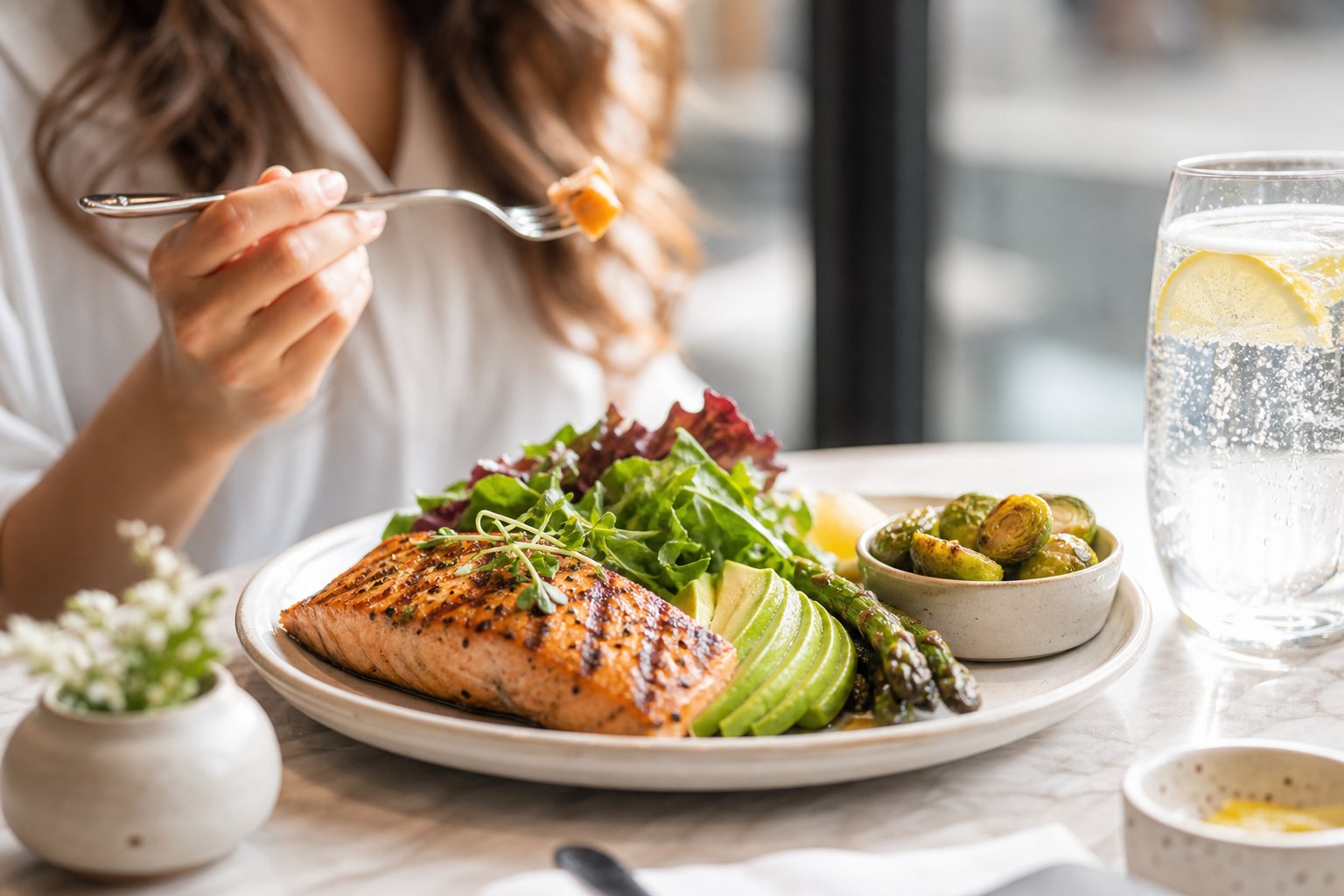
When ingredient control is limited, choose the meal with the fewest likely carbohydrate sources and continue your normal routine afterward. One uncertain restaurant meal does not require a drastic response.
Make the Highest-Confidence Choice Available
Rank your choices by preparation and visible ingredients. Plain meat with vegetables gives you more confidence than a mixed dish with several sauces.
Ask targeted questions, then make a decision with the information available. If your server cannot confirm every seasoning, you can still remove the largest risks: breading, sweet drinks, starch sides, and obvious sugary sauces.
Leave part of an uncertain component if its taste or texture suggests sweetness or starch. You do not need a precise carb count to make a useful adjustment.
Don’t Turn One Uncertain Meal Into a Full Keto Breakdown
Avoid treating uncertainty as permission to abandon the rest of your plan. If your sauce contained sugar, adding bread and dessert expands a small issue into a much larger carbohydrate load.
Drop diet-culture guilt from the response. A restaurant keto mistake reflects limited information or execution under pressure. It does not define your effort or erase your previous consistency.
Continue the evening in line with your regular choices. Drink water as usual and stop eating when you are satisfied.
Return to Your Normal Routine at the Next Meal
At your next meal, use your familiar keto structure: protein, low-carb vegetables, and enough fat for satisfaction. Resume your normal meal timing and portions.
You do not need punishing exercise, extreme fasting, or severe calorie restriction to get back on keto. Your body will respond to what you eat over the following meals, while the timing of ketosis varies with your carb intake and personal metabolism.
If you monitor glucose, ketones, or symptoms for a medical reason, follow the plan set with your clinician. Restaurant estimates should never replace medical guidance.
If restaurant meals are only one part of a broader pattern of repeatedly going off plan, it can be useful to examine why you keep breaking keto at night or during other predictable situations.
Use the Experience to Improve Your Next Restaurant Decision
Identify the exact point where uncertainty entered the meal. It may have been the marinade, your late arrival, a shared appetizer, or an unplanned drink.
Turn that detail into one change. Call ahead about the marinade, eat a snack before a late dinner, or request sauce on the side when you visit again.
Keep notes on dependable orders if you eat out frequently. Record the restaurant, meal, modification, and how satisfied you felt afterward. You will build a useful personal reference without needing a perfect estimate for every ingredient.
When Eating Out Keeps Breaking Your Keto Consistency
Repeated restaurant problems signal that your keto plan needs to fit your weekly schedule more closely. You need a structure that works during social meals and busy days as well as it works at home.
The Same Restaurant Situations Repeat Every Week
Identify recurring events such as a work lunch, family dinner, weekend brunch, or takeout night. A regular event deserves a standard response.
Choose a default restaurant order for each setting. You might use a burger bowl for lunch, steak with vegetables for dinner, and eggs with avocado at brunch. Verify recipes when menus change.
If one location offers no workable meal, suggest another nearby place or eat part of your meal beforehand. A repeated problem is easier to solve when you address the setting in advance.
Your Meal Plan Doesn’t Fit Your Social Life
A sustainable keto plan should leave room for the meals you value. If your plan assumes that you will cook every night while your life includes frequent dinners out, the plan will keep creating friction.
Decide how strict you want restaurant meals to be. You may reserve tight carbohydrate control for a medical goal set with your clinician, or use a broader low carb lifestyle for selected social events. Your choice should match your goals and the guidance you receive for any health condition.
Plan where flexibility belongs. A defined choice gives you direction before social pressure starts.
Convenience and Preparation Need to Be Reworked
Frequent emergency takeout points to a preparation gap. Keep fast home meals and portable foods available so a delayed schedule does not force a rushed restaurant decision.
Useful options include cooked protein, bagged salad, frozen non-starchy vegetables, eggs, canned fish, and individually portioned snacks. Keep delivery orders saved for restaurants where you know the modifications.
Review meal timing as well. If long gaps leave you extremely hungry by dinner, adjust lunch or schedule a protein-based snack.
When Personalization Can Make Keto Easier
Personalization helps when a strict ketogenic diet clashes with your training, appetite, medical needs, culture, or social schedule. Your workable carb limit may differ from someone else’s, and ketosis is only one possible marker of progress.
Track patterns that affect your consistency: hunger, energy, digestion, restaurant frequency, and ease of preparation. Use those observations to shape portions, meal timing, and your degree of carb restriction.
If you take diabetes or blood pressure medication, seek clinical guidance before making major carbohydrate changes. A registered dietitian or qualified clinician can help you personalize your keto diet while accounting for medications, nutrient needs, and health goals.
If eating out keeps exposing weaknesses in your current keto routine, a more personalized approach may make the overall plan easier to follow in real-world situations.
Conclusion: Restaurant Keto Is About Managing Uncertainty, Not Finding Perfect Meals
Successful restaurant keto comes from a repeatable process: choose a plain protein, swap the starch for vegetables, verify prepared extras, and set a portion that fits your hunger. Planning your order and drink before arrival removes many rushed decisions.
When information remains incomplete, make the highest-confidence choice available. Resume your normal ketogenic diet at the next meal and record one practical improvement for your next visit. This approach lets you maintain your low carb lifestyle while still taking part in restaurant meals and social occasions.